Pakistan petrol rises nearly 25 rupees in a week as oil supply risks intensify
Pakistan raised petrol to 370.80 rupees per litre and high-speed diesel to 398.04 rupees after four consecutive increases. Higher crude prices and disruption risks around the Strait of Hormuz and Bab el-Mandeb are feeding quickly into the import-dependent fuel market.
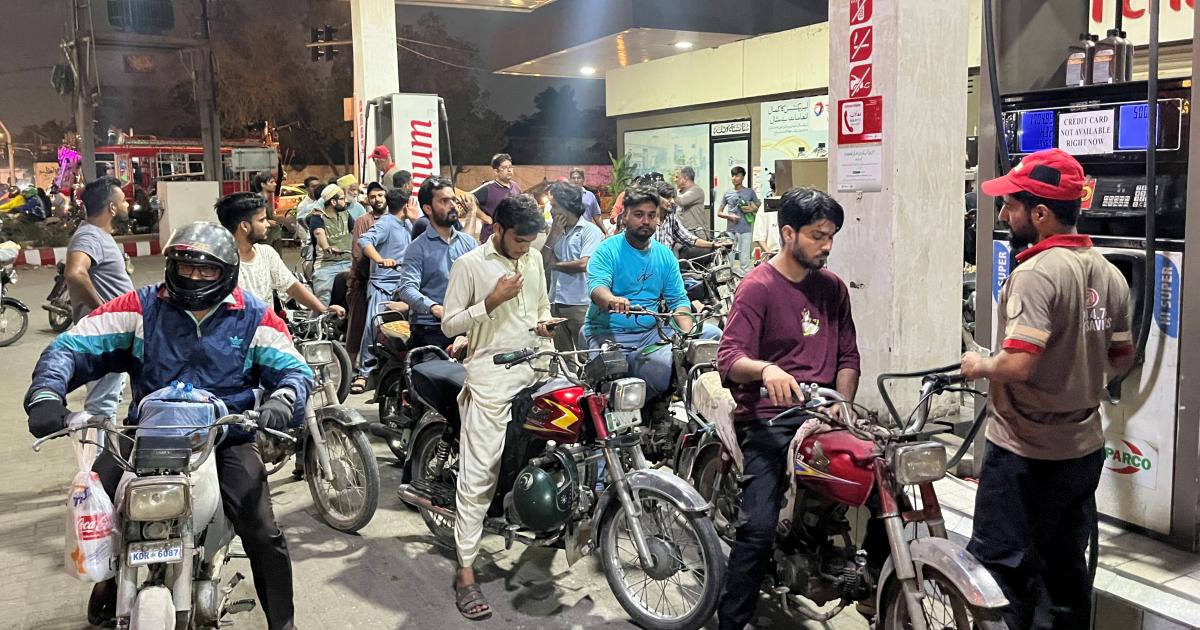
Fourth increase takes petrol to 370.80 rupees
Pakistan has raised petrol prices for the fourth consecutive time, taking the cumulative increase since the start of the week to 24.93 rupees per litre, Independent Urdu reported. The latest adjustment added 3.05 rupees, lifting the ex-depot petrol price from 345.87 rupees at the beginning of the week to 370.80 rupees per litre.
High-speed diesel increased by 5.37 rupees to 398.04 rupees per litre. Its cumulative rise during the same period reached 19.99 rupees, from 378.05 rupees. The revised prices took effect on 11 September under a mechanism through which the Oil and Gas Regulatory Authority reviews ex-depot prices. Pakistan shifted to daily fuel-price setting in July after renewed tensions between Iran and the United States produced sharp volatility in international petroleum markets.
Shipping disruption adds to crude-price pressure
The domestic increases came as Brent crude moved above $100 per barrel for the first time since July. Security risks have intensified around the Strait of Hormuz and near Bab el-Mandeb, two critical passages for energy and commercial shipping. Roughly one-fifth of the world's oil normally moves through Hormuz, leaving import-dependent Pakistan particularly exposed to interruptions and higher freight or crude costs.
Reuters data cited by Independent Urdu showed that only seven vessels crossed the Strait of Hormuz on Wednesday, down from 12 a day earlier and a 10-day average of 14. No liquefied natural gas tanker passed through the waterway. Pressure has also increased near Bab el-Mandeb, where Iran-aligned Houthis in Yemen have targeted commercial vessels linked to Saudi Arabia.
Regional prices reflect different policy systems
Earlier price snapshots show how rapidly Pakistan's daily revisions are changing the market. WE News reported that petrol rose from 341.59 rupees per litre on 22 August to 364.35 rupees on 9 September, including a 5.58-rupee increase that day. The later government adjustment reported by Independent Urdu put the price at 370.80 rupees from 11 September.
Neighboring markets have responded differently. Kabul set 92-octane petrol at 87 afghanis per litre on 27 August, up from 78 afghanis on 1 August and equivalent to about 375 Pakistani rupees at the 9 September exchange rate cited by WE News. New Delhi held petrol at 102.12 Indian rupees per litre from 30 August through 9 September, equivalent to about 298 Pakistani rupees, although tax, subsidy and pricing systems make direct currency comparisons incomplete.
Bangladesh kept petrol at 140 taka and octane at 145 taka per litre for September, its fourth consecutive month without a change in core retail fuel prices. The figures were equivalent to about 315 and 327 Pakistani rupees respectively. China's average petrol price was reported at about 8.68 yuan per litre, or roughly 358 Pakistani rupees.
Iran retained subsidized prices of 15,000 rials per litre for the first 60 litres and 30,000 rials for the next 50 litres of monthly consumption. The price above the 110-litre quota doubled from 50,000 to 100,000 rials per litre. These regional differences show that the same global oil shock reaches consumers at different speeds, depending on import exposure, taxation, subsidies and the frequency of official price revisions.