36% of packaged oil, ghee and milk samples fail quality tests in Pakistan
Laboratory tests found that 176 of 491 packaged edible oil, ghee and milk samples in Pakistan did not meet national quality standards. Vanaspati ghee recorded a 48% failure rate, prompting the government to order nationwide testing of loose products.
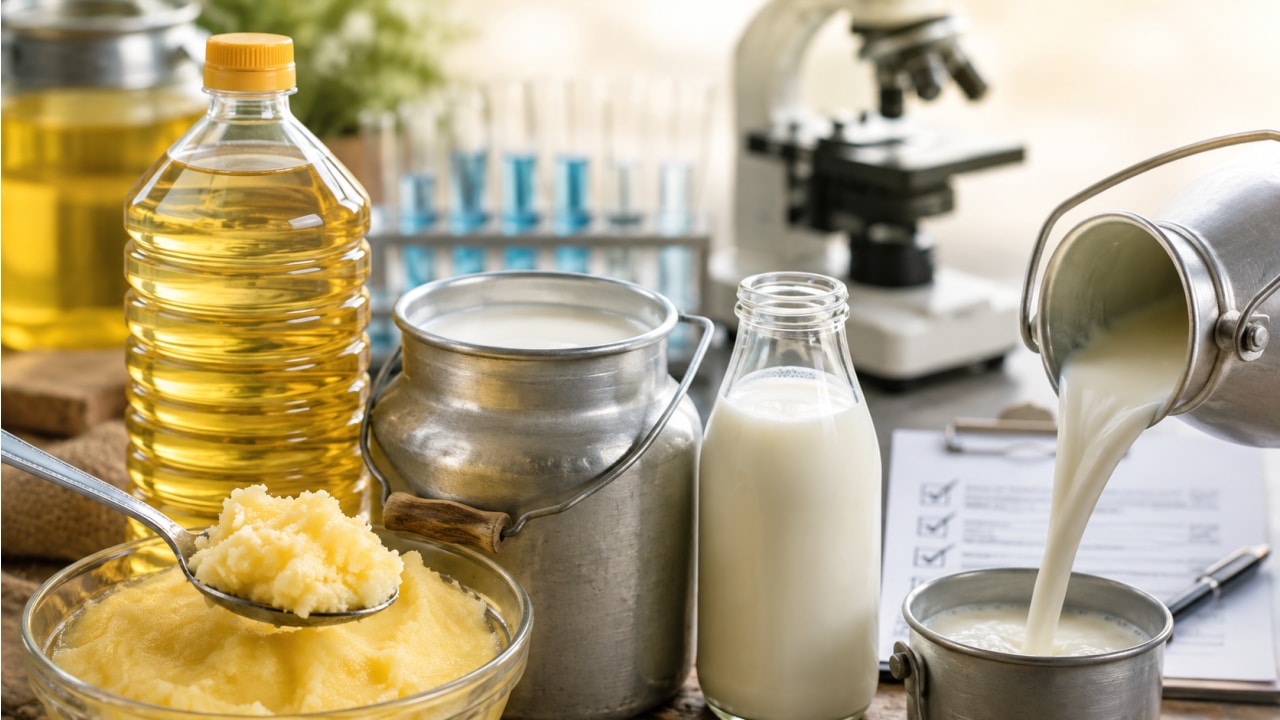
Tests find 176 non-compliant samples
Nearly 36% of packaged edible oil, ghee and milk samples collected from markets across Pakistan failed to meet national quality standards, according to findings released by the Ministry of Planning. The Pakistan Council of Scientific and Industrial Research, or PCSIR, tested 491 samples: 315 complied with the prescribed standards and 176 were declared non-compliant.
The findings were presented to the National Price Monitoring Committee at a meeting chaired by Federal Minister for Planning Ahsan Iqbal. The Pakistan Standards and Quality Control Authority, or PSQCA, consolidated the results, while PCSIR conducted the assessment under the Ministry of Science and Technology.
Vanaspati ghee posts highest major-category failure rate
Vanaspati ghee produced one of the most concerning results. Tests found that 98 of 204 samples, or 48%, did not meet national standards. Among blended cooking oils, 40 of 146 samples failed, representing 27% of the category. Packaged liquid milk had a 25% failure rate, with 26 of 104 samples declared substandard.
Smaller categories also returned significant failures. Eight of 18 milk powder samples were non-compliant, as were three of four refined palm oil samples. One of 13 refined canola oil samples failed. The small sample numbers in these categories limit broader conclusions, but the results give regulators additional product groups to examine.
The report identified substantial quality deficiencies in some milk products. One sample contained only 0.8% milk fat, compared with a minimum requirement of 3.5%. Samples from leading multinational packaged-milk producers met the required standards, while problems were found among products sold by relatively lesser-known local brands. The material released did not identify individual non-compliant brands.
Government expands scrutiny to loose products
Iqbal instructed provincial governments, regional administrations and relevant regulators to conduct a nationwide survey of loose and unpackaged edible oil, ghee and milk. Those products were outside the scope of the current assessment, which covered packaged goods. The next survey is intended to measure quality, identify regional patterns, determine the causes of deficiencies and assess possible public-health risks.
The minister also established a technical subcommittee with experts from the Ministry of Planning, PCSIR and PSQCA. It will review the laboratory findings and prepare evidence-based recommendations for regulatory and policy action. The move follows official concern about cardiovascular diseases and other non-communicable illnesses, particularly among younger Pakistanis. For processors and retailers, the results increase the prospect of closer testing and enforcement, especially in fragmented local-brand and loose-product markets. Clear disclosure of testing methods, product identities and corrective measures will be important for buyers seeking to distinguish compliant suppliers from the wider market.