Pacific tuna shortage drives skipjack prices to highest level since 2017
Papua New Guinea’s tuna catch fell 37% as El Niño disrupted major Pacific fishing grounds, while skipjack prices reached their highest level since 2017. Higher raw-material, fuel and fishing costs are squeezing Dongwon Group’s processing and fleet operations despite a 9% increase in canned tuna prices.
Pacific catches fall as El Niño strengthens
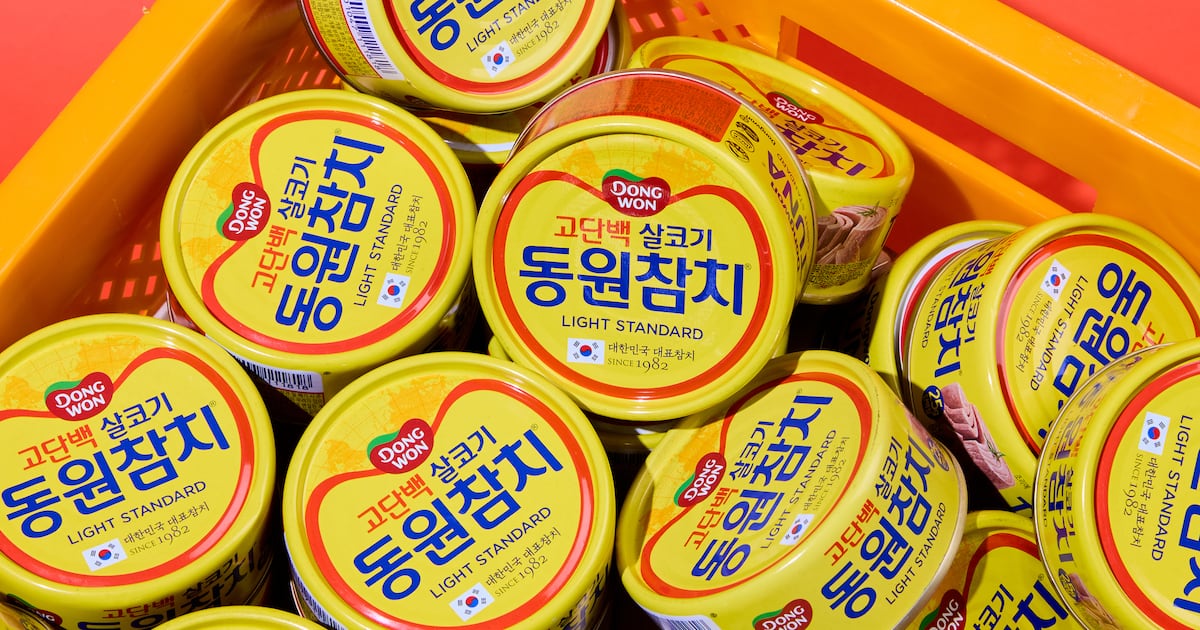
A sharp contraction in Western and Central Pacific tuna catches has pushed skipjack prices to their highest level since 2017, increasing costs for canned tuna producers and weakening returns for fishing fleets. The pressure is particularly visible at South Korea’s Dongwon Group, whose businesses span distant-water fishing and the production of Dongwon Tuna, the country’s leading canned tuna brand.
According to the Deep-Sea Fisheries Information System, tuna catches in Papua New Guinea, a major Pacific fishing ground, totaled 133,383 tonnes through Sept. 15, down about 37% from a year earlier. Participants at the International Tuna Trade Meeting in Bangkok in September said local transaction prices for skipjack, the main raw material used in canned tuna, had reached their highest level since 2017. The source report linked the decline in catches to El Niño and other factors affecting the region’s fisheries.
Raw-material inflation cuts Dongwon’s margins
Hana Securities estimated that the average price of whole-round tuna rose about 25% year on year to $1,950 per tonne in the third quarter. Recent prices were around $2,200 per tonne. Analyst Sim Eun-ju estimated that Dongwon F&B’s tuna can manufacturing costs increased by about 20 billion won from a year earlier. She said the higher costs reduced the price competitiveness of gift sets and probably weighed on sales.
Dongwon F&B’s consolidated third-quarter sales increased 4% year on year to 1.4144 trillion won, according to disclosures cited by ChosunBiz. Operating profit fell 55.4% to 32.7 billion won, while net profit declined 53.4% to 25.8 billion won. On a standalone basis, sales decreased 1.3% to 634.3 billion won and operating profit plunged 86.9% to 5.8 billion won. Its operating margin fell from almost 7% a year earlier to 0.9%. The company held an 80% share of South Korea’s canned tuna market, a segment of the global canned seafood market, in the first half of the year, and cumulative sales of Dongwon Tuna, launched in 1982, exceeded 7.9 billion cans last year.
Higher prices fail to protect fishing profits
Dongwon Industries, which operates what the report described as the world’s largest purse-seine tuna fleet, is also under pressure. Including overseas subsidiaries and joint ventures, it operated 37 distant-water vessels in the first half of the year, among them 19 purse seiners and 8 longliners. Higher fish prices would ordinarily support a fishing company’s margins, but lower catch volumes and rising fuel costs have increased operating expenses. Standalone third-quarter sales rose 9.8% to 273.3 billion won, while operating profit fell 34% to 12.5 billion won. The company recorded a net loss of 9.5 billion won, compared with a profit of 12.7 billion won a year earlier.
Processors face prolonged cost pressure
Dongwon Group raised canned tuna prices by an average of 9% from Sept. 1, but sales volumes declined and whole-round tuna prices remained elevated in the fourth quarter. A climate outlook released by the US National Oceanic and Atmospheric Administration on the 12th gave a probability of more than 79% that El Niño would remain strong or very strong through January–March next year. Dongwon said volatility in catches and fish prices was likely to continue because of weak Pacific fisheries and that it would seek to protect profitability through better fishing efficiency and higher productivity. For processors and buyers, sustained high skipjack prices could keep supply contracts, inventories and retail pricing under pressure even where manufacturers have already passed part of the cost increase to consumers.