Organized crime tightens control over Mexico's illegal logging and timber trade
Criminal groups in Mexico have moved from extorting loggers to directly controlling forest territories, deciding who can harvest and sell timber. Official studies estimate illegal logging costs the state up to 20,745 million pesos a year in lost income tax and drives at least 8% of gross deforestation.
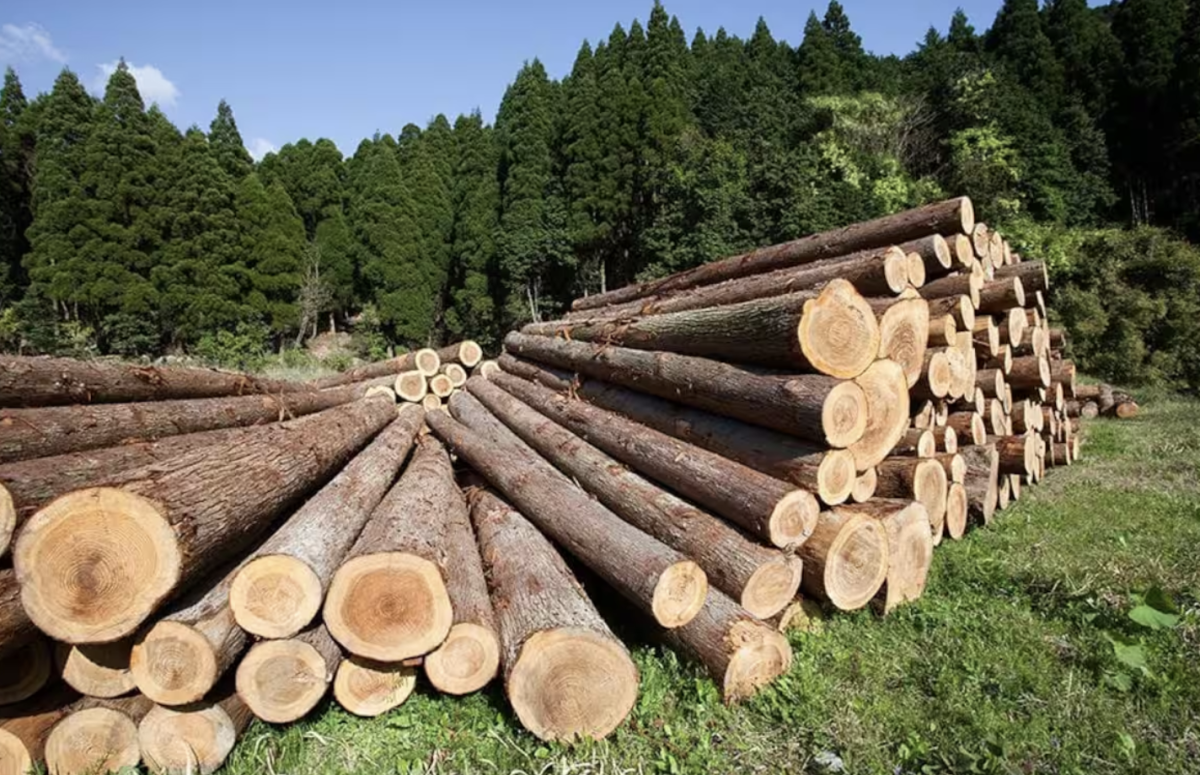
From extortion to territorial control
Criminal organizations in Mexico have moved beyond extorting loggers and now directly control forest territories, according to a report by omnia.com.mx. Armed groups decide who can fell trees, subjugate ejidatarios (communal landholders), seize sawmills, monitor transport routes and place timber on the market using altered documents. An initiative presented to the Senate in 2025 warned that clandestine logging has become a large-scale business, while a report by the National Forestry Commission (Conafor) acknowledged that corruption, weak enforcement, impunity and the presence of criminal groups facilitate the extraction and laundering of wood for commercial use.
The scale of the losses
An official study, «Estimación de las pérdidas económicas por la tala ilegal en México», prepared by the Secretariat of Environment and Natural Resources (Semarnat) and the National Institute of Ecology and Climate Change (INECC), modelled three levels of illegality. In the scenario where 70% of consumed timber is of illicit origin, the state failed to collect between 14,818 and 20,745 million pesos annually in income tax (ISR). The study estimates that illegal logging drives at least 8% of gross deforestation — around 16,640 hectares a year — with losses of environmental services reaching up to 1,033 million pesos.
The Federal Attorney for Environmental Protection (Profepa) has identified 122 critical areas for forestry crimes, 13 of them inside priority natural zones. These include the Bosque de Agua linking Mexico City, Morelos and the State of Mexico; La Malinche National Park, between Puebla and Tlaxcala; Pico de Orizaba, between Puebla and Veracruz; and the Monarch Butterfly Biosphere Reserve in Michoacán.
Cartels, corridors and export routes
Reports place clandestine logging, timber laundering or forest invasions across Chihuahua, Guerrero, Oaxaca, Chiapas, Jalisco, Sonora, Durango, Sinaloa, Querétaro, Nayarit, Campeche, Quintana Roo and Yucatán. In Chihuahua, an investigation by the Global Initiative Against Transnational Organized Crime identifies factions of the Sinaloa Cartel — among them Los Salazar and Flechas MZ — in the armed exploitation of the Sierra Tarahumara and the Golden Triangle. Citing the Criminal Investigation Agency, it reports that La Línea, an arm of the Juárez Cartel, disputes the Bocoyna timber corridor and that indigenous youths are forcibly recruited as loggers or lookouts in municipalities such as Maguarichi, Guerrero, Uruachi, Ocampo, Madera and Guadalupe y Calvo.
In Michoacán, a Bloomberg Businessweek report ties the territorial dispute between the Jalisco New Generation Cartel and Cárteles Unidos to extortion of the avocado industry and the clearing of forest land for new orchards. The same reporting places Los Tena, a splinter of the Knights Templar, in land seizures in Aquila and in the smuggling of protected woods such as sangualica and granadillo to China. In Guerrero, armed groups including Los Viagras and Los Maldonado impose logging in the Sierra de Petatlán and Tierra Caliente, moving timber in trucks with Michoacán plates.
Enforcement gaps
In Chiapas, a ruling by the environment committee of the Chamber of Deputies reported growth of more than 500% in timber trafficking across Ocosingo, Palenque and other zones. During 2025, Profepa documented the seizure of 22 oyamel logs in Ocuilan, inside the Bosque de Agua. Conafor's 2023 self-evaluation report says it allocated 49.26 million pesos to 236 projects covering 275,801 hectares of sustainable forest management, alongside chain-of-custody certificates and traceability mechanisms. Still, the commission concludes that illegal timber keeps displacing authorized producers because it pays no taxes, permits or management fees, while weak inspection and impunity let criminal groups control harvesting, transport and sale.