Organic cane sugar leads Argentina’s specialty-food exports in first half of 2026
Argentina exported 78,538 tonnes under the Organic Argentina seal in the first half of 2026, up 21% year on year. Organic cane sugar led the segment with 31,470 tonnes, while the United States remained the largest destination.
Organic shipments rise 21%
Argentina’s certified organic food exports expanded during the first half of 2026, led by cane sugar and supported by demand from the United States and European markets. Data released by the Secretariat of Agriculture, Livestock and Fisheries show that shipments carrying the Organic Argentina seal reached 78,538 tonnes, an increase of 21% from the same period of 2025.
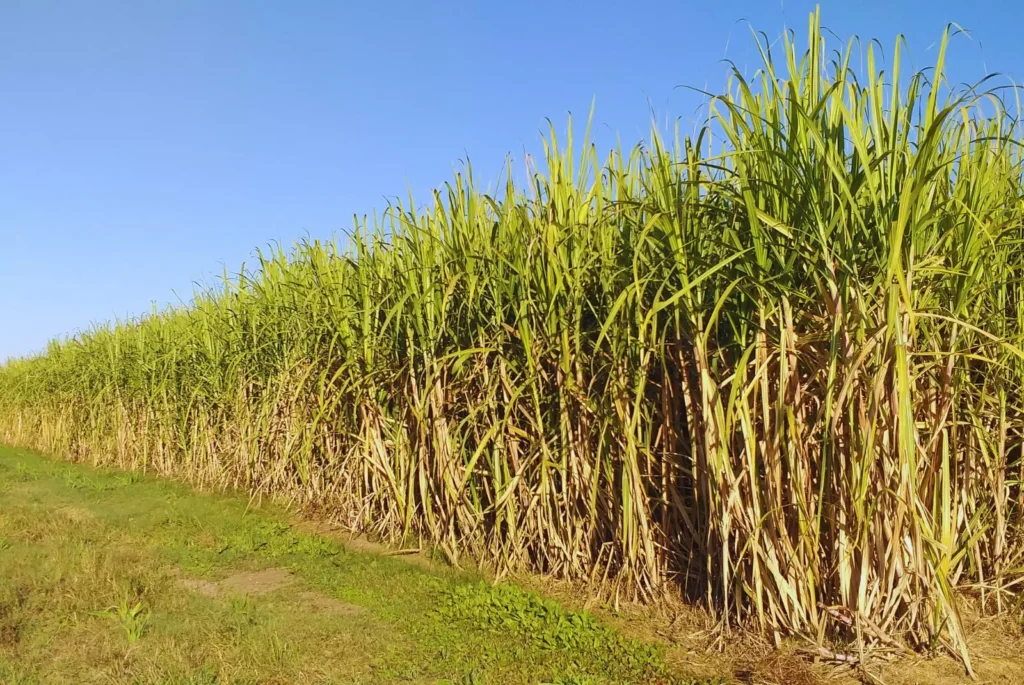
Organic cane sugar accounted for 31,470 tonnes, making it the largest product in the certified segment. Its share was close to 40% of all volume shipped under the organic seal. Pears ranked second with 15,485 tonnes, followed by apples with 4,735 tonnes, wine with 3,642.3 tonnes and pear purée with 2,970 tonnes, according to Bichos de Campo.
The product mix shows that Argentina’s organic trade spans bulk agricultural commodities, fresh fruit and processed food and beverages. Certification gives these products a differentiated commercial position, but it also requires farms, processors and supply chains to comply with specific production standards and verification procedures.
United States remains the main destination
The United States received 45,349 tonnes of Argentina’s certified organic products during the six-month period, equivalent to more than half of the reported total. The Netherlands, Germany, Canada and the United Kingdom were the other leading destinations. In these markets, organic certification can be a condition of access to particular buyers and retail channels rather than an optional label.
Argentina’s differentiated-food strategy extends beyond organic production. The official framework also includes the Argentine Foods seal, which identifies goods complying with defined quality protocols, as well as Geographical Indications and Designations of Origin for products whose characteristics or reputation are linked to a particular territory.
Exports under the Argentine Foods seal increased by 15% in value and 5% in volume from a year earlier, reaching $661 million and 317,000 tonnes in the first half. The principal categories were chilled, vacuum-packed beef at $221 million; peanuts and peanut paste at $145 million; frozen pre-fried potato products at $106 million; squid at $55 million; and fresh pears at $43 million. Brazil, the Netherlands, Germany, the United States and Chile were the five largest markets.
Origin-certified exports post faster growth
Shipments covered by Designations of Origin and Geographical Indications generated $43 million from 30,100 tonnes in the first half of 2026. Export value rose 83.5% year on year, while volume increased 134.6%. Yerba mate contributed $29 million and tea another $14 million.
Syria was the leading market in this group, purchasing $25 million, or 15,351 tonnes, followed by Spain, Chile, Germany and Canada. For tea specifically, the United States was the largest destination at $8.6 million and 8,415 tonnes, ahead of Germany, India, Poland and Spain.
The results highlight several distinct routes for Argentine suppliers seeking value beyond undifferentiated commodity sales. Organic cane sugar currently provides the largest volume within the organic category, while quality seals support sizeable beef, peanut, potato, squid and fruit shipments. Origin certification remains smaller in absolute value, but its first-half growth rates indicate rapidly expanding sales for yerba mate and tea in a geographically diverse set of markets.