One-third of cherry orchards in Bulgaria’s Kyustendil region produce no crop
Around one-third of the cherry-growing area in Bulgaria’s Kyustendil region has produced no yield following climate damage, local farmers told Trud. The crop failure in the country’s leading cherry-producing region is set to restrict supply and affect procurement prices.
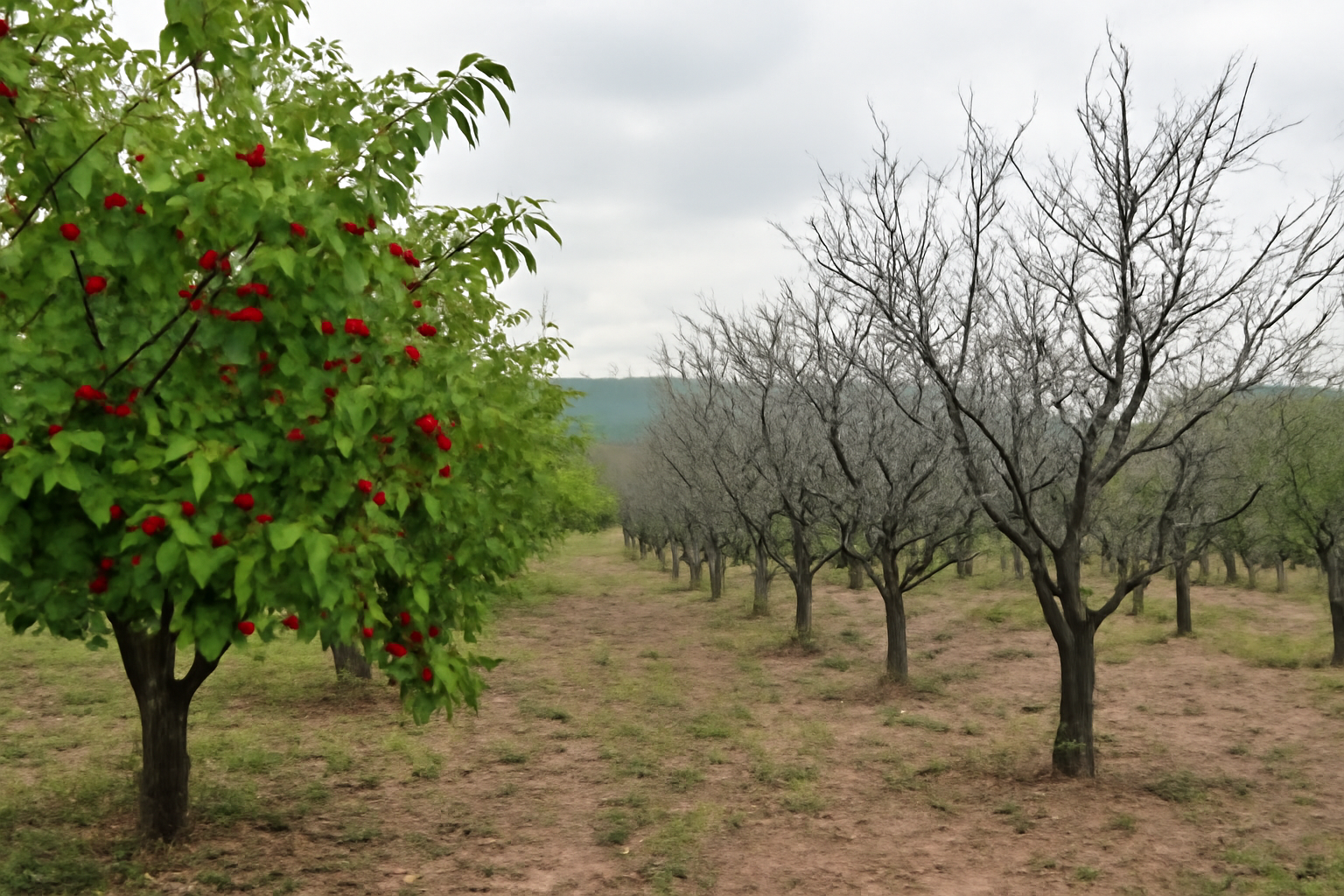
Zero yields across one-third of the area
Around one-third of the area planted with cherries in Bulgaria’s Kyustendil region has produced no crop, local agricultural producers told Trud. The affected orchards recorded zero yields after climate-related damage, making the season a major setback for the country’s most important cherry-producing district.
The reported loss concerns cultivated area rather than a stated share of harvested tonnage. The available information does not provide the region’s total planted area, its expected production before the damage or the volume harvested from orchards that retained a crop. It nevertheless shows that a substantial part of Kyustendil’s production base will contribute nothing to market supply this season.
Supply pressure in Bulgaria’s leading region
Kyustendil has Bulgaria’s largest production of cherries, so a failure covering roughly one-third of its orchards has consequences beyond the individual farms affected. Production from the remaining area will have to serve buyers that would normally source fruit from a broader local harvest. The immediate exposure falls on growers, collection points, wholesalers, processors and retailers linked to the region.
The damage can reduce the volume available for fresh consumption and processing, although no separate figures have been reported for either channel. Fruit quality and the distribution of losses among individual orchards will also influence how much marketable produce reaches buyers. The source material does not identify the specific weather events responsible for the damage or state whether other Bulgarian growing regions suffered comparable losses.
Procurement prices face an uneven market
A smaller harvest in the largest production district creates conditions for firmer procurement prices when buyers compete for limited marketable fruit. However, the direction and scale of any price movement will depend on the yield and quality of the surviving crop, demand from processors and traders, and supplies available from other regions. No actual procurement price or year-on-year comparison was provided.
Higher prices would not automatically compensate every producer. Farms with zero yields have no fruit to sell, while growers with a viable crop may benefit from tighter supply. Buyers face the opposite risk: reduced local availability can raise sourcing costs and make it harder to secure the required volumes and quality grades.
Missing data will determine the full impact
The size of the commercial loss cannot yet be calculated from the information available. No estimate has been provided for damaged hectares, lost tonnes, farm revenue, processing utilization or potential compensation. There is also no reported forecast for Bulgaria’s total cherry harvest.
For market participants, the next relevant indicators will be the actual volume collected from the unaffected orchards and the procurement prices offered as harvesting progresses. Those figures will show whether the zero-yield area translates into a broad national shortage or remains primarily a severe regional production shock.