Oman Joins International Hydrogen and Fuel Cell Partnership as It Builds an Export-Focused Green Hydrogen Industry
Oman, represented by its Ministry of Energy and Minerals, has joined the International Partnership for Hydrogen and Fuel Cells in the Economy (IPHE). Mubasher and Argaam report that membership targets access to policy work, technical standards, joint research and the rules governing international trade in hydrogen and its derivatives. No investment figures, project capacities or timetables were disclosed.
Oman has joined the International Partnership for Hydrogen and Fuel Cells in the Economy (IPHE), represented by the Ministry of Energy and Minerals, in a step intended to strengthen the country's presence in the global hydrogen system and support the development of a low-emission hydrogen economy, according to Mubasher and Argaam.
Both publications describe the IPHE as an international cooperation platform bringing together countries and institutions working on hydrogen and fuel cell technologies and on accelerating their adoption in transport, industry, power generation and energy storage. Neither report disclosed financial terms, project capacities or a timetable attached to Oman's membership.
What membership is expected to deliver
Citing the Oman News Agency, Mubasher reported that accession is expected to broaden cooperation with other member states and give Oman access to leading international experience in developing policies, regulatory frameworks and technical standards for the hydrogen sector. That access is framed around the country's plans to expand green hydrogen projects and connect them to international markets.
Argaam reported that the partnership will also serve as a platform for developing green hydrogen value chains, harmonising standards, specifications and safety requirements, and supporting international trade in hydrogen and its derivatives, with the stated aim of greater international alignment and faster, safer and more economical deployment of hydrogen and fuel cell technologies.
Standards, research and skills
The areas of cooperation set out in the two reports cover:
- policy design, regulatory frameworks and technical standards for hydrogen;
- harmonisation of specifications and safety requirements across member states;
- research, development, innovation and joint pilot projects;
- capacity building and the training of national specialists, alongside efforts to attract higher-quality investment.
Argaam linked the last point directly to Oman's ability to prepare the workforce required for the growth of a hydrogen economy.
Officials point to export-scale production
Salim bin Nasser Al Aufi, Minister of Energy and Minerals, said the accession marks an important milestone in Oman's path towards building a hydrogen economy and reflects its intention to contribute to international cooperation and to the development of a sustainable global market for green hydrogen. He said Oman is seeking to establish a globally competitive green hydrogen economy, and that membership should support innovation, workforce readiness and the policies and standards needed for a resilient hydrogen market.
Paulo Emilio Valadao de Miranda, chair of the IPHE, welcomed Oman's accession as the partnership continues to attract a growing number of countries committed to developing the global hydrogen economy. He pointed to Oman's ambitious low-emission hydrogen vision, its renewable energy potential and its focus on developing large-scale production and export opportunities, and said the country brings expertise on infrastructure, international markets, policy and standards.
Laurent Antoni, executive director of the partnership, said Oman combines significant renewable energy potential with an ambitious hydrogen programme and a clear focus on building the capabilities and frameworks needed for a new industry. He said the partnership expects to facilitate an exchange of experience with other members as countries confront shared challenges around infrastructure, standards, skills and the development of international hydrogen markets.
Vision 2040 and the resource base
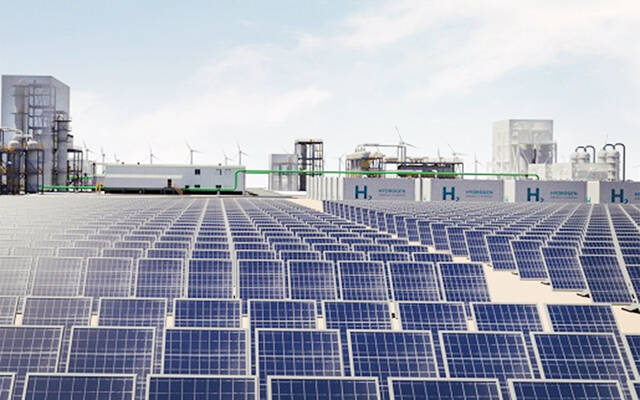
Both reports place the move within Oman's strategy of using its solar and wind resources to build a green hydrogen industry that supports sustainable development goals and carbon neutrality while increasing the sector's contribution to the national economy.
The accession is also tied to Oman Vision 2040 and its targets for economic diversification and for widening the base of industries built on knowledge, innovation and sustainability. Neither Mubasher nor Argaam reported the value of investment committed to Oman's hydrogen programme or the volumes the country expects to export.