ÖKO-TEST flags four pesticides in Edeka and Rewe snack tomatoes
ÖKO-TEST has criticised snack tomatoes sold by Edeka and Rewe after identifying four different pesticides, CHIP reported. The available source material does not specify the active substances, residue concentrations, products tested or whether legal limits were exceeded.
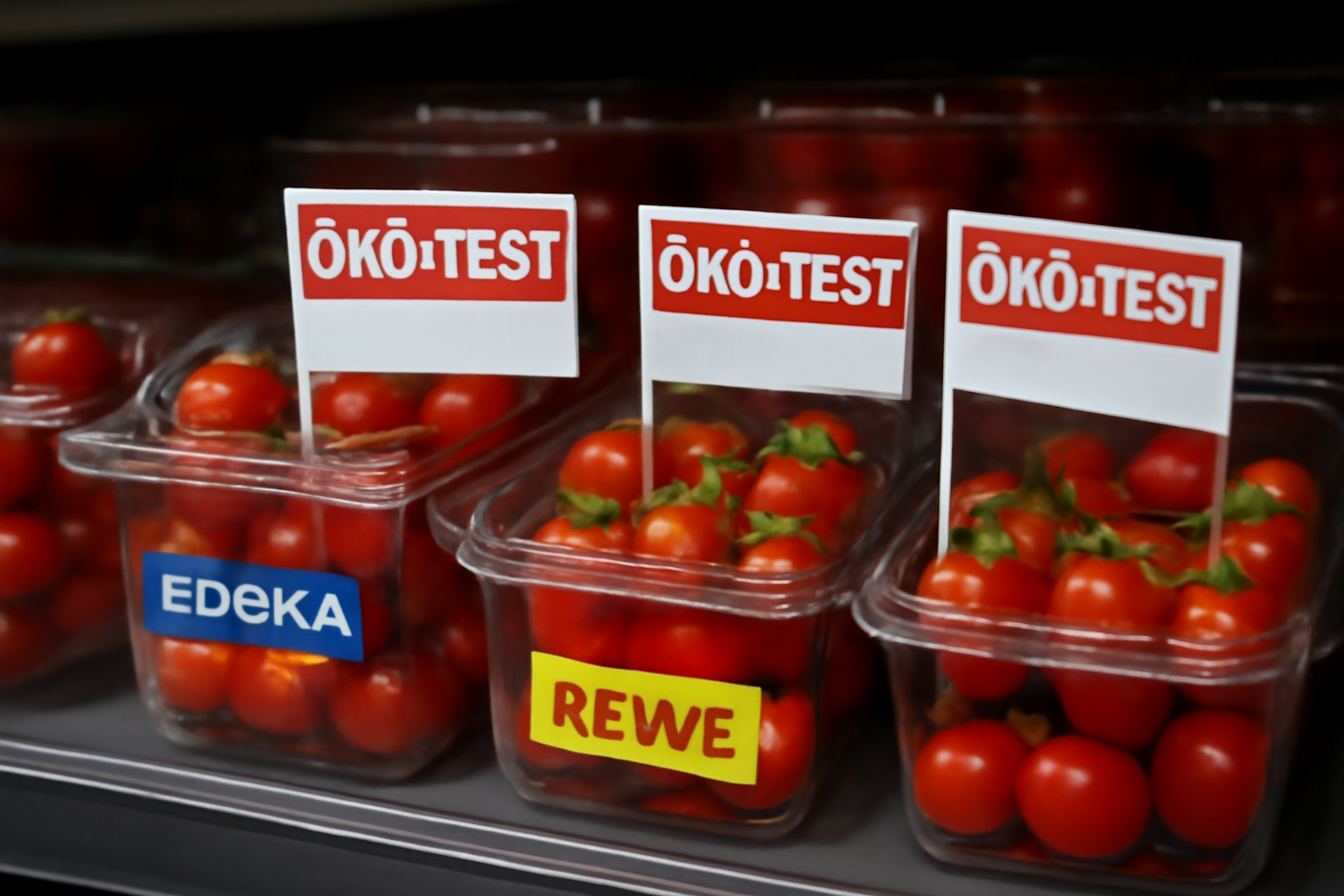
Four pesticides prompt criticism
German testing organisation ÖKO-TEST has criticised snack tomatoes sold by major retailers Edeka and Rewe after detecting four different pesticides, according to a report by CHIP. The finding concerns a widely purchased fresh product and puts pesticide residues, supplier controls and consumer expectations at the centre of the discussion.
The information provided does not identify the four pesticides or give their measured concentrations. It also does not state which individual Edeka and Rewe products were examined, where the tomatoes were grown, how many samples were tested or when they were purchased. Those missing details prevent a comparison between suppliers, origins and production methods.
Most importantly, the report as provided does not say that statutory maximum residue levels were exceeded. A product can attract criticism in a consumer test because several substances are present or because the testing organisation applies expectations that are stricter than the legal threshold. The disclosed finding should therefore not be treated as evidence of a regulatory violation.
Retailers and suppliers face scrutiny
Even without evidence of a legal breach, the detection of four pesticides can matter commercially. Edeka and Rewe are two of Germany’s largest food retailers, and snack tomatoes are marketed as a ready-to-eat convenience product. Consumers may consequently expect especially tight controls over residues and clear information about cultivation.
For growers and packers, the case highlights the importance of documenting plant-protection treatments and checking produce before delivery. Retailers can set private residue requirements that go beyond statutory rules, while testing organisations may use their own criteria when rating products. The available material does not disclose which standards ÖKO-TEST applied in this case.
The report also provides no response from Edeka, Rewe, their suppliers or the relevant food-safety authorities. It is therefore unclear whether the retailers have commissioned additional tests, contacted producers, changed sourcing arrangements or taken any product-level action. No recall or sales suspension is mentioned in the supplied information.
Key data remain undisclosed
For importers, distributors and tomato producers, the commercial significance depends on facts that are not yet available: the named active substances, residue quantities, applicable limits, sample origins and whether the substances occurred in one product or across several products. Country of origin would also be necessary before drawing conclusions about any particular production region or trade flow.
The finding nevertheless creates a reputational issue for the products concerned. Multiple residues can influence purchasing decisions even when each individual substance remains within its legal limit. Producers supplying German retailers may face closer documentation demands or additional laboratory screening if buyers respond by tightening private specifications.
On the evidence supplied, the firm conclusion is narrow: ÖKO-TEST found four different pesticides in snack tomatoes associated with Edeka and Rewe and criticised the products, as reported by CHIP. Any stronger claim about health risk, legal non-compliance, the affected brands or the source countries would require the full test results and product details.