Oishii Farm scales indoor strawberry production and plans Japan launch in 2026
Oishii Farm says it has achieved stable, factory-scale strawberry production by combining bee pollination with precise environmental controls. After opening a major New Jersey facility in 2024, the company plans to begin production and sales in Japan in 2026.
Controlled production moves beyond the pilot stage
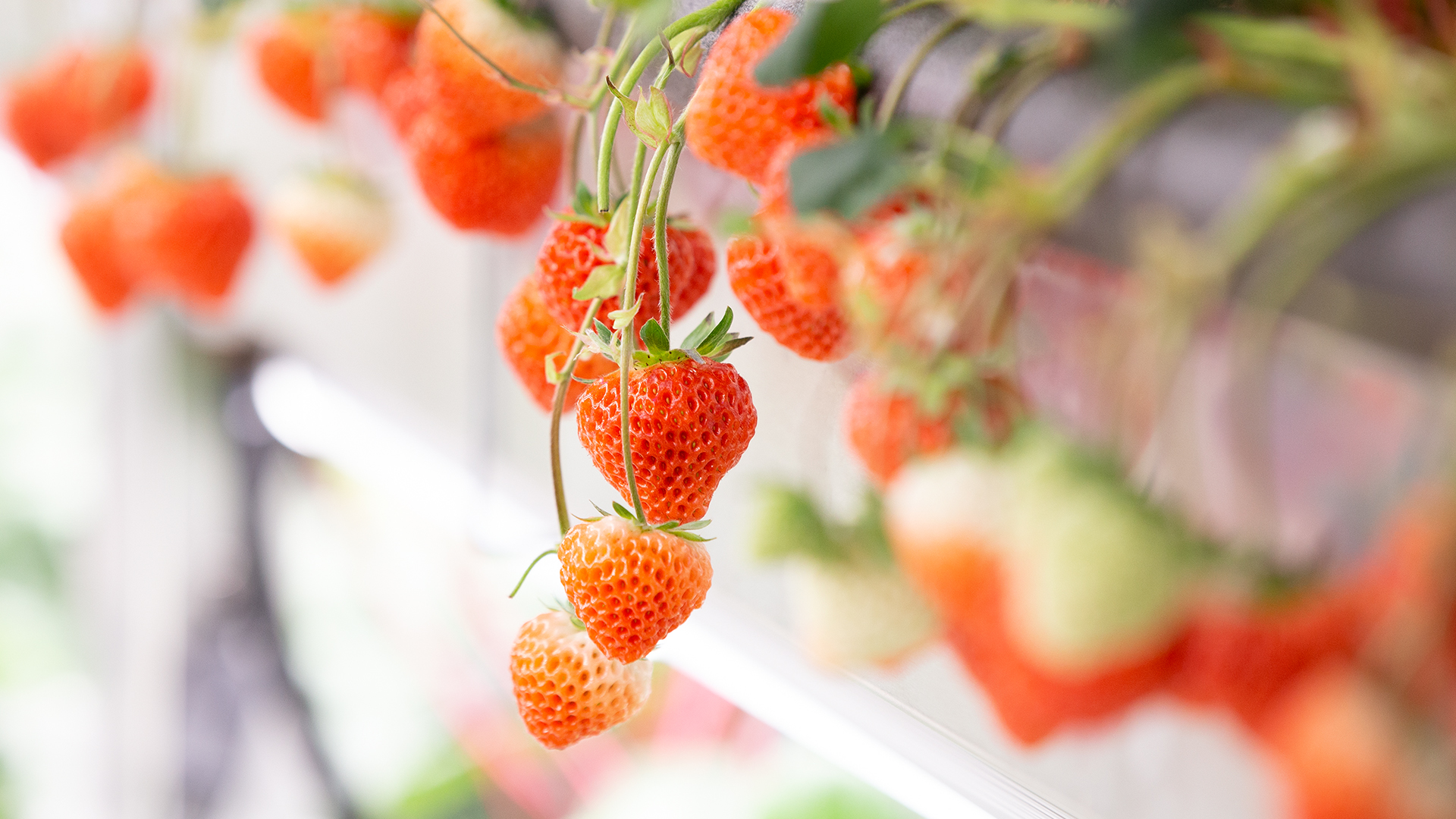
US-based Oishii Farm says it has become the first company to achieve stable mass production of strawberries inside a plant factory. According to Japanese sustainability publication Alterna, the system combines natural pollination by bees with precise control of temperature, humidity, light, carbon dioxide concentration and airflow. Pollination had been the largest technical obstacle because strawberries require conditions that support both plant growth and bee activity.
The company was founded by Japanese entrepreneur Hiroki Koga. While studying in California in 2015, Koga experienced restrictions on washing cars because of water shortages, which highlighted the vulnerability of conventional production to limited resources. Separately, strawberries imported from Japan received a strong response from US Michelin chefs. Their subsequent adoption by Michelin restaurants and Whole Foods indicated commercial demand for premium fruit in the United States.
New Jersey facility supports wider distribution
Oishii Farm started operating what Alterna describes as one of the world's largest indoor strawberry farms in New Jersey in 2024. Its products are now sold in 18 US states and one Canadian province, while about 20% of Michelin-starred restaurants in New York use the company's strawberries. These outlets position the business in the premium segment, where consistent flavor and quality can help offset the higher capital and energy requirements associated with controlled-environment agriculture.
Locating production near major consumer markets can shorten transport distances and reduce exposure to weather-related supply disruptions. The company grows without chemical pesticides and can supply fruit throughout the year. These characteristics could be particularly valuable for strawberries, which are perishable, vulnerable to handling damage and normally subject to seasonal fluctuations. However, the source provides no figures for production volume, operating cost, energy use or retail prices, leaving the economics of large-scale replication unclear.
Japan launch and turnkey technology plans
Oishii Farm began research and development work in Japan in 2025 and has decided to start domestic production and sales in 2026. An open-innovation center established in Hamura, Tokyo, in August is researching plant-factory varieties, cultivation methods, factory automation and artificial intelligence-based environmental controls. More than 50 organizations, including NTT, attended the center's opening ceremony, according to Alterna.
The company raised ¥24 billion in a Series C round in May 2026, bringing cumulative funding to ¥52.5 billion. Support from Japan's Decarbonization Partners, an organization backed by the Ministry of the Environment, also helped attract private investment. Oishii Farm now plans to work with Japanese manufacturers on turnkey plant-factory systems that combine protected horticulture with industrial technology. Management estimates that weather-independent food production could contribute to a sustainable industry worth ¥200 trillion. That figure represents the company's market ambition rather than disclosed strawberry revenue or contracted capacity, and commercial viability will depend on whether automation and environmental control can deliver reliable output at competitive production costs.