Oil market expected to loosen in 2027 as supply growth outpaces demand
Global oil supply is expected to grow faster than demand in 2027 as Middle Eastern flows recover and producers outside OPEC+ expand output. Geopolitical risks, refinery repairs and Chinese stockbuilding could nevertheless keep prices and margins volatile.
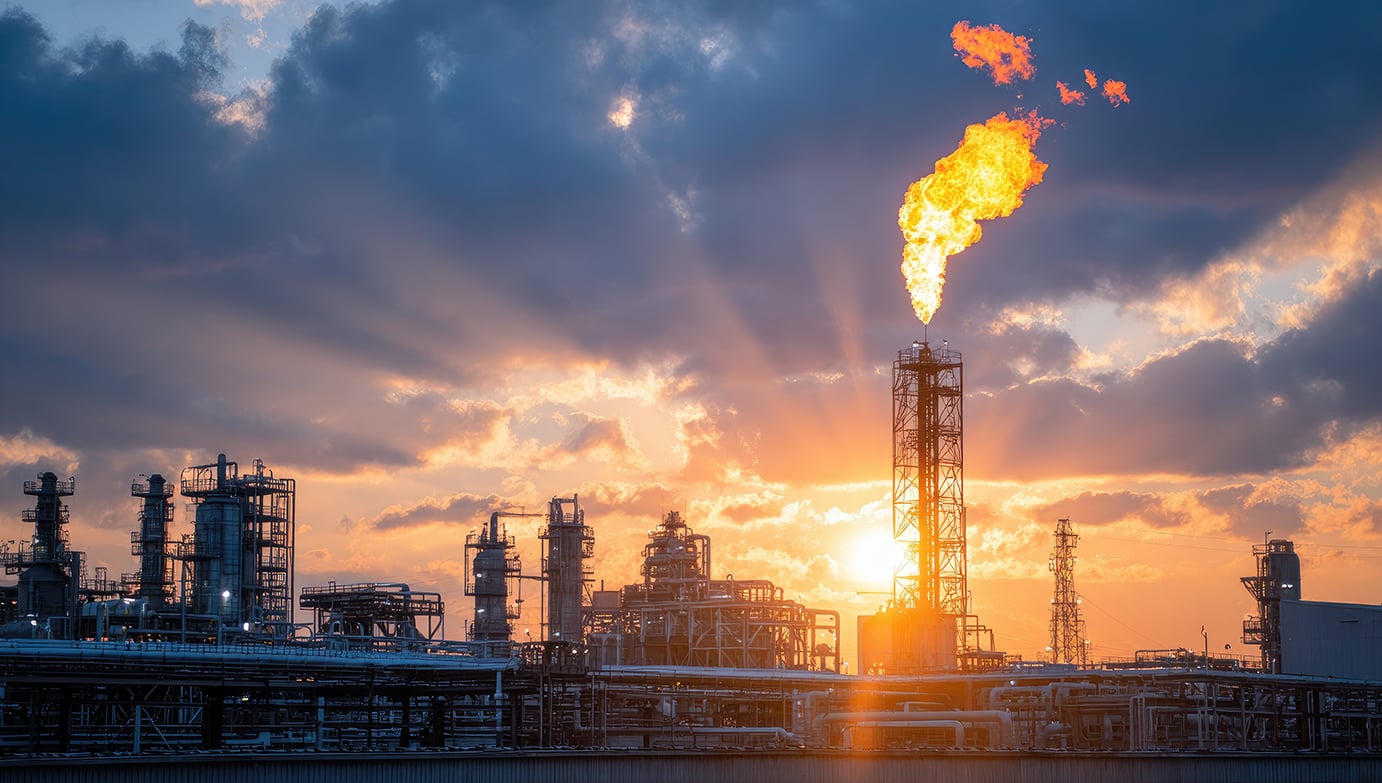
Supply growth points to a looser oil market
The global oil market is expected to become less tight in 2027 than in 2026 if Middle Eastern production and transport routes gradually recover, according to Naewna, reporting an outlook from SCB EIC. Capacity is also increasing among both OPEC+ and non-OPEC producers, while global demand growth is slowing. The result could be crude supply expanding faster than consumption, although geopolitical disruptions remain a major source of price volatility.
The United States, Brazil, Guyana, Argentina, Canada and the United Arab Emirates are among the countries expected to add production capacity. If tensions in the Middle East ease, returning output and transport capacity could reinforce the surplus. Supply security will remain as important as headline capacity because the Strait of Hormuz crisis has prompted Middle Eastern producers to invest in pipelines, alternative ports and other backup export routes.
Demand will continue to grow, but at a slower pace because of a fragile global economy, wider electric-vehicle adoption and improving energy efficiency. India and other emerging Asian economies are expected to assume a larger role as sources of incremental demand, reducing the market’s reliance on China as its main growth engine.
Crude prices and refining margins face downward pressure
SCB EIC expects crude prices to decline in 2027 from their 2026 level as supply constraints ease. The trajectory is unlikely to be smooth: wars, OPEC+ production decisions and renewed Chinese stockbuilding could sustain a geopolitical risk premium and generate sharp price movements.
Refining margins are also forecast to retreat gradually from the elevated levels recorded in 2026. Those margins were supported by disruptions to Middle Eastern crude and refined-product supply, lower run rates at some Asian refineries and continued tightness in diesel and other middle distillates. Global refinery runs and Middle Eastern processing capacity should recover in 2027, but repairs to plants and infrastructure mean normalization may take time.
From 2028 to 2030, refiners will face additional pressure from new capacity in China, India and the Middle East. Electric vehicles are weighing on gasoline demand, while jet fuel and diesel have better growth prospects. Plants able to switch feedstocks and raise the share of higher-value products should therefore be better positioned than less flexible competitors.
Petrochemical oversupply remains unresolved
Temporary supply disruptions may support petrochemical spreads, but they do not remove the sector’s underlying excess capacity. Demand is rising with packaging, medical products, electric vehicles, electronics and consumption in developing economies, yet growth is slower than in the past. New capacity in China, the Middle East and the United States is expanding more quickly, particularly through large projects with low-cost feedstock advantages.
Low utilization and price competition will continue to constrain commodity petrochemicals, especially polyethylene and polypropylene. Specialty and high-value-added products have a stronger outlook because technical requirements, certification and differentiated performance give suppliers greater pricing power. In Thailand, private investment and digital and electronics exports are supporting domestic plastics demand, but producers still need to shift portfolios toward higher-value products and control costs.
Thailand’s retail fuel prices may fall more slowly than global crude prices because the country’s oil fund still carries substantial debt and must preserve cash flow for repayment. Diesel demand has normalized after accelerated stockbuilding early in 2026, and its price is expected to remain broadly stable rather than decline immediately in 2027. Ethanol demand is forecast to rise by about 3% with gasohol use, while B100 demand could contract if the diesel blend is reduced from B7 to B5. For fuel retailers, limited volume growth and rising EV adoption increase the importance of convenience retail, fleet solutions and other non-fuel services.