Oil losses outweigh soybean rally as Vietnam’s MXV-Index falls 0.69%
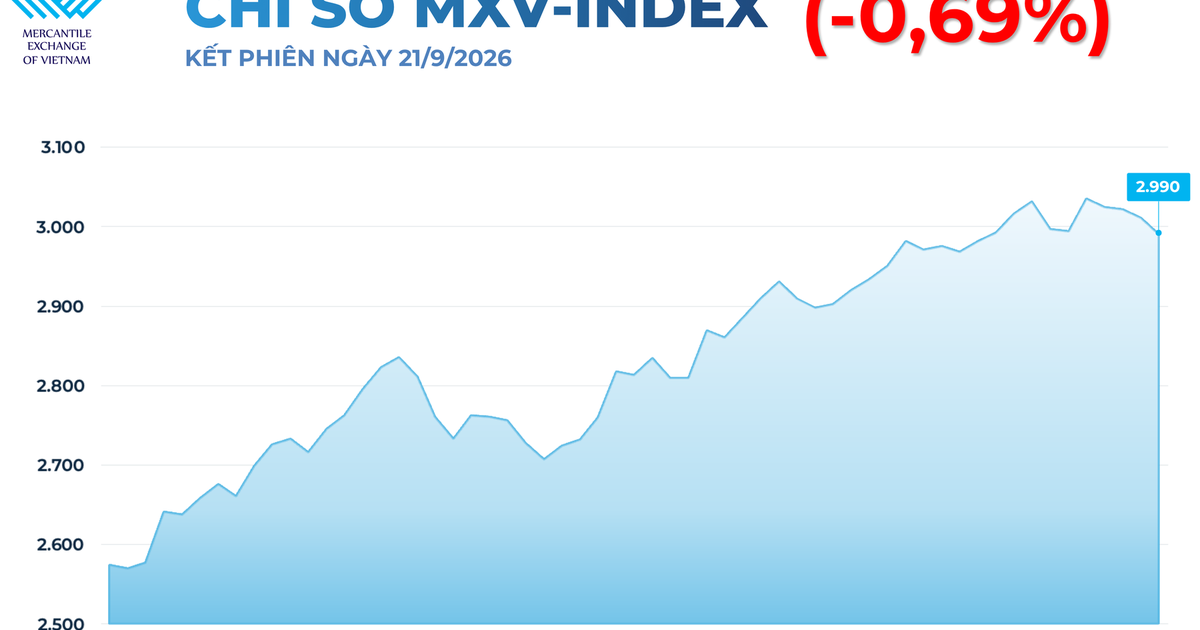
Vietnam’s MXV-Index fell 0.69% to 2,990 points on September 21 as losses across all five energy contracts outweighed an almost 2% rise in agricultural commodities. Brent and WTI declined sharply, while Chinese purchases supported US soybean and processed-product futures.
Energy losses drive the index lower
Vietnam’s commodity market benchmark declined on September 21 as a broad sell-off in energy outweighed gains across agricultural contracts. Vietnam Commodity Exchange data cited by Vietnam.vn showed the MXV-Index falling 0.69% to 2,990 points. All five energy commodities traded lower, while the agricultural group gained almost 2% and all seven of its component contracts advanced.
Energy prices extended their decline to a fourth consecutive session. Brent crude fell 3.4% to $100.34 a barrel and WTI dropped 4.51% to $95.78 a barrel, leaving both benchmarks at their lowest closing levels in almost two weeks. The Vietnamese Government News reported that expectations of possible US-Iran talks on the sidelines of the United Nations General Assembly in New York reduced the risk premium attached to potential Middle Eastern supply disruptions.
Saudi flows rise, but Hormuz risks remain
Saudi Arabia has also increased oil exports through Gulf ports to offset supply affected by the attack on its East-West pipeline. Satellite data cited by the Vietnamese Government News indicated that Saudi flows through the Strait of Hormuz had risen significantly from August, reaching about 2.9 million barrels per day. The East-West pipeline, which has capacity of approximately 4-5 million barrels per day, remains under restoration.
Physical shipping conditions, however, have not returned to normal. About 17 cargo vessels passed through Hormuz over September 19-20, compared with 37 one week earlier. Middle Eastern producers have increasingly used ship-to-ship transfers off Oman to maintain exports: transferred volumes rose to about 2.5 million barrels per day in September from 1.4 million barrels per day in August. US Energy Secretary Chris Wright has also said Washington could continue lending crude from the Strategic Petroleum Reserve if oil prices remain high.
Ngô Việt Hùng, head of investment advisory at Ho Chi Minh City Commodity Trading Joint Stock Company, cautioned that supply risks could not yet be considered resolved. Vessel traffic through Hormuz remains well below its pre-conflict level, while regional conditions remain unsettled. Oil prices may therefore remain highly sensitive to both US-Iran diplomacy and the pace at which Gulf export routes recover.
Chinese demand lifts the soybean complex
Agricultural contracts moved in the opposite direction. November soybean futures gained 1.9% to $488 per tonne. December soybean meal rose 2.7% to $406.1 per tonne, while December soybean oil increased 0.9% to $1,517.9 per tonne. The advance followed additional purchases by Chinese state-owned companies of at least four cargoes of US soybeans, equivalent to about 260,000 tonnes, for delivery in December and January.
The purchases came before Chinese President Xi Jinping’s scheduled September 23-25 visit to the United States and an expected meeting with US President Donald Trump. The prospect of further trade discussions provided support to soybean prices, but the durability of the rally will depend on confirmed Chinese orders. New-crop supply in the United States and favorable production prospects in South America could weigh on prices if buying slows.
For commodity traders, the session highlighted two distinct risk channels. Oil contracts reacted to expectations that diplomatic engagement and alternative export arrangements could ease immediate supply pressure. Soybeans responded to physical Chinese purchases and expectations for improved US-China trade relations. In coming sessions, Hormuz shipping activity, US-Iran contacts, the US harvest and South American weather will determine whether these moves persist.