Hormuz disruption and costlier sulfur squeeze Morocco's OCP, Le Monde reports
Revenues at OCP, Morocco's state-owned phosphate group, fell in the first half of the year, mainly because of higher sulfur prices, according to Le Monde. The French daily ties the pressure to disruptions in the Strait of Hormuz, the corridor used by Gulf sulfur cargoes. Sulfur is the input that turns phosphate rock into phosphoric acid and finished DAP and MAP fertilizer.
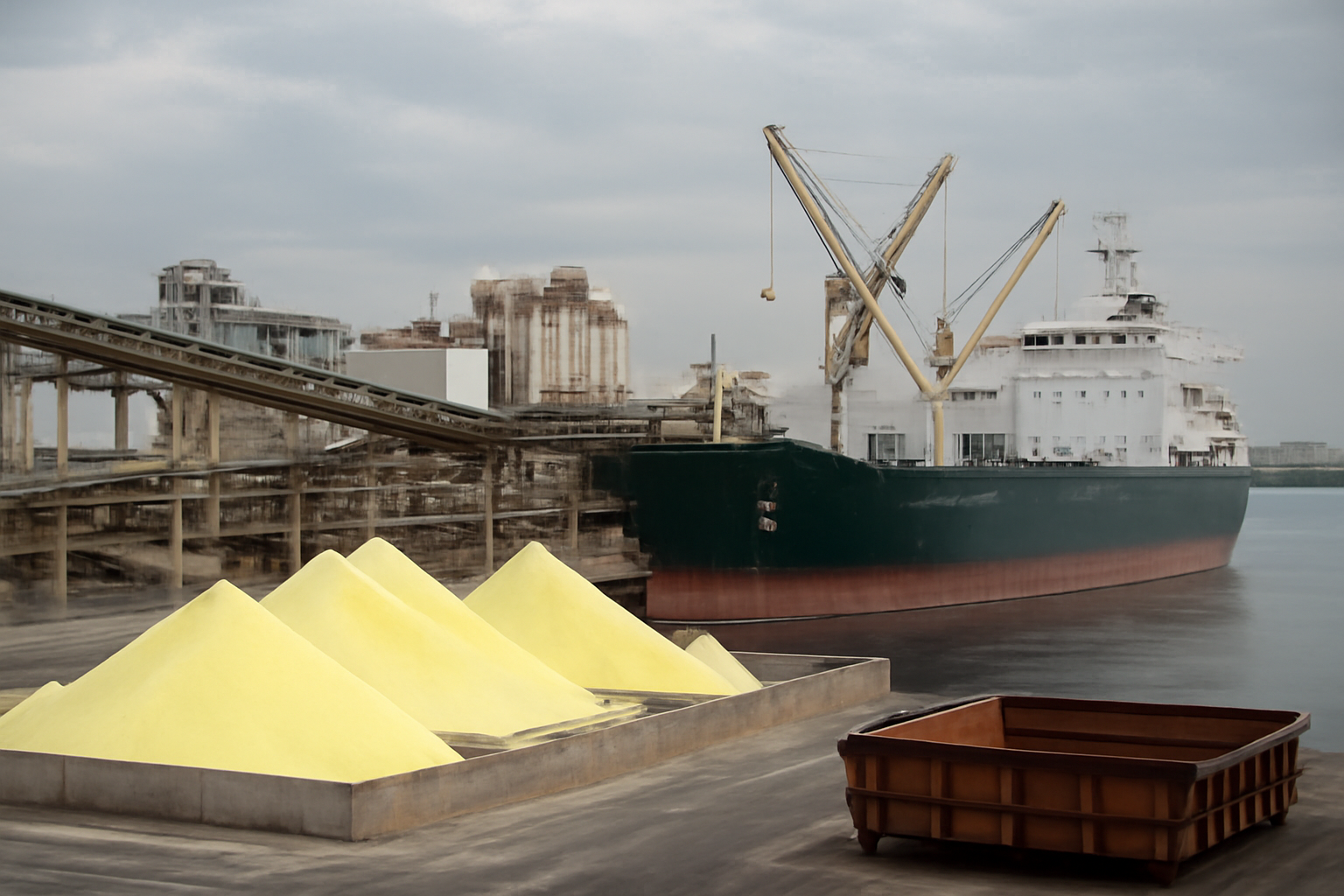
Revenues at OCP, the state-owned Moroccan phosphate group, dropped in the first half of the year, and higher sulfur prices were the main cause, Le Monde reported. The French daily linked the squeeze to disruptions in the Strait of Hormuz, the corridor through which sulfur cargoes loaded in the Gulf reach world markets.
Sulfur sets the cost base of phosphate fertilizer
Sulfur is not spread on fields in the volumes that matter here; it is burned. Phosphate producers convert it into sulfuric acid, and the acid attacks phosphate rock to yield phosphoric acid, the intermediate behind DAP, MAP and TSP fertilizers. Because the chemistry is fixed, the tonnage of sulfur needed per tonne of finished product barely changes. When the sulfur price moves, it moves straight into the cash cost of every tonne of processed phosphate, with no substitute to switch to and little room to dilute the effect through efficiency gains.
That mechanism explains why an input most farmers never see can decide a producer's half-year. OCP's competitive position has long rested on owning its phosphate rock while buying the second key input on the open market. The rock is domestic and its cost is largely under the group's control; sulfur is imported, priced internationally and shipped. The asymmetry works in OCP's favour when sulfur is cheap and against it when the market tightens.
The Hormuz factor
Most internationally traded sulfur is a by-product rather than a mined commodity. It is recovered when refineries and sour gas processing plants strip sulfur compounds out of crude oil and natural gas, which concentrates supply in the large hydrocarbon-producing regions of the Gulf. Cargoes leaving those terminals transit the Strait of Hormuz. Disruption in that corridor therefore reaches fertilizer economics quickly, according to Le Monde's account of OCP's first half.
- Freight and insurance costs rise for vessels routed through or around the area.
- Delivery schedules lengthen, pushing buyers to hold larger and more expensive inventories.
- Sellers gain pricing power, because by-product output cannot be increased on demand.
What it means for fertilizer buyers
OCP is one of the largest suppliers of processed phosphates to world markets, so its cost base is not a purely Moroccan matter. Buyers of DAP and MAP in South America, South Asia, Europe and Africa are exposed to the same chain: sulfur into sulfuric acid, acid into phosphoric acid, phosphoric acid into granulated fertilizer. Every link in that chain has now become more expensive to operate.
A producer facing a costlier input has two routes. It can absorb the increase, which compresses margins, or push it into offer prices, which raises the delivered cost of phosphate fertilizer for importers. Both outcomes matter at farm level, because phosphate application rates are highly sensitive to affordability and buyers routinely delay purchases or cut doses when granule prices climb faster than crop prices.
A state-owned balance sheet
OCP is held by the Moroccan state, as Le Monde notes, which means the group's results feed into public finances as well as into its own accounts. Phosphates and their derivatives are among Morocco's principal export lines, and processed products carry far more value per tonne than raw rock. Any sustained squeeze on revenue therefore has implications beyond a single reporting period, from the pace of capital spending on processing capacity to the contribution phosphates make to the country's trade balance. The variable driving all of it sits outside Morocco's borders, on a shipping route the group does not control.