South Korea’s Nubo targets Brazil’s soybean and corn fertilizer market
Nubo and Ekoa Life Sciences have signed a joint research agreement to develop high-efficiency fertilizers for soybeans and corn in Brazil. The partners plan local trials, Brazilian product registration and a commercial launch, with support from South Korea’s Rural Development Administration.
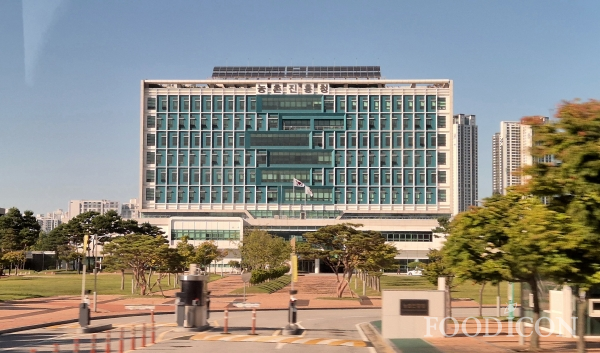
Nubo and Ekoa sign joint research agreement
South Korean green biotechnology company Nubo has signed a joint research agreement with Brazil’s Ekoa Life Sciences to develop high-efficiency fertilizers for soybean and corn cultivation. The project gives Nubo a route into one of the world’s largest markets for agricultural inputs, beginning with technical validation and moving toward local registration and commercialization.
Food Icon and Newsis, as carried by Financial News, reported that the two crops cover about 69 million hectares in Brazil, roughly seven times the land area of South Korea. Brazil is the world’s largest soybean producer and a major corn exporter, making performance in these crops commercially significant for fertilizer suppliers, biological-input companies and distributors.
Coated fertilizer to be combined with biological inputs
Under the agreement, Nubo will supply its HI-COTE controlled-release coated fertilizer and fertilizers designed for drone application. Ekoa will contribute biological technologies, including microbial inoculants used in biological nitrogen fixation, as well as access to its local distribution network. The companies will assess whether Nubo’s fertilizers and Ekoa’s microbial products can be combined in a coated formulation.
Trials will focus on soybeans and corn under Brazilian conditions. If the formulation proves viable, the partners intend to pursue product registration in Brazil and then move to a commercial launch. Neither company disclosed an investment value, trial schedule, production target or expected launch date.
Controlled-release fertilizers regulate when nutrients become available in line with crop growth. According to the Newsis report, the technology can supply nutrients through harvest after a single fertilizer application. Nubo expects this approach to reduce field labor and environmental pressure, although the partners must demonstrate its performance on local farms before seeking broader adoption.
Government support opens a route to South America
The cooperation developed with assistance from South Korea’s Rural Development Administration. Following the South Korea-Brazil summit in February, the agency formed a public-private delegation with South Korean companies in May and supported exchanges in Brazil. It also issued an English-language certificate confirming Nubo’s designation as a quality fertilizer, which the company used in discussions with Ekoa.
Nubo said it plans to build product competitiveness through trials on Brazilian farms and later expand its business across South America. For the South Korean fertilizer industry, the agreement also represents a move beyond its traditional focus on vegetables and fruit toward large-scale staple crops. The immediate opportunity remains conditional: technical compatibility, field results, regulatory approval and access to Ekoa’s distribution channels will determine whether the research agreement becomes a durable commercial position in Brazil.