Novo advances Saudi semaglutide manufacturing plan with Lifera
Novo Nordisk and Lifera are progressing plans to manufacture semaglutide medicines in Saudi Arabia, including Ozempic and Wegovy. Commercial production has not yet begun, and the partners have not disclosed a launch date, investment value or dedicated GLP-1 capacity.
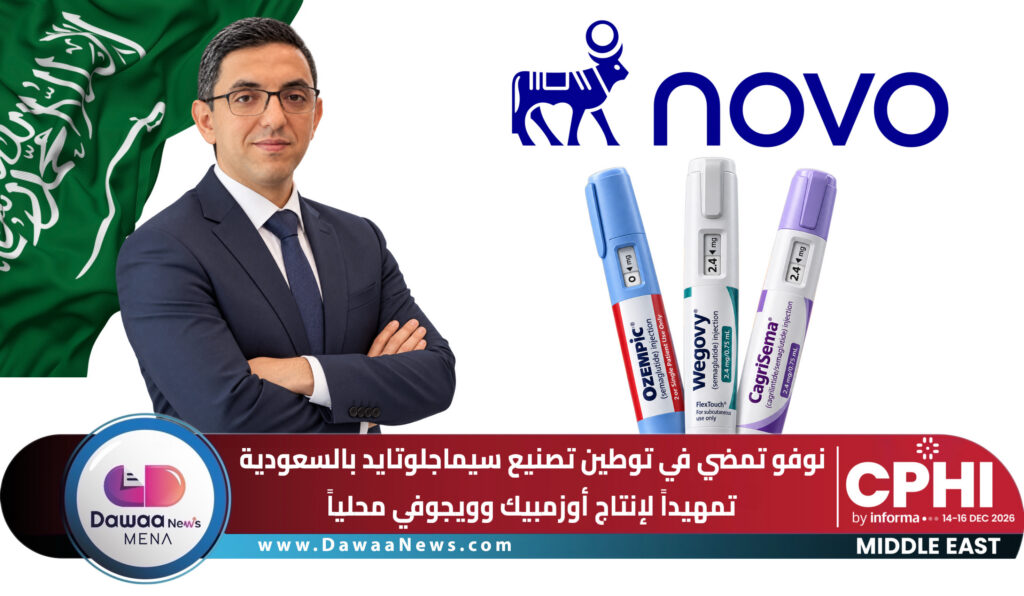
Localization moves beyond the 2025 agreement
Novo Nordisk is advancing plans to localize semaglutide manufacturing in Saudi Arabia, building on an agreement with Lifera that covers treatments sold under the Ozempic and Wegovy brands. Hamza bin Harkat, Novo’s general manager in Saudi Arabia, presented the progress during the Global Healthspan Summit in Riyadh in September 2026, according to Dawaa News.
The project is intended to transfer technology and knowledge, develop Saudi expertise and establish sustainable domestic capacity for innovative medicines. It also supports the country’s pharmaceutical supply-security objectives under Vision 2030 and the National Biotechnology Strategy. However, the latest announcement does not mean Saudi-made Ozempic or Wegovy is commercially available.
The initiative formally began on April 28, 2025, when Novo and Lifera, a company owned by Saudi Arabia’s Public Investment Fund, signed a memorandum of understanding to localize GLP-1 treatments for diabetes and obesity. The Saudi Press Agency said the agreement covered semaglutide products, including Ozempic and Wegovy, and envisaged a regional manufacturing center supplying Saudi Arabia and export markets.
Commercial timetable and GLP-1 capacity remain open
Novo and Lifera have not announced when commercial semaglutide manufacturing will begin. They have also not disclosed the project’s investment value, annual GLP-1 output, the first product expected from the Saudi line or the proportion of domestic demand that local production could cover. The work therefore remains at the technology-transfer, industrial-readiness and regulatory-qualification stage.
Semaglutide is the active ingredient in Ozempic, used for type 2 diabetes, and Wegovy, used for weight management under approved indications. The Saudi Food and Drug Authority lists Wegovy, Ozempic and the oral medicine Rybelsus among registered semaglutide products. Local manufacturing will require quality systems, regulatory approvals and a qualified supply chain in addition to production equipment.
Lifera’s manufacturing arm, SaudiBio, provides the industrial platform for the partnership. Lifera says the SaudiBio site in Sudair Industrial City is undergoing a major expansion and is expected to reach readiness consistent with Saudi Food and Drug Authority requirements and EMA Annex 1 in 2027. The facility occupies about 5,400 square meters on a 30,000-square-meter site, with total planned capacity of approximately 70 million units annually.
Insulin partnership provides an industrial base
The 70 million-unit figure should not be treated as disclosed semaglutide capacity. Lifera says 70% of the targeted capacity is allocated to Novo insulin products, while the balance is intended for other medicines supporting domestic supply resilience. No specific share has been assigned publicly to GLP-1 products.
Novo’s Saudi manufacturing relationship predates the semaglutide initiative. The partners have been transferring and manufacturing insulin products, and Lifera says their collaboration could eventually produce about 65% of Saudi Arabia’s insulin requirements locally. Saudi authorities have also announced arrangements to localize as many as seven insulin products.
Semaglutide would represent a more complex and higher-value stage of that industrial partnership. The 2025 memorandum identified exports to regional and international markets as a long-term objective, while Saudi Arabia was described as the first country outside Denmark approved by Novo to localize GLP-1 manufacturing technology.
The export ambition nevertheless depends on successful technology transfer, validation, regulatory clearance and sufficient capacity. Until the companies disclose a commercial start date and product-specific output, the immediate significance lies in building a pharmaceutical manufacturing base rather than changing current regional supplies of Ozempic and Wegovy.