Norway’s technology-led aquaculture model strengthens salmon production
Norway’s salmon industry is combining hatchery control, vaccination, offshore farms and automated processing to raise productivity and product consistency. Investments by Silver Seed and Nordlaks illustrate how research and engineering support production for European and global markets.
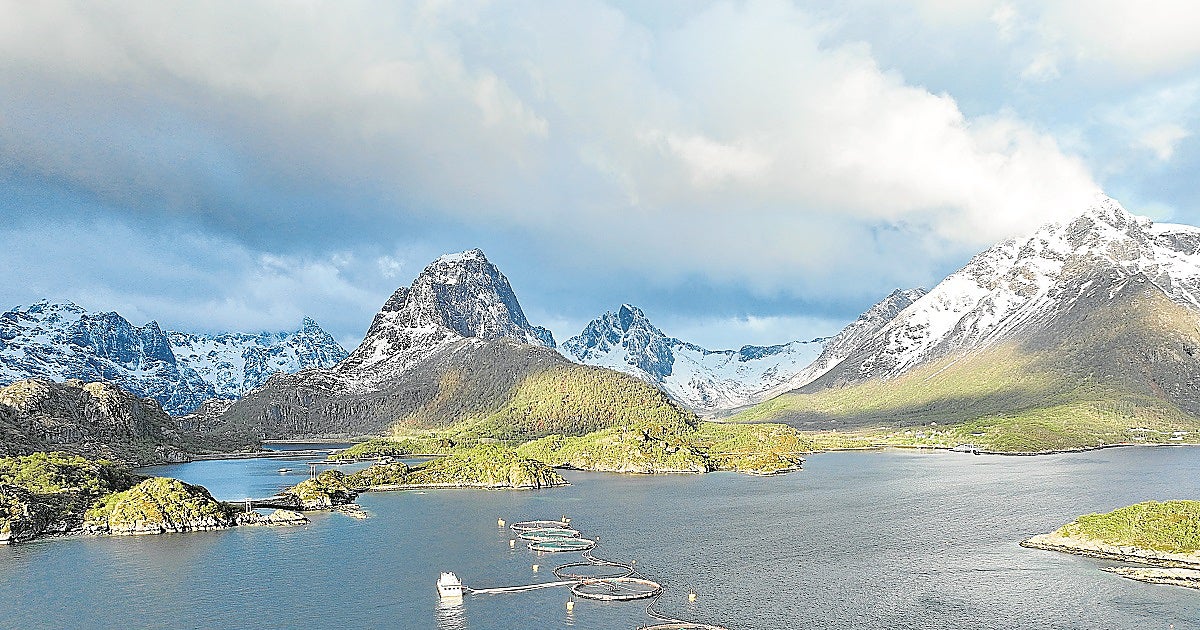
Technology across the production cycle
Norway’s position in global aquaculture rests on natural conditions, fishing experience and sustained investment in research and production technology. Tore Holvik, the Norwegian Seafood Council’s director in Spain, told ABC that the industry has focused on fish welfare, sustainability, digitalisation, farm monitoring and methods that produce more with fewer resources. For buyers, the intended results are consistent year-round quality, food safety, full traceability and continuously improving sustainability standards.
Norwegian salmon generally takes between two and three years to reach the usual market weight of 4-5 kilograms. Control begins at the hatchery. Silver Seed AS, based in the Lofoten Islands, is authorised to produce four million smolts annually. Eggs are kept in an incubator until hatching, while water temperature is tightly controlled and cannot exceed 8°C during the initial stage.
Silver Seed opened its current facility in 2020 following a €40 million investment. It employs 11 people, including three biologists, and has four departments through which fish move as they grow. Feeding and temperature are continuously monitored. Fish are transferred between tanks through pipes at specified sizes and vaccinated while still small. The company’s technology can vaccinate 22,000 juveniles per hour. According to ABC, vaccination helps ensure that 99% of Norwegian salmon receive no antibiotics.
Offshore capacity and fish welfare
Nordlaks has invested a cumulative €400 million in technology, ocean farms and offshore aquaculture platforms. Its Jostein Albert facility, officially Havfarm 1, is a 385-metre floating farm designed for exposed Norwegian waters. Six nets measuring 47 by 47 metres give it capacity for up to 10,000 tonnes of salmon. The project began its first fish generation in 2020 and has reached its sixth.
Salmon enter the farm at approximately 2 kilograms, remain for less than a year and typically reach or exceed 5 kilograms. Feeding and monitoring are managed from Nordlaks’ operations centre in Børøya, Hadsel. The structure is secured by 11 anchors weighing 22 tonnes each and a 90-tonne chain. Its mooring system allows it to rotate according to wind, waves and currents.
Nordlaks is also developing Storbatsegga, a semi-closed ocean tank with steel walls extending 20 metres below the sea surface. The design aims to protect salmon from sea lice and improve welfare. Norwegian rules also limit stocking density: fish may occupy no more than 2.5% of a tank’s total volume, leaving 97.5% for flowing water. Losses across the farmed-salmon production cycle are reported at 7-8%, compared with survival of only 7-8% among wild salmon.
Automation connects farms with markets
Technology continues after harvesting. Nordlaks operates a highly automated Atlantic salmon processing plant that handles about 7,000 tonnes of raw material annually. Machines remove heads and backbones and divide fish into two fillets. A filleting robot then makes precision cuts and portions the product by weight and customer specification, helping the processor maximise the value recovered from each fish.
Nordlaks produced close to 60,000 tonnes of salmon in 2025. The company has 839 employees, a fleet of 60 vessels and sends 60% of its production to the European market. It also reports that 88% of its facilities are electrified. Spain is among Europe’s most important and dynamic salmon markets, supported by consumption in traditional dishes as well as sushi, sashimi and poke. The combined hatchery, farming and processing system gives Norwegian suppliers control over quality and specifications from egg to final product, strengthening their ability to serve large food chains and international buyers throughout the year.