Norway leads Vietnam’s Atlantic salmon supply despite import tariffs
Norway remains Vietnam’s largest supplier of Atlantic salmon with 22,407 tonnes, ahead of Chile at 13,175 tonnes, according to the Norwegian Seafood Council. Its position persists despite Vietnamese tariffs of 10% on whole salmon and 15% on fillets.
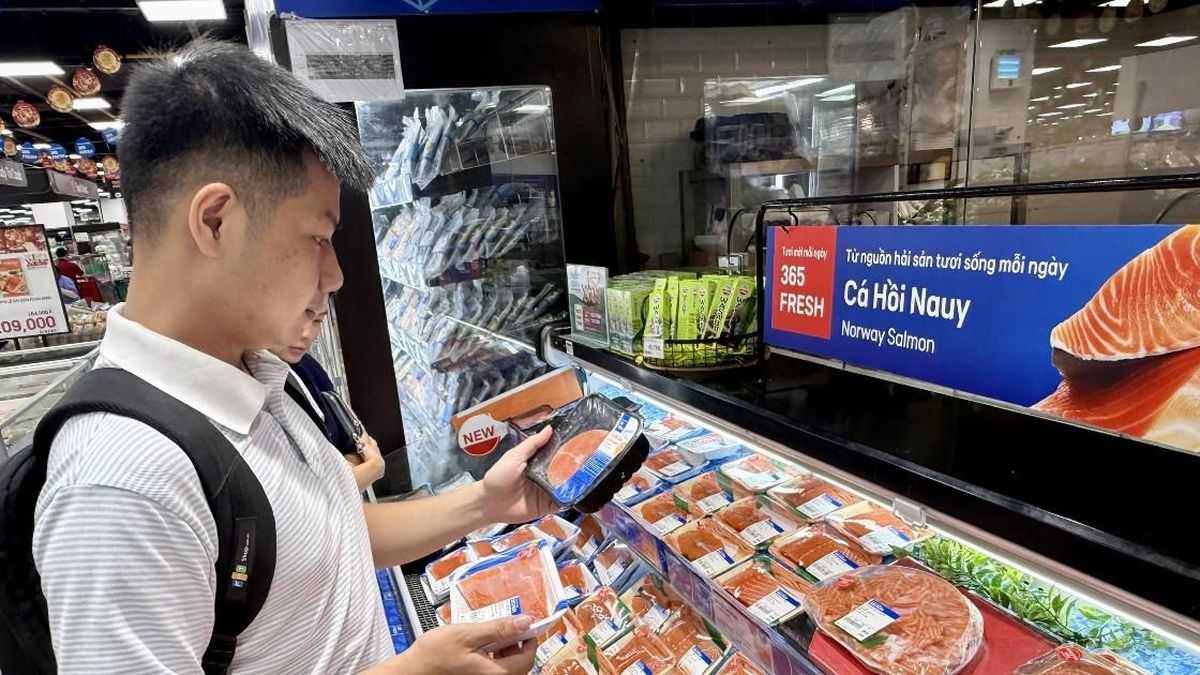
Norway retains a wide lead
Norway remains the largest supplier of Atlantic salmon to Vietnam, with total volume of 22,407 tonnes, including 6,828 tonnes of fresh salmon, according to figures presented by the Norwegian Seafood Council, or NSC. Chile ranks second with 13,175 tonnes, but only 597 tonnes of that volume is fresh fish. The United Kingdom supplies 4,349 tonnes, followed by Australia with 2,331 tonnes, the Faroe Islands with 78 tonnes and New Zealand with 54 tonnes. The figures, reported by VnEconomy, do not specify the period covered.
Norway’s lead is particularly pronounced in the fresh segment, which depends on temperature-controlled processing, transport and distribution. The country maintains its position even though Vietnam imposes a 10% tariff on whole Norwegian salmon and a 15% tariff on salmon fillets. That cost disadvantage makes Norway’s market share relevant for exporters, Vietnamese importers and food-service operators: purchasing decisions appear to reflect product availability, established logistics and perceived quality as well as price.
Trade agreement could alter costs
The salmon campaign was presented in Ho Chi Minh City on September 10, 2026, as Vietnam and Norway marked 55 years of diplomatic relations and sought to deepen bilateral trade. Vietnam and the European Free Trade Association, which includes Norway, concluded negotiations on a free trade agreement in July 2026. Once signed, ratified and implemented, the agreement is expected to expand opportunities for Norwegian goods, including seafood, in Vietnam.
The source did not provide an implementation timetable or the future tariff schedule for salmon. Any reduction in the existing duties could nevertheless improve the competitiveness of Norwegian fresh and processed products. For Vietnamese importers and distributors, lower border costs could create room for sharper retail pricing, wider menu use or higher margins. Competing suppliers, particularly Chile and the United Kingdom, would face stronger pressure in a market where Norway already holds the leading position.
Traceability supports premium demand
Consumer interest is increasingly tied to origin and quality. An NSC survey found that 52% of Vietnamese respondents preferred Norwegian salmon, although many consumers still believed their favored salmon originated in Japan. Norway’s association with Japanese cuisine reflects a market-development effort that began in 1985, when Project Japan brought Norwegian suppliers together with Japanese importers, chefs and restaurants. About 30% of Norwegian salmon is now estimated to be consumed raw in sushi and similar dishes worldwide.
Åshild Nakken, NSC’s Southeast Asia regional director, said Norwegian salmon is produced under food-safety and quality controls covering the full chain. The Norwegian Food Safety Authority oversees the chain, while Norway’s Institute of Marine Research independently tests salmon before it enters the market. Processing, chilling, transport and distribution in Vietnam are temperature-controlled to preserve freshness and texture. For buyers handling a premium, perishable product, those controls form part of the commercial proposition rather than only a consumer-facing claim.
Retail and restaurant campaign expands
NSC is supporting demand through its largest promotional program in Vietnam in 2026. Partners include Lotte Mart, Mena Gourmet, Mega Market, Morico, Botejyu and Sushi BON. Participating supermarkets and restaurant chains will offer special menus, point-of-sale promotions, tastings and interactive activities across the country. The campaign links Norwegian production, the product’s role in Japanese cuisine and its growing use in modern Vietnamese dishes. For the supply chain, the program combines origin messaging with direct product trials, potentially broadening demand beyond sushi outlets to supermarkets, restaurants and household consumption.