Northern Italy's 2026 Processing-Tomato Campaign Falls Short as Costs Rise
The 2026 processing-tomato campaign in northern Italy came in below expectations while costs along the chain increased, according to L'Informatore Agrario. The Italian farm publication reported on a supply-chain meeting convened by the Organizzazione Interprofessionale (OI) Pomodoro Nord Italia, where the season's difficulties and the sector's main challenges were the central topics.
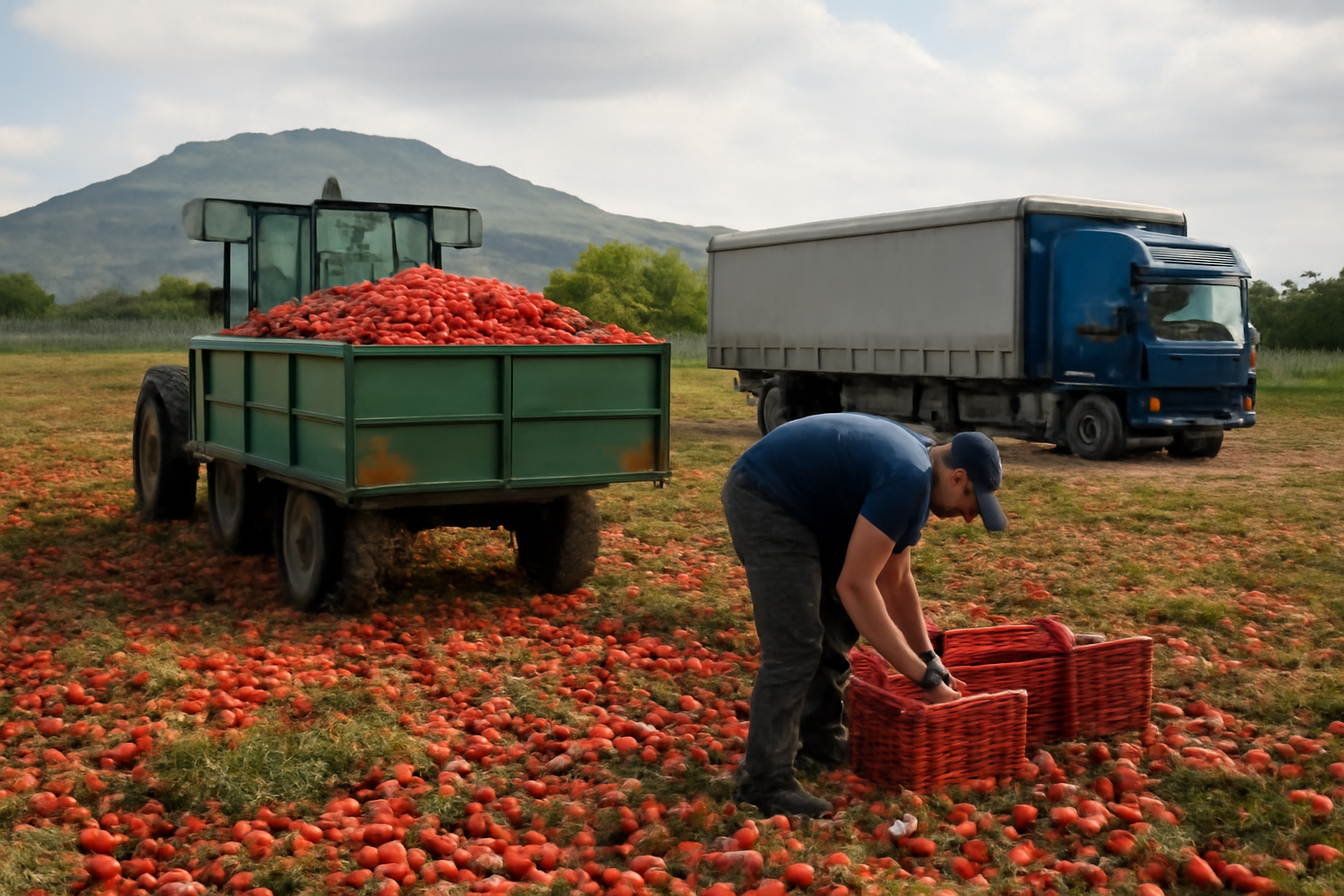
The 2026 processing-tomato campaign in northern Italy came in below expectations, and higher costs are squeezing the chain, according to L'Informatore Agrario. The Italian farm publication reported that the difficulties of the 2026 season, and the main challenges waiting for the sector, were the central topics of a supply-chain meeting held by the Organizzazione Interprofessionale (OI) Pomodoro Nord Italia.
A campaign short of expectations
Processing tomatoes are not a spot crop. Area and volumes are fixed in framework agreements negotiated before planting between producer organisations and processing companies, and factories are sized around the tonnage they expect to receive during a harvest window that lasts only a few weeks. A campaign that falls short of expectations therefore lands on both sides of the contract at the same time.
For growers, a weaker campaign means the tonnage actually delivered and paid for is below what was assumed when the crop went into the ground, while the cost of getting it there — land, seedlings, irrigation, harvesting — has already been incurred. For processors, lower intake means lines run below capacity during the only period of the year when they can run at all, and fixed costs are spread across fewer finished tonnes. Neither side can recover the gap later in the year, because the raw material simply is not there.
Costs rising along the chain
The cost side was the other half of the discussion reported by L'Informatore Agrario. The tomato chain carries an unusually broad cost base for an agricultural product: seedlings and transplanting, irrigation and the energy needed to pump it, mechanical harvesting, road haulage that must reach the plant within hours of picking, and then the industrial stage itself — steam, water treatment, packaging and the storage of a product that is made once a year and sold over twelve months.
Packaging and energy are the items that move fastest and are hardest for either party to control, and they sit mostly on the processor's side of the ledger. Field costs land on the grower. When both rise in the same season that deliveries fall, the margin available to be split between the two ends of the chain narrows from both directions at once.
Competitiveness of the northern district
Italy's processing-tomato industry is organised into two interprofessional districts, the northern one centred on the Po valley and a central-southern district, each negotiating its own terms between growers and processors. The northern district is heavily oriented towards passata, chopped and pulped products sold through branded and private-label retail channels, a large share of it exported. That exposes it to buyers who compare Italian product against pulp and paste from lower-cost origins, and to private-label tenders in which price is the main variable. Higher domestic costs in a year of weak supply are difficult to pass into those channels quickly.
What to watch next
The OI meeting framed the 2026 result as the starting point for the season ahead rather than a closed chapter. Several variables will decide whether the district holds its footprint:
- the reference price and contract terms agreed for the next campaign, and whether they cover the higher cost base growers are reporting;
- planted area, which signals how much of the rotation growers are willing to commit to tomatoes rather than to alternatives such as cereals and maize;
- water availability and irrigation costs across the Po valley through the summer;
- the ability of processors to recover higher input and packaging costs from retail and export customers.
None of this is settled by a single meeting. But a season that misses expectations while costs move the other way puts the next framework negotiation at the centre of the outlook for the northern Italian tomato chain, because that is where the cost increases of 2026 are either absorbed or passed on.