North Bengal tea factories halt green leaf purchases over pesticide concerns
Bought-leaf factories in North Bengal have stopped purchasing green tea leaves from small growers after banned-pesticide residue was reported in samples. Growers are seeking government intervention, warning that the suspension threatens a supply chain supporting more than 3 million people.
Factories suspend procurement
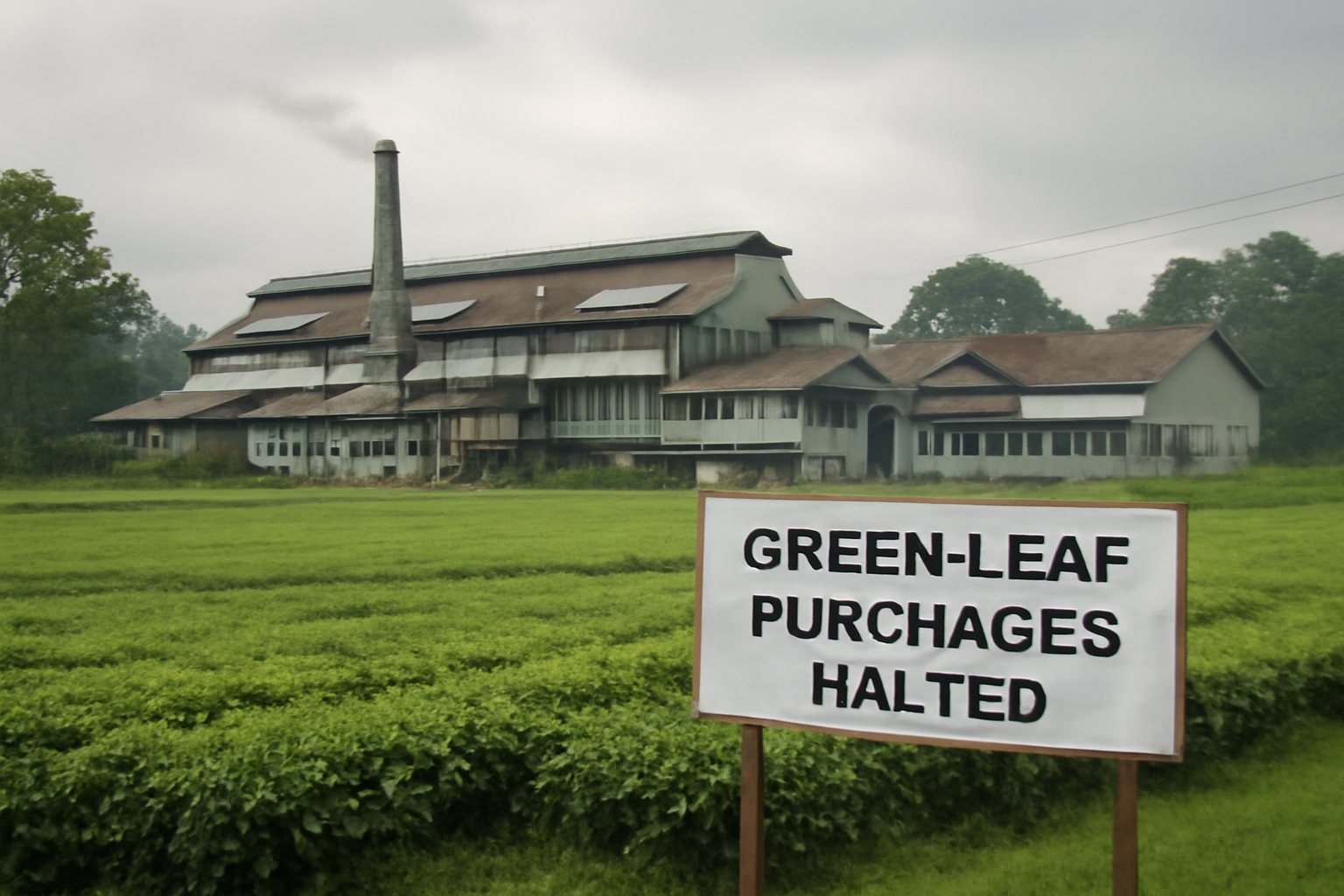
North Bengal’s tea supply chain has been disrupted after bought-leaf factories stopped purchasing green tea leaves from small growers. Members of the North Bengal Tea Producers Association suspended procurement, leaving growers without their principal channel for selling freshly plucked leaves and creating uncertainty for processors that depend on smallholder production.
The Times of India reported that bought-leaf factories stopped buying from growers on Monday after some samples were said to contain residues of monocil, a banned pesticide. The report did not identify the farms linked to the samples or disclose how many factories, growers or consignments were affected. No timetable for resuming purchases was announced.
Bought-leaf factories are standalone processors that purchase fresh leaves rather than relying exclusively on their own plantations. They convert the perishable crop into made tea for sale through auctions or private transactions. A prolonged interruption therefore affects both sides of the chain: growers cannot hold fresh leaves for an extended period, while factories risk losing their supply of raw material.
Growers seek state intervention
The Confederation of Indian Small Tea Growers’ Association, or CISTA, has written to West Bengal Chief Minister Suvendu Adhikari, asking him to urge factories to resume procurement, according to The Times of India. CISTA said the livelihoods of more than 3 million people in North Bengal could be affected if purchases remain suspended.
The exposure extends beyond farm owners. Green-leaf production supports pluckers, collection agents, transport operators and factory workers, while interruptions can also affect traders and buyers farther along the chain. Small growers are particularly vulnerable because their business depends on frequent collection and prompt delivery of leaves to nearby processing units.
CISTA has previously said that small growers, each cultivating less than one hectare on average, account for nearly 70% of West Bengal’s crush-tear-curl tea production. That concentration means a procurement dispute involving bought-leaf factories can quickly become a regional production issue rather than remaining a problem for individual farms.
Compliance pressure reaches the factory gate
The suspension comes amid wider scrutiny of pesticide compliance in India’s tea sector. Northeast Now reported that Hindustan Unilever Limited and Tata Consumer Products Limited told tea traders on July 23, 2026, that they would purchase only tea meeting Food Safety and Standards Authority of India requirements. The communications increase the commercial risk for processors if residues in finished tea exceed permitted standards.
Grower groups in neighboring Assam have also raised concerns over mandatory pesticide testing. The North East Confederation Small Tea Growers’ Association asked FSSAI to review its 2024 directive, arguing that compliance requirements could threaten nearly 150,000 small growers in Assam. It also noted that FSSAI officials had promoted biopesticides and conducted awareness programs on maximum residue limits.
Restart depends on traceability and testing
For North Bengal, the immediate issue is whether factories and growers can establish a testing and sourcing process that allows compliant leaves to keep moving. A blanket suspension protects processors from purchasing suspect material, but it also shifts the financial burden onto growers whose leaves may not have been tested or implicated.
The next steps will depend on discussions among producer associations, small-grower representatives, regulators and the West Bengal government. Until procurement restarts, the region faces lost leaf volumes, lower factory utilization and mounting pressure on growers who have limited alternatives for processing a highly perishable crop.