NongHyup launches unified Korean goat-meat brand as imports surge
NongHyup has launched a unified domestic goat-meat brand to strengthen quality control, consumer trust and market access for South Korean farmers. The initiative comes after imports rose from 526 tonnes in 2010 to 8,143 tonnes in 2024.
Domestic brand targets growing import competition
South Korea’s NongHyup has launched a unified goat-meat brand designed to differentiate domestic products from lower-priced imports and create more stable sales channels for local farmers. The initiative covers production, slaughter, processing and distribution, with common standards intended to strengthen confidence in the quality, hygiene and origin of Korean goat meat.
The launch comes as imported goat meat takes a larger share of a market supported by rising demand. According to the Ministry of Agriculture, Food and Rural Affairs, South Korean goat-meat imports increased from about 526 tonnes in 2010 to 8,143 tonnes in 2024, an expansion of more than 15-fold. The ministry plans to implement measures for developing the goat industry through 2029, as import competition puts pressure on the domestic production and distribution base.
Herd and farm numbers continue to rise
Domestic supply is also expanding. NongSuChukSan Newspaper reported that South Korea’s goat herd grew from 455,000 animals in 2021 to 450,000 in 2022, 459,000 in 2023 and 525,000 in 2024. It subsequently reached 619,000 before increasing to 707,701 by August. The number of goat farms rose from the low 12,000 range in 2022 to the high 12,000 range in 2023, 14,000 in 2024 and 16,267 in the latest reported year.
Greater supply could limit the durability of a recent seasonal price recovery. Goat auction prices in livestock markets fell to 6,193 won per kilogram in June, then rose during the summer seasonal-demand period to 6,719 won in July, 7,231 won in August and 7,611 won in September. The combination of a larger domestic herd and continued import growth leaves farmers exposed if consumer demand fails to keep pace.
Standards cover farms, processing and cold-chain sales
NongHyup Economic Holdings established a national council of livestock cooperative leaders for goat-industry development in May of the previous year and tested branded products through the Hwasun and Hadong livestock cooperatives. The pilots included goat soup and grilled patties from Hwasun and bulgogi from Hadong. A unified business plan was prepared in December, combining existing operations from the two cooperatives and NongHyup Moguchon under the NongHyup Goat brand, which launched in the month before the report.
Participating farms will use identification tags and individual records, while management standards include foot-and-mouth disease vaccination records and deworming. Slaughter and processing will take place in HACCP-certified facilities, supported by livestock-product safety testing. Refrigerated vehicles, chilled retail equipment and store hygiene requirements will form the cold chain. Meat will be processed through specialist goat facilities and original-equipment manufacturers, with distribution planned through NongHyup and Hanaro stores, online channels and specialist restaurants.
NongHyup Feed has also introduced the Myeongpum Ansim Goat feed range for young, finishing and breeding animals. The products are tailored to different growth stages, with formulations targeting early development, feed efficiency, rumen health, disease prevention and reproductive performance. The feeding program will support standardized farm management under the unified brand.
Retail test indicates demand, but traceability remains unresolved
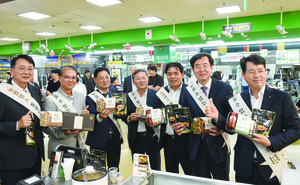
A tasting and sales event at NongHyup Distribution’s Hanaro Mart Yangjae branch drew sustained consumer interest. Most of the prepared inventory sold out, including 140 servings of fresh meat, 400 goat soups and 150 bulgogi products, alongside black-goat extract from NongHyup Moguchon. Industry representatives are nevertheless calling for an individual-animal traceability system, arguing that farm-level records alone may be insufficient. The agriculture ministry has identified traceability as a central issue and said it plans to support standardized management and brand development, although its current budget makes goat-meat consumption campaigns difficult.