NongHyup Launches Integrated Domestic Goat Meat Brand as South Korea's Dog Meat Ban Nears
NongHyup Economic Holdings has launched "NongHyup Goat", an integrated brand using 100% domestic animals with controls from rearing records through HACCP slaughter, processing and safety testing. The cooperative plans to extend the range from fresh cuts and goat soup into convenience meals and health foods. The move comes as South Korea's 2024 law bans dog meat breeding, distribution and sale from February 2027.
South Korea's largest agricultural cooperative has launched an integrated national brand for domestically produced goat meat, an attempt to move a product long confined to specialist restaurants into the mainstream meat market.
The livestock economy division of NongHyup Economic Holdings held the launch ceremony for the brand, “NongHyup Goat”, at the NongHyup Hanaro Mart store in Yangjae, Seoul, on the 21st, withbuyer.com reported. Goat cuts, goat bulgogi and other products were sampled and promoted at the event.
Control from farm to counter
The brand's core claim is full-chain control. “NongHyup Goat” uses 100% domestic animals and applies NongHyup's stage-by-stage management standards across production, slaughter, processing and distribution.
- At the production stage, rearing data is recorded electronically for each individual animal.
- Slaughter and processing take place at HACCP-designated facilities.
- Safety testing is carried out by the livestock research institute of NongHyup Economic Holdings before the meat is finished as a retail product.
Ahn Byung-woo, chief executive of the livestock economy division, said the brand was introduced so that consumers can choose with confidence through NongHyup's systematic management, adding that the aim is to provide consumers with food they can trust and to secure stable sales channels for goat farms, raising the competitiveness of the domestic goat industry.
From tonic dish to everyday food
The division plans to diversify the product range from fresh cuts through convenience meals to health foods, and to widen its sales channels. It also intends to build a stable production and supply base by working with regional livestock cooperatives and goat farms, and to stimulate consumption of the meat.
Goat meat in South Korea has been consumed mainly as boyangsik — restorative food eaten for stamina, typically in specialist restaurants. Moving it into supermarket chillers and processed-food aisles requires both a year-round product format and a consumer base that has never handled the meat at home. The brand's current line-up spans cuts, bulgogi and goat soup.
The 2027 dog meat ban
The commercial opening is tied to regulation. Under the law on ending dog meat consumption, enacted in 2024, the breeding, distribution and sale of dog meat will be fully prohibited from February 2027, removing one strand of a centuries-old summer tonic tradition built around the bok-nal days. According to withbuyer.com, goat meat is filling that space quickly, with restaurant franchises and NongHyup bringing goat-based products and brands to market in succession.
Franchises target the gift market
Bon IF, a leading Korean food service franchise operator, is running Chuseok promotions on its integrated ordering platform Bon Order and on Naver Smart Store. From 15 to 28 September, customers who buy or gift a gift card worth 30,000 won or more receive a 3,000 won discount coupon, usable at around 2,000 franchise outlets nationwide and in the Bon Order app across brands including Bonjuk, Bonjuk & Bibimbap, Bon Dosirak, Bon Seolleongtang and Easy Brewing Coffee.
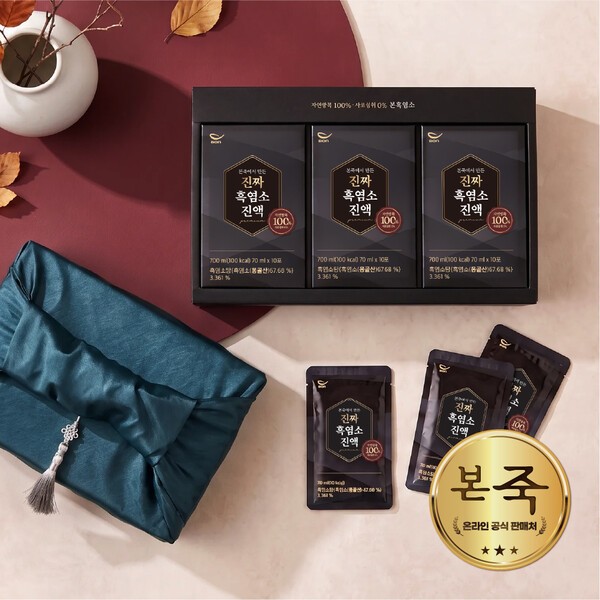
The promotion's featured item is black goat extract from the tonic brand Bon Heugyeomso Neungi Samgyetang. Every purchaser receives wrapping-cloth gift packaging and a 5,000 won paper gift voucher, while buyers taking larger quantities receive additional extract. The product, made by Bonjuk, is formulated to minimise the gamey odour characteristic of black goat, which the company presents as a way to reach first-time buyers. Bon IF says demand since the promotion opened has brought the item close to selling out.
Interest in black goat extract is rising in a tonic extract and juice market long dominated by red ginseng, withbuyer.com notes. The two approaches differ: franchises are entering through accessible gift products, while NongHyup is building an integrated brand spanning production to distribution. How far goat meat fills the space left by dog meat, and whether the wider market expands as a result, remains to be seen.