Non-alcoholic beer reaches 8.2% of European beer consumption
Non-alcoholic beer now represents 8.2% of European beer consumption, equivalent to roughly one in every 12 beers. Its rising share is pushing brewers to reassess product portfolios, production planning and investment priorities.
One in 12 beers is now alcohol-free
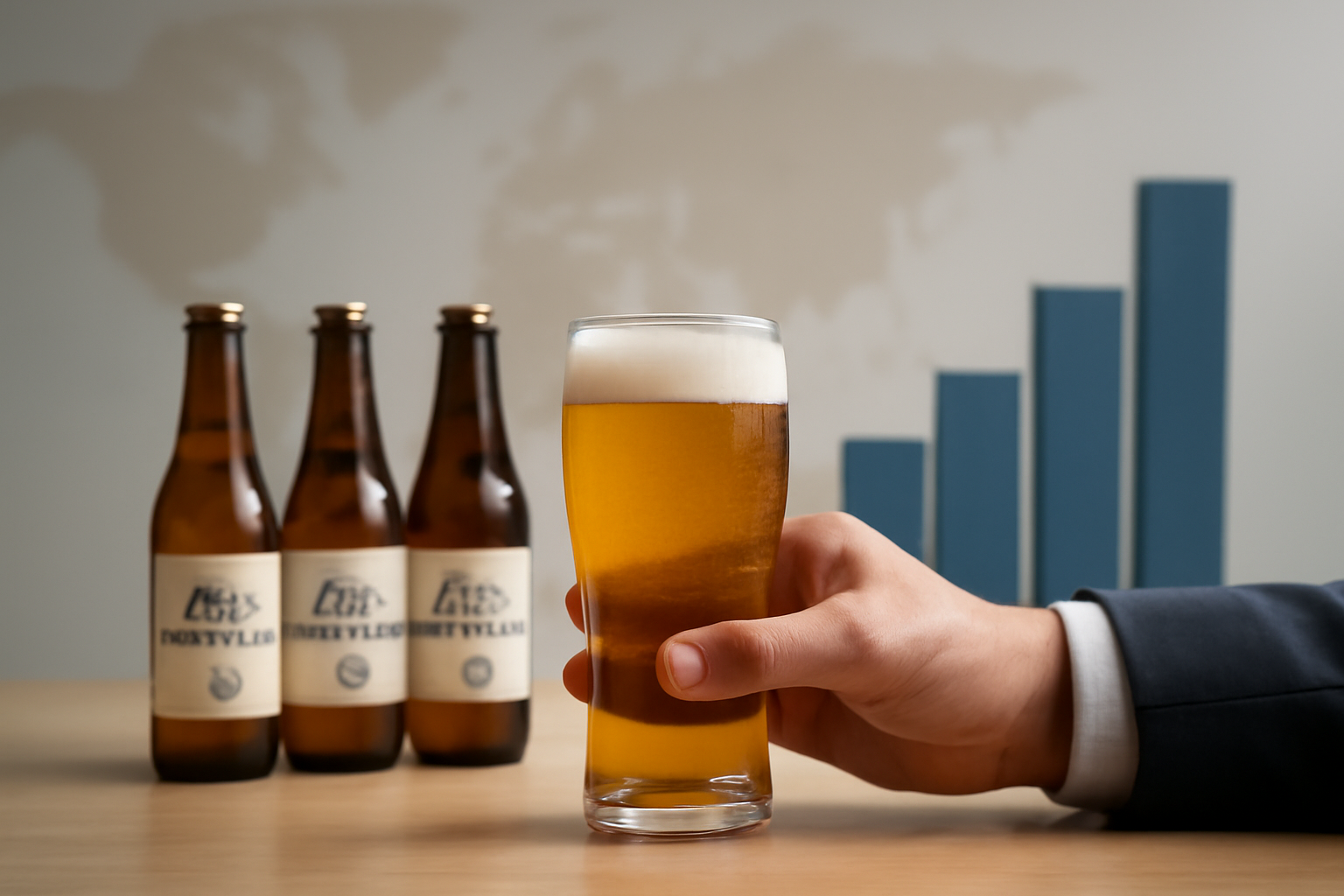
Non-alcoholic beer has expanded to 8.2% of total beer consumption in Europe, meaning approximately one in every 12 beers consumed belongs to the alcohol-free category. The figure shows that the segment is no longer peripheral to the European beer business and is becoming a material part of the market served by large brewers and smaller producers.
The increase gives brewers a clear reason to reconsider the balance between conventional and non-alcoholic products. An 8.2% share is large enough to affect decisions about brand portfolios, packaging formats, production schedules and the allocation of marketing budgets. It also raises the commercial cost of treating alcohol-free beer as a limited extension of an established alcoholic brand.
The available information does not provide consumption volumes by country, company-level sales or a comparison with previous years. It therefore does not show which European markets are leading the category or how quickly the 8.2% share was reached. Even so, the reported rise indicates that alcohol-free beer is gaining relevance across Europe rather than remaining confined to a small specialist niche.
Product mix becomes a production question
For producers, a larger non-alcoholic category creates operational choices as well as sales opportunities. Brewers must decide how much capacity, packaging and distribution support to assign to these products relative to their conventional ranges. The answer will differ between companies with dedicated alcohol-free brands and those that sell non-alcoholic versions of established labels.
The shift also makes consistency and availability more important. Once a category reaches one in 12 beers consumed, retailers and hospitality operators have stronger grounds to treat it as a regular part of their assortment. Brewers that cannot supply the category reliably risk giving shelf space and menu visibility to competing brands.
Portfolio breadth will matter, but simply adding more products will not guarantee stronger sales. Producers still need to determine which brands, formats and routes to market justify investment. The 8.2% share provides evidence of demand at the category level, but the supplied material contains no price, margin or cost data showing how profitability compares with conventional beer.
Investment follows a larger consumer category
For investors and industry analysts, the central issue is how brewers convert the category’s growing share into sustainable revenue. Companies may need to direct more capital toward alcohol-free production capability, product development and packaging, but the appropriate level of spending depends on demand in individual markets and the performance of specific brands.
Distributors and retailers will also have to monitor how the category changes purchasing patterns. A growing alcohol-free segment may alter the mix moving through warehouses, supermarkets, bars and restaurants even if total beer consumption does not rise. The immediate effect is therefore a change inside the beer market, not necessarily an expansion of the market as a whole.
The European figure establishes a significant benchmark: non-alcoholic beer accounts for 8.2% of consumption and approximately one beer in 12. For brewers, the category is now sufficiently large to influence routine decisions on capacity, portfolio management and commercial execution. Future evidence on national volumes, prices and company sales will be needed to identify which producers and markets are capturing the largest gains.