Alcohol-free beer on track for $49 billion in global revenue by 2030 as brewers widen portfolios
Global revenue from alcohol-free beer is forecast to reach $49 billion by 2030, close to double the 2021 level, according to Statista. The segment already accounts for more than 6% of global beer revenue and 2.1 billion litres of EU output, even as total European production fell 0.7% in 2025.
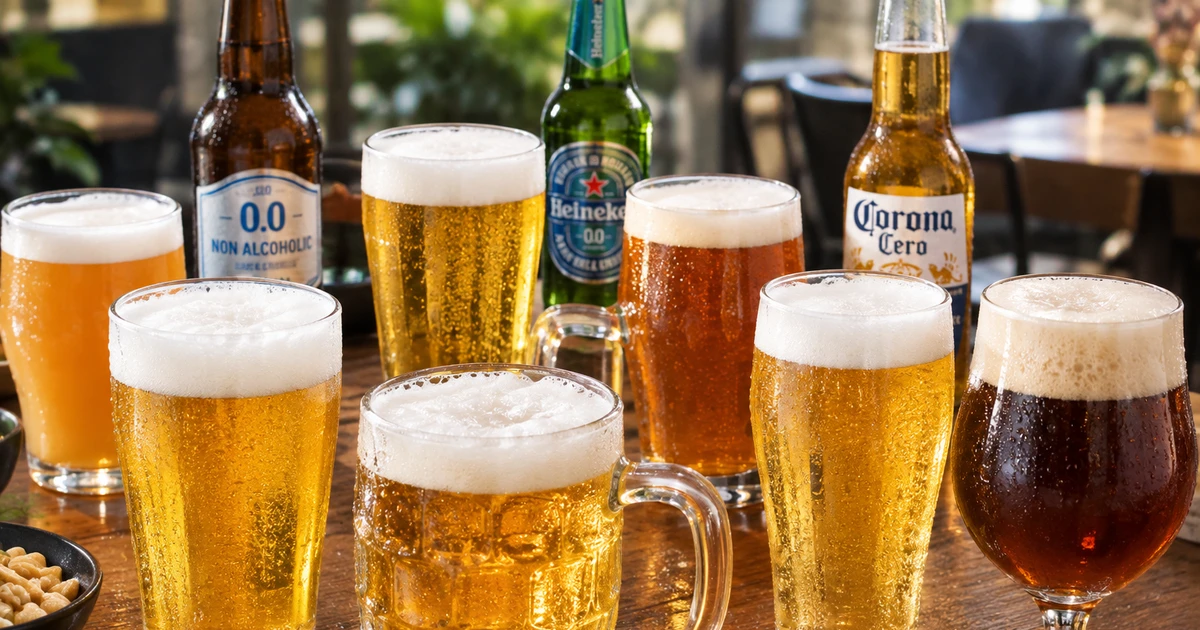
Alcohol-free beer is shifting from a side option to a strategic segment for the world's brewers. Global revenue for the category is forecast to reach $49 billion by 2030, close to double the 2021 figure, according to Statista data cited by Vietnamese business outlet kienthuc.net.vn. The expansion is taking place while conventional beer volumes stagnate or decline in many of the industry's largest markets.
Revenue share above 6% and double-digit growth
Statista puts alcohol-free beer at more than 6% of global beer revenue today, with annual growth of roughly 6% to 17% over the past five years. That wide range reflects how uneven the category's performance remains between markets: in some countries alcohol-free lines are already a standard part of every major brewer's portfolio, while in others distribution is only now being built out.
The path to $49 billion assumes the drivers of the past five years hold — investment in product development, broader availability through retail and foodservice channels, and consumer preference for drinks positioned around health. Traditional beer, by contrast, is growing slowly in many countries, which pushes brewers to defend revenue through the alcohol-free segment rather than through volume growth in their core ranges.
Europe: total output down, alcohol-free steady
Eurostat data shows the European Union produced 34.4 billion litres of beer in 2025, a decline of 0.7% from the previous year. Beer with an alcohol content below 0.5% and alcohol-free beer accounted for 2.1 billion litres of that total, more than 6% of output.
Spain stands out as a consumption market:
- Sales of alcohol-free beer rose 4.6% in 2025
- Volume reached 3.3 million hectolitres
- That equals 14% of all beer consumed in the country
The Spanish consumption share is more than double the EU-wide share of production, an indication of how far national drinking patterns diverge inside a single regulatory bloc.
Process technology drives the product range
A report published by Forinsightsconsultancy attributes the segment's innovation to new brewing processes, improved yeast strain development, precision fermentation, flavour stabilisation and more sustainable production methods. Those techniques address the category's historic weakness — taste — which had limited repeat purchase.
Product development is also moving beyond straight substitutes for lager. Brewers are launching organic, gluten-free and vegan versions, as well as functional alcohol-free beers combining natural ingredients, vitamins, herbs and electrolytes, aimed at health concerns and social-occasion drinking. The same report points to rising imports of premium non-alcoholic drinks, clean-label products, sustainable brewing techniques and novel flavours as long-term growth drivers in both developed and emerging markets.
Health claims and labelling remain unsettled
Evidence of nutritional benefit is limited. A 2026 study covering 65 beers found that vitamin B6 content in alcohol-free and alcoholic beer can be comparable, but the researchers did not treat this as grounds for classifying alcohol-free beer as a nutritious drink.
Labelling is a second open question. "Alcohol-free" does not always mean 0% alcohol: some products in the category still contain trace amounts, depending on each market's rules. kienthuc.net.vn notes that checking the stated alcohol content on the label remains necessary, particularly for consumers who must avoid alcohol entirely. For exporters, the divergence in national definitions is a practical compliance issue as cross-border trade in the category grows.