Nigeria targets 1 million tonnes of cashew production by 2036
Nigeria’s cashew industry has set a target of 1 million tonnes by 2036, nearly three times its 2025 harvest. The national roadmap also seeks to raise domestic processing from 15% to 50%, but ageing orchards, weak quality control and an earlier missed production target underline the execution risks.
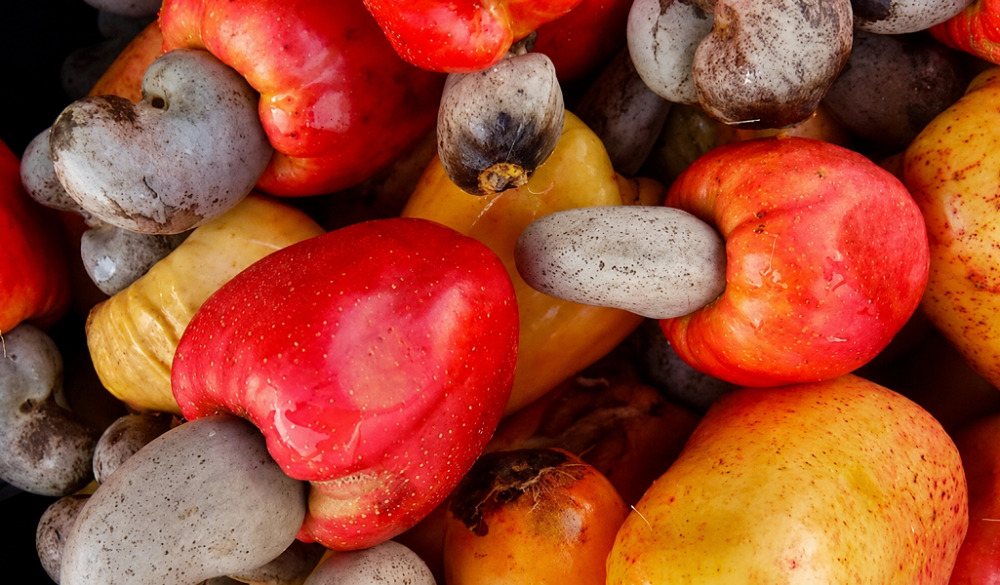
Roadmap targets a near-tripling of output
Nigeria’s cashew industry is targeting production of 1 million tonnes by 2036, nearly three times the 340,000 tonnes harvested in 2025. La Tribune reported that the National Cashew Association of Nigeria, or NCAN, announced the ambition on 28 July during the launch of a national roadmap for the industry.
The plan is designed to coordinate public and private action, attract investors and improve the organisation of the value chain. Its measures include strengthening producers’ capabilities, widening access to inputs, raising yields and encouraging investment in shelling and processing plants. The roadmap calls for 50% of Nigeria’s cashew crop to be processed domestically.
Cashew remains one of Nigeria’s strategic agricultural exports alongside cocoa and sesame. Nigeria was the world’s second-largest producer in 2025, according to La Tribune, behind Côte d’Ivoire. The regional leader had already exceeded 1.5 million tonnes, giving Nigeria a substantial benchmark in both raw supply and processing.
Domestic processing is the second test
Only 15% of Nigeria’s current harvest is processed locally. Raising that share to 50% would redirect a much larger volume of nuts into domestic shelling and processing, with potential benefits for industrial revenue and employment. It would also require factories to expand in step with farm output, rather than leaving new production dependent mainly on raw-nut sales.
Recent investment includes a proposed plant in Ogun State by Singapore-based agricultural commodities trader Robust International. The company announced the project in February. Once operational, the facility is expected to lift Robust International’s total processing capacity to 220 tonnes per day from 100 tonnes currently.
Nigeria has a broad production base: cashew is cultivated in 27 states and the Federal Capital Territory. The roadmap therefore depends on coordination among state governments, cooperatives and private companies, as well as the mobilisation of producers across widely dispersed growing areas.
Earlier target highlights execution risks
The new objective follows an earlier production pledge that was not achieved. In 2017, NCAN targeted output of 500,000 tonnes by 2020. La Tribune identified ageing orchards, greater vulnerability to disease, limited access to improved varieties and pest pressure among the constraints holding back farm performance.
Quality control is another commercial weakness. The absence of an effective system has led to discounts for Nigerian cashews on the international market and damaged the product’s reputation. Governance is also concentrated in NCAN, currently the only umbrella organisation regulating the industry, despite the scale and variety of problems across the value chain.
Analysts cited by La Tribune pointed to Côte d’Ivoire and Ghana as possible institutional models. Côte d’Ivoire created the Cotton and Cashew Council to monitor, regulate and develop its sector. Ghana has a Cashew Council and the Tree Crops Development Authority. For Nigeria, reaching 1 million tonnes will therefore require more than planting and factory announcements: it will depend on orchard renewal, improved inputs, enforceable quality standards and sustained government coordination.