New Zealand’s main malt mill to close in September, raising import reliance
Malteurop will close its Marton malt mill at the end of September, affecting 14 workers and a facility linked to about 70% of New Zealand’s malt market. Local competitor Gladfield expects opportunities for domestic supply but says the country will become more reliant on imported malt.
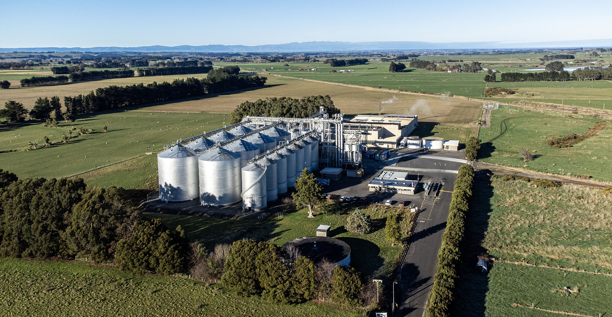
Malteurop prepares to close Marton facility
Malteurop will close New Zealand’s largest malting factory at Marton at the end of September, removing a major domestic supplier to the brewing industry and leaving 14 mill workers facing uncertain employment. The multinational malt producer has operated the facility since 2008.
According to a Local Democracy Reporting article published by Wellington.Scoop, Malteurop supplies around 70% of New Zealand’s total malt market. Its customers include major brewers Lion, DB and Asahi. The closure therefore affects more than one regional factory: it changes how some of the country’s largest beverage producers may source a central brewing ingredient.
Rangitīkei mayor Andy Watson said the district was losing another source of long-term, stable employment at a difficult time. He also pointed to the pressure on grain farmers across New Zealand as production costs rise. Those growers now face uncertainty over demand previously associated with the Marton operation.
Brewers may turn to Australian and local supply
Malteurop has an existing site in Geelong, Australia, capable of serving the entire New Zealand market, Wellington.Scoop reported. Analysts therefore expect large customers to shift part of their purchasing across the Tasman while continuing to obtain some malt domestically.
Gladfield, Malteurop’s main New Zealand competitor, is based in Canterbury and expects to gain business after the Marton closure. The company said it hoped to supply key breweries, but acknowledged that shutting the mill would make New Zealand more dependent on imported malt.
The likely outcome is a more concentrated domestic supply base combined with a larger role for Australian production. For breweries, the change may require adjustments to procurement and logistics. For local maltsters, it creates an opening to compete for large accounts. For grain farmers, however, the loss of a nearby processing outlet could narrow local sales options at a time when rising costs are already weighing on the sector.
Regional employment absorbs another setback
The closure follows substantial industrial job losses in the wider area. The Karioi pulp mill and Tangiwai sawmill closures in 2024 eliminated roughly 230 jobs across Rangitīkei and Ruapehu. The Marton decision is smaller by headcount, but it adds to the erosion of established processing employment and commercial links that local families had maintained for generations.
Watson, a governor of the Mayor’s Taskforce for Jobs New Zealand, has begun considering support for workers who may need new employment. He said several companies had approached him after the announcement to express interest in the Marton site’s grain storage and production potential. He passed those approaches to the relevant parties.
That interest leaves open the possibility that the industrial site could attract another operator, although no transaction or replacement project has been announced. Until a new use is secured, the immediate effects remain the loss of 14 jobs, uncertainty for regional growers and a shift in malt sourcing toward Canterbury and imports from Australia.