New Zealand kiwifruit growers target India as tariff-free quota doubles trade capacity
New Zealand currently exports about 7,500 tonnes of kiwifruit to India. A tariff-free quota of up to 15,000 tonnes under the New Zealand–India Free Trade Agreement could double the volume growers can supply without tariffs.
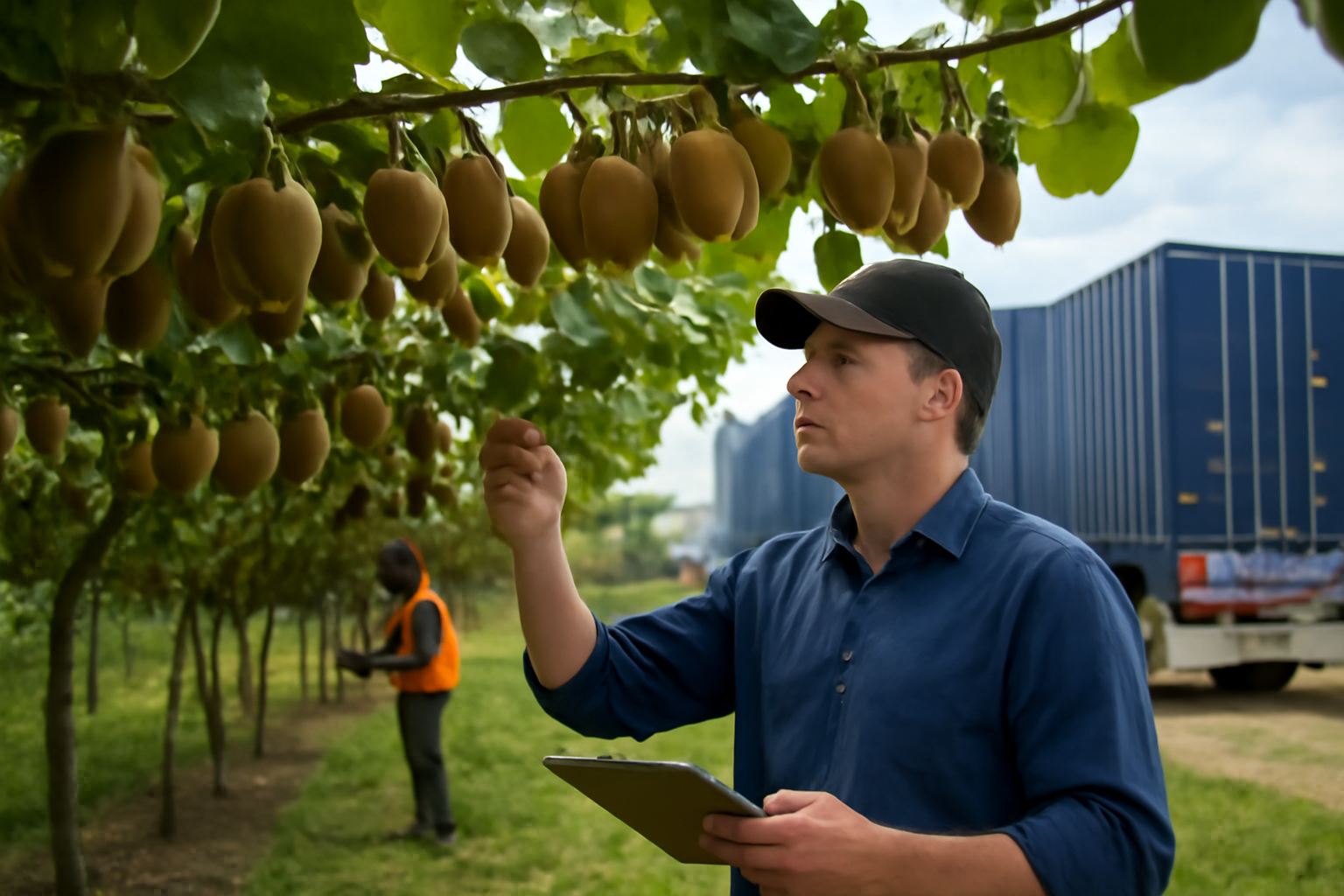
Tariff-free quota creates room for expansion
New Zealand’s kiwifruit industry is strengthening its commercial relationship with India, combining increased market access with cooperation on growing technology. The Financial Express reports that New Zealand currently exports about 7,500 tonnes of kiwifruit to India. Under the New Zealand–India Free Trade Agreement, up to 15,000 tonnes can enter the Indian market tariff-free.
Lorraine Mapu, ANZ Managing Director of Business and Agriculture, said the arrangement enables growers to supply roughly twice the current volume without tariffs. The additional capacity gives New Zealand producers a defined route for expanding sales in India, which the publication describes as a major growth market. It also creates an opportunity for Indian importers and distributors to handle larger volumes of premium New Zealand fruit, although the report does not provide forecasts for demand, prices or the timing of any increase.
Premium production supports the export strategy
The trade opportunity is backed by a New Zealand industry generating around NZ$5 billion annually. At Sandhu Farms in Katikati, in the Bay of Plenty, production reaches approximately 20,000 trays per hectare. The premium SunGold crop generates more than NZ$200,000 in revenue per hectare, according to The Financial Express. The family-run orchard covers 12 hectares and records annual turnover of NZ$2.4 million.
Those returns depend on tightly controlled production and export standards. Navjot Singh of Sandhu Farms said growers face extensive rules, administrative work and fruit testing before the Zespri cooperative approves exports. Billy Singh, whose father moved to New Zealand, said New Zealand growing techniques could help Indian producers improve pollination and canopy management. His comments point to a relationship that could extend beyond shipments of fruit to the transfer of orchard knowledge needed to produce premium kiwifruit in India.
Technology and resilience shape cooperation
New Zealand’s production model was tested when the PSA virus devastated orchards about a decade ago. The Financial Express describes how Stephen Kenna of KWKiwi Farms rebuilt through research, genetics and new production methods. Varieties including Gold3 helped the wider industry recover. His son Daniel later returned to the family orchard and represents a generation combining established farming knowledge with digital tools, sustainability measures and data-led management.
ANZ regards kiwifruit orchards as strong agricultural assets because growers have demonstrated resilience through major production challenges. Mapu said the bank offers green loans and farming uplift facilities to support investment as growers address sustainability requirements. ANZ is assisting technology and sustainability investment in New Zealand and could collaborate with India in the sector. For market participants, the developing relationship has two distinct components: a tariff-free channel capable of accommodating another 7,500 tonnes relative to current exports, and possible technical cooperation that could raise Indian orchard standards. The immediate commercial opportunity remains New Zealand fruit entering India, while the longer-term relationship may also involve Indian growers adopting New Zealand production practices.