Nestlé Starts Glass-Jar Coffee Line at Tri An Plant in Vietnam, Serving 11 Markets
Nestlé has begun operating a glass-jar packaging line for soluble coffee at its Tri An factory in Vietnam, with capacity of more than 350,000 jars a day. The line has been running since August and supplies 11 markets with Nescafé Gold and Nescafé Classic. The start-up extends Nestlé's 30-year build-out of coffee processing in Vietnam, backed by the NESCAFÉ Plan and more than 21,000 farming households.
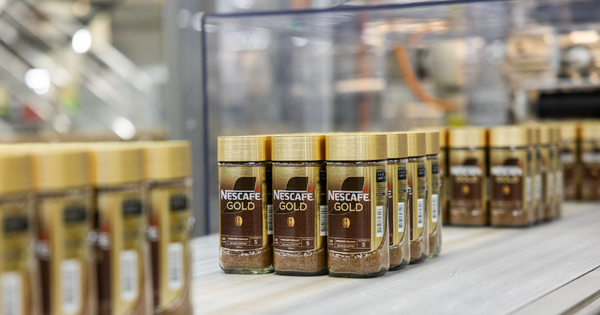
Nestlé has started production on a new glass-jar packaging line for soluble coffee at its Tri An factory in Vietnam. The line, known as the Jar Line, has been running since August with capacity of more than 350,000 jars a day and supplies 11 markets, according to Bao Phap Luat.
The line can switch between Nescafé Gold and Nescafé Classic and handle several pack formats depending on what each destination market requires. That flexibility is the operational core of the investment: a single line serving 11 markets at once has to hold output volume, quality control and format changeovers together.
Three decades of coffee capacity in Vietnam
Nestlé described the Jar Line as the latest step in more than 30 years of building a coffee production network in Vietnam, spanning growing regions, farming support, processing and export. Over that period the Tri An plant accumulated the technology, workforce and operating experience needed to run equipment to the company's global standards. That base, the company said, is what allowed the plant to take on a line such as the Jar Line and to move a larger share of the value chain into Vietnam.
Vietnam is one of the world's largest coffee producers, with robusta the dominant crop. Bao Phap Luat noted that a raw-material advantage alone does not lift the value of Vietnamese beans; it has to be matched by development across growing areas, cultivation methods, processing and manufacturing capability, and compliance with international market standards.
The NESCAFÉ Plan and the raw material base
Nestlé treats Vietnam as an important market in its long-term Southeast Asia strategy and has invested across the coffee value chain, starting at farm level. The NESCAFÉ Plan, launched in Vietnam in 2011, has so far worked with more than 21,000 farming households in the country's main growing areas. The program covers technical training in cultivation, support for replanting ageing coffee trees, and more efficient use of resources in production.
It also promotes regenerative agriculture practices and sustainable farming standards, aimed at improving yields, bean quality, farmer incomes and production capability. Nestlé frames the work as securing input quality before the beans reach the factory.
Automation, training and the local supplier base
Truong Hoang Phuong, director of the Nestlé Tri An factory, said the Jar Line was designed with a high level of automation and digitalisation, running as an integrated process from raw-material intake through to finished product. Sensors, cameras and real-time data management allow continuous monitoring of production and handling of operating information.
Before start-up, Vietnamese engineers and staff trained in the United Kingdom, Spain and Australia and worked alongside international specialists during installation, commissioning and process standardisation. The Tri An team now operates the Jar Line independently to Nestlé's global standards, which the company says builds a base for taking on more demanding technology later.
The line also draws in local industrial suppliers. Domestic companies can take part in packaging, materials, logistics, equipment maintenance and quality inspection. Binu Jacob, chief executive of Nestlé Vietnam, said that when Vietnamese suppliers work with the company and progressively meet international standards, the benefit runs both ways: suppliers gain access to international standards in quality, safety, improvement and risk management, which strengthens their capability and competitiveness in the supply chain.
Two suppliers were cited as examples:
- Liconin, originally a Vietnamese electromechanical business that built steel structures for the factory, expanded its capability and scope over four years working with Nestlé and is now able to work with other international companies as well.
- Tuan Manh Logistics, started by a group of transport university graduates, increased its truck fleet tenfold between 2013 and 2025 and widened its customer base after working to the standards of a foreign-invested client.
Jacob described foreign-invested companies helping domestic firms grow as a win-win story. Bao Phap Luat characterised the Jar Line start-up as a marker of the role high-quality foreign investment plays in domestic manufacturing capacity, technology transfer and supply chain development.