Neptune Energy advances deep-brine lithium project around 43 million-tonne Altmark resource
Neptune Energy is progressing a direct lithium extraction project in Germany’s Altmark after an independent assessment identified a 43 million-tonne lithium carbonate equivalent resource. Pilot work has produced battery-grade material, but commercial recovery, costs and final capacity remain subject to further testing and permits.
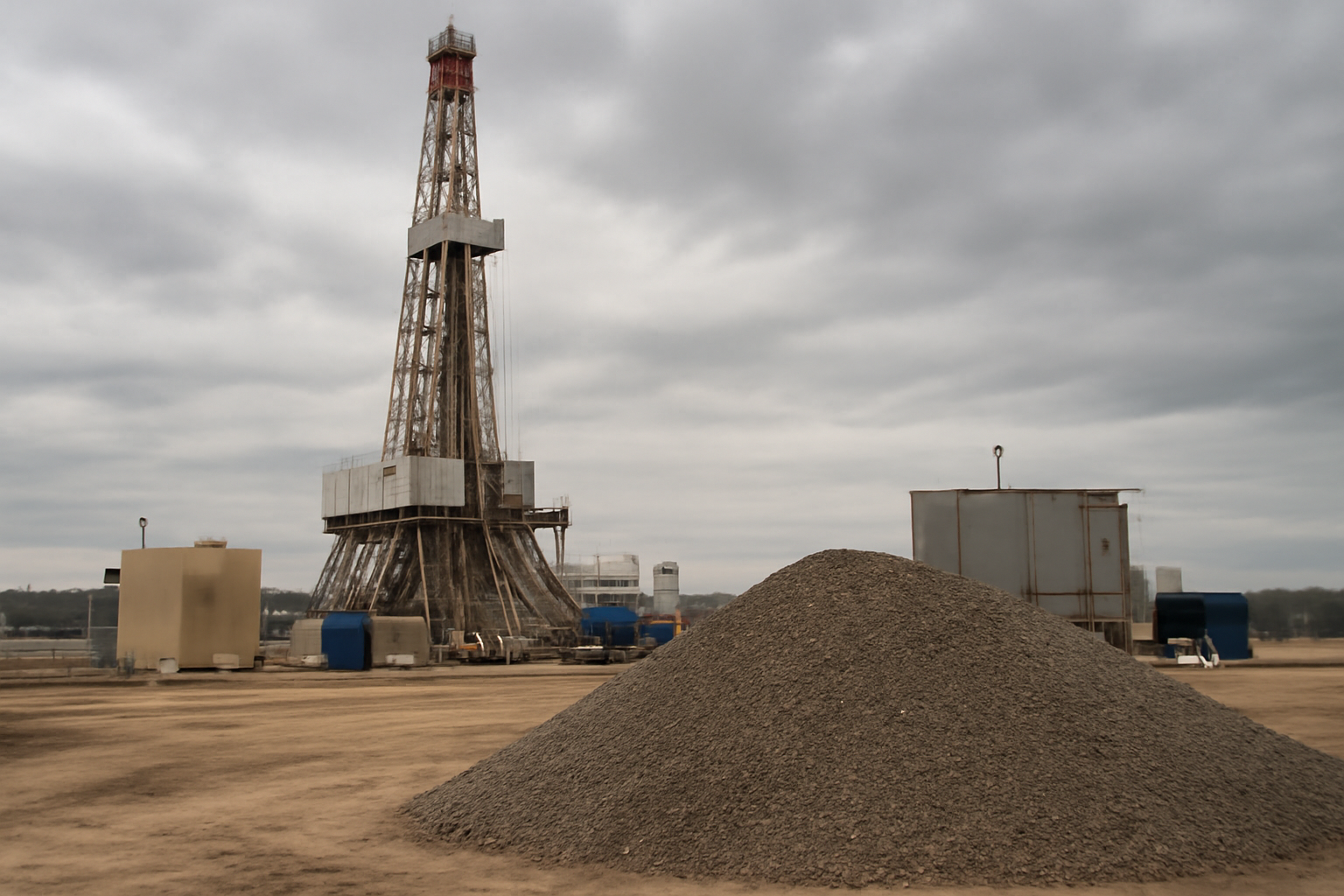
Independent assessment defines project-scale resource
Neptune Energy is moving toward a demonstration facility for direct lithium extraction in the Altmark region of Saxony-Anhalt, where an independent assessment identified 43 million tonnes of lithium carbonate equivalent, or LCE. The figure describes a project-specific underground resource rather than 43 million tonnes of lithium metal or a measure of Germany’s total economically recoverable reserves.
According to Neptune Energy, Sproule ERCE assessed the resource in August 2025 under the CIM and NI 43-101 standards. The company announced the result on 24 September 2025 and described the Altmark accumulation as one of the world’s largest project-related lithium resources. The classification establishes the scale of lithium-bearing deep water within the licensed area, but it does not by itself determine how much material can be recovered commercially.
Neptune holds the Jeetze-L mining authorization and three lithium exploration permits in the region. The Milde A-L and Milde C-L permits were awarded in 2024, followed by Milde B-L in the southeastern Altmark in 2025. The area also offers an existing industrial base: Neptune and its predecessor companies have produced natural gas there since 1969.
Pilot tests move toward an integrated plant
The proposed process pumps lithium-bearing deep water to the surface and separates the dissolved lithium through direct lithium extraction, or DLE. Neptune says the approach avoids open-pit mining and evaporation ponds and requires little land. The water resource nevertheless has to be handled at industrial scale, and extraction performance must be maintained over long operating periods before the concept can support bankable production.
Neptune completed its second pilot test with technology partner Lilac in August 2025. The trial used ion exchange to produce battery-grade lithium from Altmark deep water. A third pilot test began in mid-September to evaluate an adsorption process. The company plans to follow these trials with a demonstration phase using a fully integrated extraction plant, subject to additional mining-law approvals.
A separate project led by Germany’s Federal Institute for Geosciences and Natural Resources illustrates the technical benchmark for extracting lithium from northern German deep waters. The institute reported recovery rates of up to 70% of dissolved lithium in individual samples during in-situ tests at its Horstberg Z1 research well. Those tests used formation water taken from a depth of 3,800 metres and examined several sorbents, but the results do not establish the recovery rate or economics of Neptune’s Altmark project.
Commercial capacity and economics remain decisive
Neptune has indicated that commercial output could be raised gradually to as much as 25,000 tonnes of LCE per year from 2030. That target is small relative to the headline 43 million-tonne resource, underscoring the distinction between lithium contained underground and annual saleable production. No project capital cost, operating cost or definitive commercial recovery rate was disclosed in the available material.
For Europe’s battery industry, a successful Altmark development could add a domestic source of battery-grade lithium carbonate and reduce exposure to long-distance raw-material supply. Existing wells, subsurface knowledge and energy infrastructure from decades of gas production may assist development, but they do not remove the need to prove continuous extraction, water reinjection, product consistency and regulatory compliance. The demonstration plant will therefore be the key step for producers, processors and potential buyers assessing whether the resource can become a competitive supply source rather than remaining a large geological estimate.