Neptun Deep first gas to reach Romania's grid in first half of 2027, OMV Petrom and Romgaz confirm
OMV Petrom and Romgaz have reconfirmed that the Black Sea Neptun Deep project will deliver first gas into Romania's National Transmission System in the first half of 2027. Plateau output is estimated at about 8 billion cubic metres a year on a 100% basis, backed by roughly €4 billion of investment. The International Energy Agency says the volumes will shift the gas balance across Central and Eastern Europe.
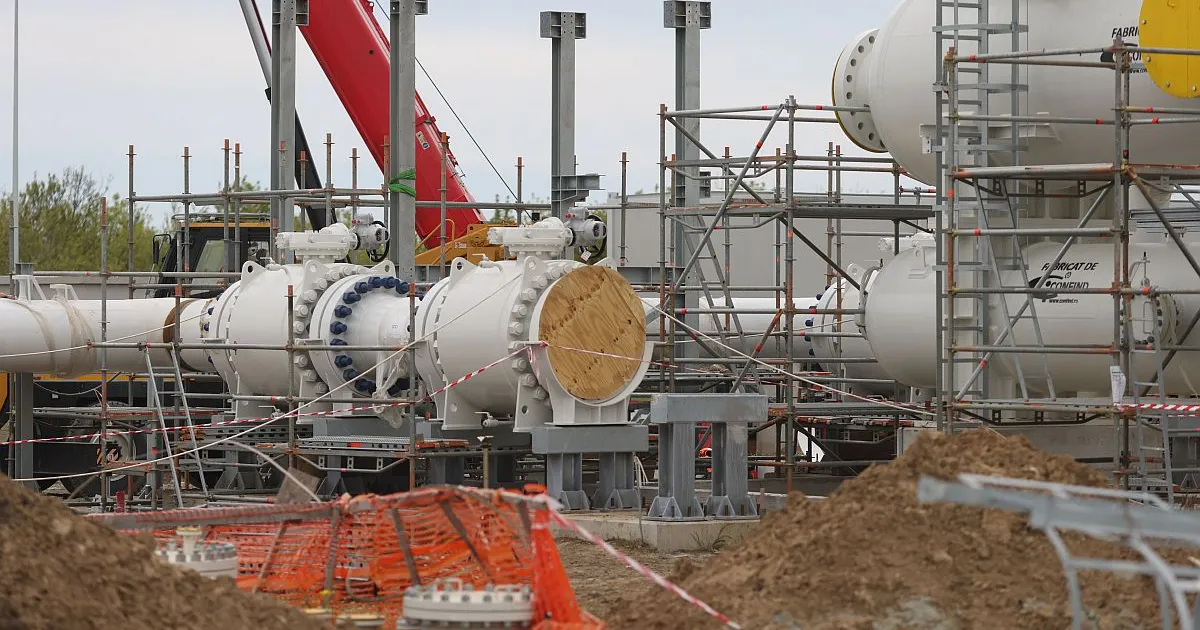
Romania's Neptun Deep offshore development will deliver its first natural gas into the National Transmission System in the first half of 2027, operators OMV Petrom and Romgaz have reconfirmed. At plateau, the Black Sea project is expected to produce around 8 billion cubic metres a year on a 100% project basis, a volume that exceeds current Romanian consumption and opens the way to sustained exports.
Capacity, reserves and investment
Neptun Deep is held 50/50 by OMV Petrom and Romgaz, money.ro reported. Recoverable volumes are put at approximately 100 billion cubic metres, while newsweek.ro reports total estimated reserves of more than 100 billion cubic metres. Development investment is around €4 billion, and plateau output of roughly 8 billion cubic metres a year is expected to be sustained for close to a decade.
profit.ro reported that the two companies expect first gas in the National Transmission System in the first half of 2027, with the plateau figure quoted on a 100% basis — each partner's entitlement is half that. newsweek.ro describes the field as Romania's most important strategic energy project since 1989 and says output will cover domestic consumption in full while freeing large volumes for export to neighbouring markets, including Moldova, Ukraine, Hungary and Bulgaria. On that basis Romania would become the largest gas producer in the European Union.
Construction status and the route to market
Work currently under way covers the drilling of production wells and the installation of deepwater subsea infrastructure, tied directly into the Tuzla–Podișor pipeline built by Transgaz. Through that dedicated line the Black Sea gas will enter the National Transmission System and feed onward into the BRUA corridor, facilitating regional transit, according to newsweek.ro.
The IEA view on Central and Eastern Europe
Dennis Hesseling, head of the Gas, Coal and Power Markets Division at the International Energy Agency, addressed the Eurogas Annual Regional Conference 2026 in Bucharest, organised by Eurogas with the Romanian Energy Employers' Federation (FPE). “The Neptun Deep project will change regional dynamics, as it will make a larger quantity of gas available from domestic production, including for export. This will of course affect the entire regional gas balance,” he said, as quoted by money.ro.
Hesseling said direct pipeline supply to Central and Eastern Europe fell sharply in 2022–2023, and that the gap was closed mainly by redirecting volumes from Western Europe rather than by new direct flows into the region. Western Europe has more import terminals and more developed trading and transport infrastructure, and part of those volumes was subsequently moved east. Baltic Pipe, carrying Norwegian gas to Poland via Denmark, played an essential role in securing regional supply.
Regional gas consumption remains well below pre-energy-crisis levels. Even so, the IEA sees Central and Eastern Europe differing from other parts of Europe where structural demand decline is anticipated: the gradual replacement of coal by natural gas in power generation could lift consumption and create an additional market for Romanian output.
Hesseling added that moving away from Russian pipeline gas also requires additional liquefied natural gas. Central and Eastern Europe has a shorter track record in LNG contracting than other European regions, although activity began to intensify from 2025. Cargoes can reach the region through infrastructure in Croatia, Greece or Poland; not all of those routes are equally direct or cheap, but they are significant alternatives.
Fiscal returns and trade flows
Revenues to the state budget from royalties, taxes on windfall income and other levies across more than 20 years of production are estimated at over €20 billion, newsweek.ro reported, describing this as long-term support for public finances. money.ro noted that Romania could move from being a market that has to secure its own supply to a producer capable of feeding others, changing the direction of regional trade flows; it added that Romania alone cannot replace all the volumes lost from Russia, but that roughly 8 billion cubic metres a year is large enough to matter in the regional equation. Bulgarian outlet money.bg, cited by newsweek.ro, said Romania will become South-East Europe's principal supplier of energy security as the European Union completes its decoupling from Russian resources.