Nepal's rice planting lags at 32.38% of paddy area amid uneven monsoon
By early July, Nepali farmers had planted rice on only 32.38 percent of the country's 1.37 million hectares of paddy fields, down from 45 percent a year earlier, My Republica reported. The rice bowl province of Madhesh is the furthest behind at 15.6 percent, raising concerns over domestic supply and import needs.
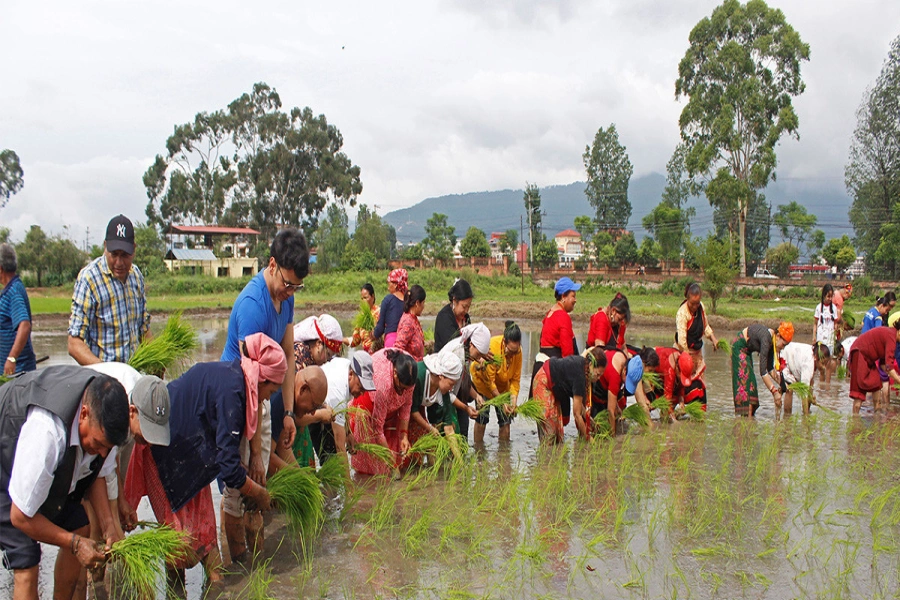
Nepal's rice planting season has fallen sharply behind schedule, with only about a third of the country's paddy area seeded by early July, according to a report in My Republica. The delay raises concerns over domestic supply, rural incomes and the country's growing reliance on imported grain.
Planting far behind last year's pace
By the first week of July, farmers had planted rice on just 32.38 percent of Nepal's 1.37 million hectares of paddy fields, My Republica reported. A year earlier, plantation had already reached 45 percent. The publication described the gap as too large to dismiss as a temporary delay, warning that a poor start to the season often carries through to harvest, food supply, rural income and, later in the year, inflation.
Rice remains Nepal's most important staple crop, which makes the slow start particularly significant for both domestic consumption and the country's import requirements.
An uneven picture across provinces
Regional figures are mixed. Sudurpaschim leads with 57.9 percent of paddy planted, followed by Gandaki and Karnali. Koshi has shown a slight improvement over last year. The sharpest concern lies in Madhesh, described as Nepal's rice bowl, where only 15.6 percent of paddy fields have been planted — far behind last year's pace. Lumbini and Bagmati have also recorded noticeable declines.
Fertilizer delivered, but the problems run deeper
The government says more than 40,500 tons of chemical fertilizers have reached farmers in recent weeks and maintains that supplies are sufficient for the season, according to My Republica. Yet planting continues to lag, which the report attributes to structural problems that go well beyond fertilizer availability.
- Erratic rainfall and longer dry spells linked to climate change.
- Labor shortages, as working-age rural residents leave for foreign employment and cities, leaving arable land idle.
- Rising input costs for quality seeds, fuel, irrigation, transport and machinery.
- Weak prices for farmers, with imported rice filling the market at competitive prices.
Growing dependence on imports
My Republica highlighted a contradiction at the heart of the trend: agriculture is described as the backbone of Nepal's economy, yet the country imports billions of rupees' worth of rice and other food grains every year. A nation known for fertile land and ample water is steadily increasing its dependence on grain imports, the publication said.
The report framed this year's slow plantation as an early warning rather than a passing statistic, urging reliable irrigation, timely access to quality seeds, affordable machinery, workable crop insurance and minimum support prices to restore confidence in farming. For traders, a weaker domestic harvest would point to firmer Nepali demand for imported rice in the months ahead.