Natural Rubber Heads for Fifth Consecutive Supply Deficit as Prices Hit Multi-Year Highs
Natural rubber is on course for a fifth straight year of supply shortfall. ANRPC puts the 2026 global gap at about 213,000 tonnes, while Vietnamese brokerage VDSC expects the deficit to extend into 2027. RSS3 passed 72 million dong per tonne in early September, the highest since 2021, lifting forecast gross margins at Vietnamese plantation companies to 37.7%.
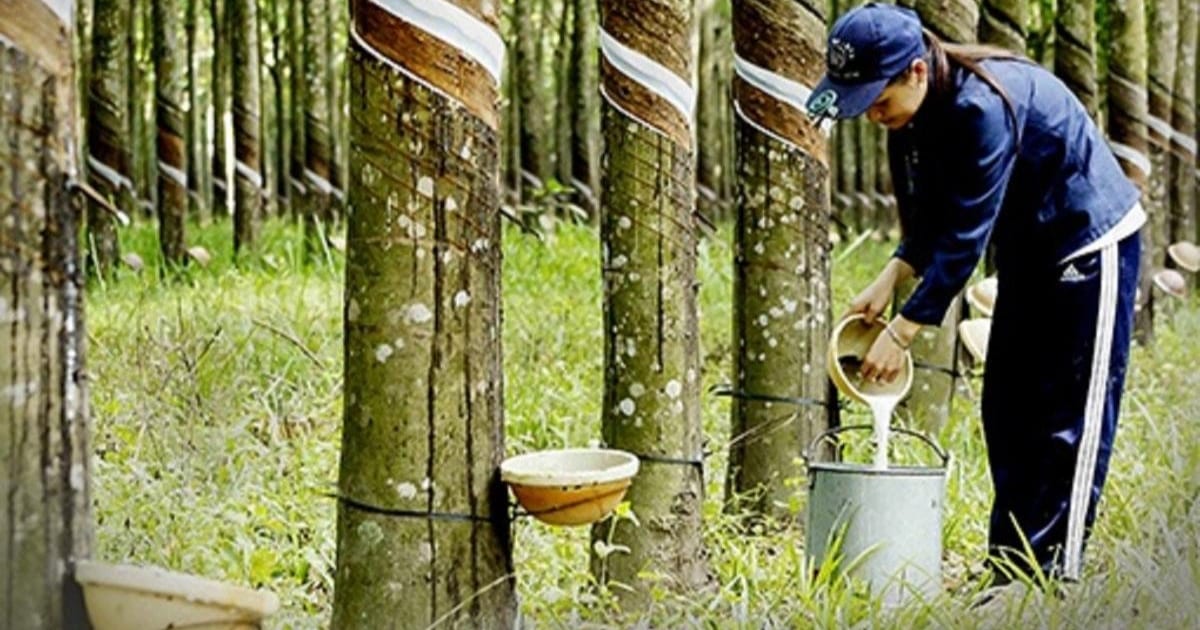
The natural rubber market is heading into what could be a fifth consecutive year of supply deficit, according to a report by Vietnamese brokerage Rong Viet Securities (VDSC) cited by moneyf.vn. Structural problems in the industry remain unresolved, while weather continues to curb tapping activity.
The Association of Natural Rubber Producing Countries (ANRPC) expects global supply to fall short of demand by about 213,000 tonnes in 2026, the fourth consecutive deficit year. ANRPC forecasts 2026 consumption at roughly 15.6 million tonnes.
Shrinking area, lost tapping days
Planted area in the main producing countries continues to contract and new planting has slowed. A rubber tree needs about six to seven years before it can be tapped, so planting decisions taken years ago now cap available output.
Third-quarter data show no easing of supply pressure. Global rubber output fell 5.2% year on year in July. Thailand's natural rubber exports dropped 10% over the first eight months to 1.62 million tonnes. Prolonged rain and storms from July through September affected several large growing regions and reduced the number of tapping days in the peak season.
In Vietnam, the Southeast region, which accounts for about 60% of the country's rubber area, was less directly exposed to the heavy rain. Supply there faces other pressures: the conversion of plantation land to industrial parks and ageing trees. In the North Central and Northwest regions, adverse weather disrupted tapping and transport in some areas.
VDSC argues that supply may absorb two successive blows: rain costing tapping days in this year's peak season, followed by drought reducing early-season yields next year. With almost no recovery window for the trees, the shortfall could extend into a fifth year.
RSS3 at its highest since 2021
Prices already reflect the tightness. In early September, RSS3 passed 72 million dong per tonne, the highest level of the 2021-2026 period, while TSR20 reached about 45 million dong per tonne, a near 13-year high.
VDSC attributes the rally to two factors working at once: rising production costs for synthetic rubber, which pushed part of demand towards natural rubber, and weather damage on top of an already short natural supply.
The brokerage sets out two price scenarios:
- If the Strait of Hormuz is reopened, feedstock supply for synthetic rubber eases and natural rubber prices could correct, but to around 53-57 million dong per tonne, still above earlier levels.
- If US-Iran diplomacy does not reopen the strait, scarcity of petroleum derivatives such as naphtha and butadiene may persist. Combined with the natural rubber deficit and weather risk, VDSC estimates prices could climb to 64-67 million dong per tonne from the fourth quarter of 2026 and stay elevated through the end of the 2027 dry season.
Demand and the electric-vehicle factor
Demand is not the main driver of the current rally. Over the longer term, the shift to electric vehicles may provide support: EV tyres are assessed to wear roughly 20-30% faster, shortening replacement cycles to two or three years. On that basis, VDSC expects global natural rubber demand to hold stable to slightly higher over the next three to five years.
Plantation margins widen
High prices favour rubber-tapping companies, for which the selling price is one of the largest variables in profitability. At producers such as Phuoc Hoa Rubber (PHR), Dong Phu Rubber (DPR) and Tay Ninh Rubber (TRC), plantation and tapping labour costs are relatively stable, so price gains feed through to margins fairly directly.
For DPR and PHR, VDSC estimates an average selling price of about 64 million dong per tonne in the third quarter of 2026, up 36% year on year, with gross margin at 37.7% against 23.6% a year earlier. The sharp September price increase is expected to show up more clearly in fourth-quarter results.
Plantation holdings are substantial. PHR has about 12,700 hectares and DPR about 16,000 hectares. TRC owns more than 7,100 hectares in Vietnam plus some 6,410 hectares through operations in Cambodia. The report also lists DRI with about 8,589 hectares in Laos.
The effect of high prices is not one-directional. The plantations of PHR, DPR and TRC are concentrated in the Southeast. If El Nino brings drought in the 2027 dry season, their own early-season output could fall, partly offsetting the benefit of higher prices. Land rent is another variable for companies that lease land and pay annually; VDSC sees PHR as one of the cases exposed if land rental costs in Ho Chi Minh City rise.