Namakkal egg cluster produces more than 60 million eggs a day
Namakkal district in Tamil Nadu produces more than 60 million eggs daily through a cluster of about 1,100 modern poultry farms. The hub, known as India’s “Egg City,” developed from poultry farming that reportedly began with only 100 hens in the 1960s.
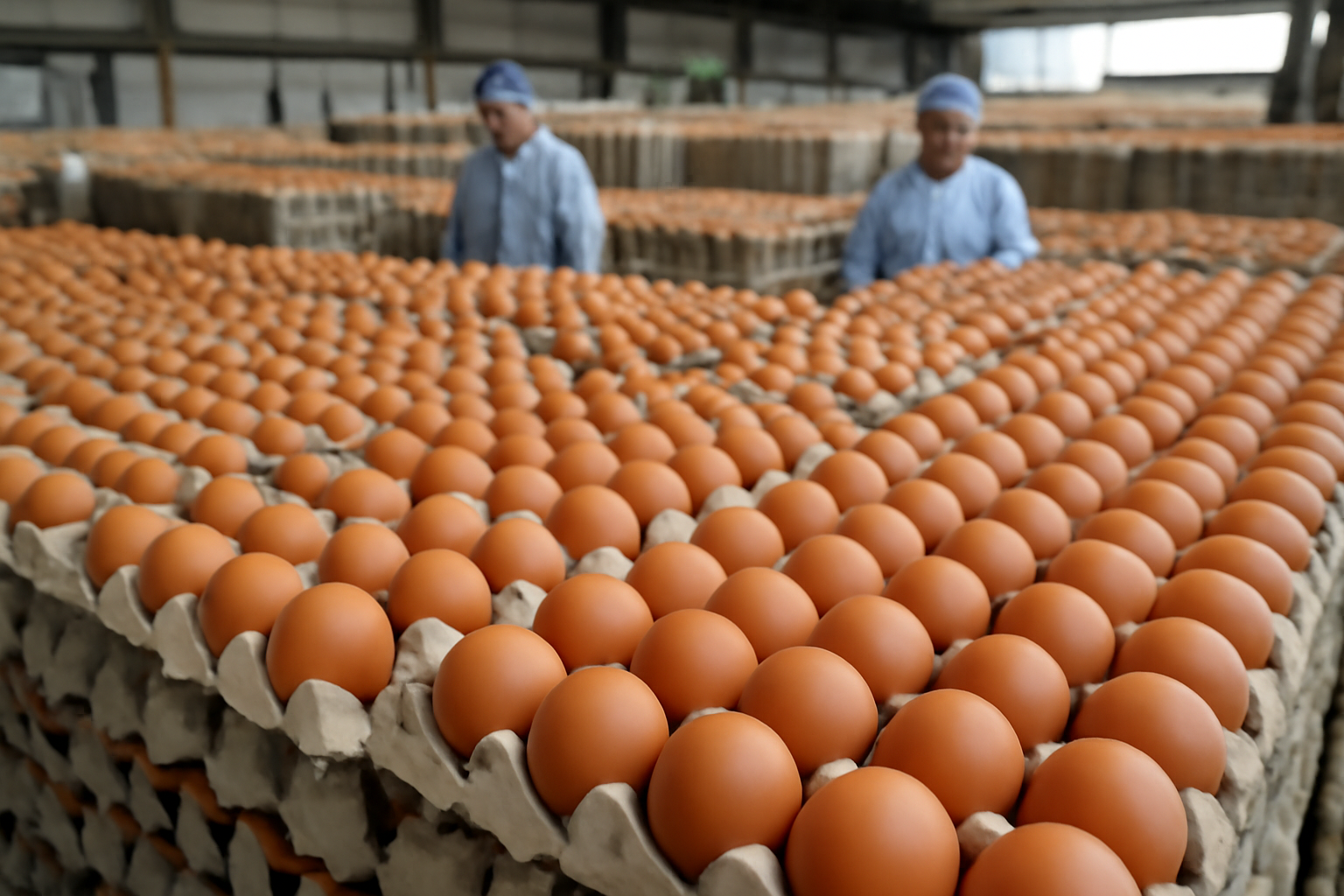
A poultry cluster built over six decades
Namakkal district in the southern Indian state of Tamil Nadu now produces more than 60 million eggs every day, underlining the scale of one of the country’s most concentrated poultry clusters. The district, widely known as “Egg City,” has about 1,100 modern farms and supplies a major share of India’s egg market, according to the material provided for this report.
The industry’s development began on a much smaller scale. Poultry farming in Namakkal reportedly started in the 1960s with only 100 hens. Its expansion from that initial flock to more than a thousand modern farms shows how specialized agricultural production can become embedded in a local economy over several decades. The available material does not identify the original farm or provide a year-by-year production series, but the contrast illustrates the magnitude of the cluster’s growth.
Concentration creates scale
Daily output exceeding 60 million eggs makes Namakkal important not only for Tamil Nadu but also for India’s wider egg supply. A cluster of about 1,100 farms allows production to be organized at a scale that would be difficult to achieve through isolated small units. The source material does not disclose individual farm capacities, ownership structures or utilization rates, so the distribution of output across the cluster remains unclear.
For producers, geographic concentration can support a dense network of businesses serving poultry farms. Feed supply, veterinary services, equipment maintenance, grading, packing and transport all become more commercially viable when a large number of farms operate in the same district. These are market implications of the reported production structure rather than additional facts supplied by the source.
The same concentration also increases operational exposure. Any disruption affecting feed availability, animal health, electricity, transport or local farm operations could influence a large volume of eggs. The source material provides no data on costs, disease events, prices or inventories, so it is not possible to quantify those risks or assess current profitability.
Significance for buyers and producers
For egg buyers, processors and distributors, Namakkal’s output makes the district a major procurement center. Large daily volumes can help commercial buyers consolidate purchases, while the presence of many farms may offer multiple supply relationships within one production area. The available information does not specify destination markets, processing volumes or the division between local and long-distance sales.
For poultry farmers elsewhere in India, Namakkal demonstrates the competitive weight that a mature production cluster can acquire. Its development from 100 hens in the 1960s to about 1,100 modern farms today reflects long-term accumulation of production capacity and specialist knowledge. However, the source does not provide investment figures, employment data or farm-level productivity measures, preventing direct comparisons with other Indian poultry regions.
Key data gaps remain
The headline production figure establishes Namakkal’s scale, but a fuller market assessment would require additional information. Farm-gate egg prices, feed costs, flock numbers, laying rates, processing capacity and shipment destinations would help determine how the cluster’s output affects producers and buyers. Export volumes would also be necessary before drawing conclusions about Namakkal’s role in international trade.
Even without those details, the figures supplied show a highly concentrated production base: more than 60 million eggs per day from roughly 1,100 modern farms. Namakkal’s transformation since the 1960s has made the district a central component of India’s egg industry and a market whose operating conditions matter well beyond Tamil Nadu.