Myanmar border rice exports halt for five months as insecurity and illegal levies disrupt routes
Myanmar recorded no border exports of rice and broken rice from February through June 2026, DVB reported, citing industry data and traders. Shipments had not resumed in July, raising the prospect of a sixth consecutive month without recorded border trade.
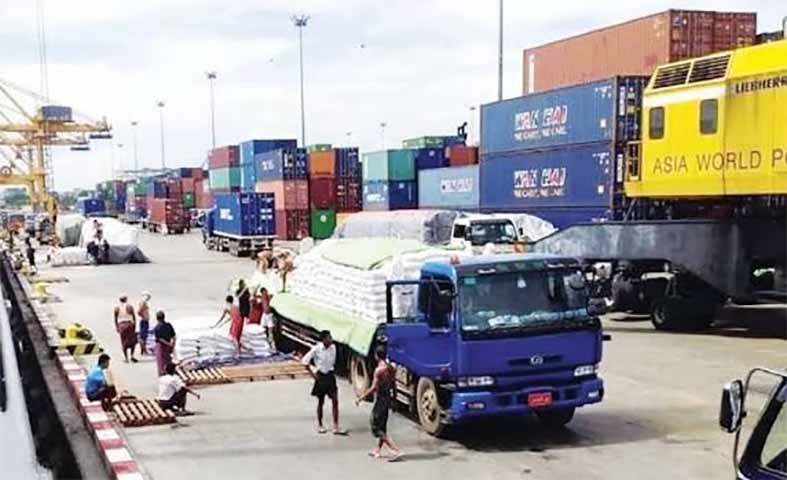
Border shipments fall to zero
Myanmar’s exports of rice and broken rice through land borders stopped for five consecutive months as insecurity and illegal charges made key trade routes increasingly difficult to use. The Myanmar Rice Federation recorded zero border export volume from February through June 2026, according to Democratic Voice of Burma (DVB).
Shipments had still not resumed in July, putting the country on course for a sixth consecutive month without recorded border exports. Traders described the interruption as the worst faced by the sector and said numerous businesses in Upper Myanmar had suspended operations.
Muse route becomes commercially unworkable
The disruption is concentrated on the route from Mandalay to Muse, the principal China-Myanmar border gateway used by rice traders in Upper Myanmar. A trader cited by DVB said companies in the region depend on border commerce because they cannot readily use normal overseas trade channels. With trade through Muse at a standstill, those businesses have lost their main outlet.
DVB reported that the Muse corridor is affected by military insecurity and large unauthorized payments collected at armed checkpoints along the route. These costs compound the operational risks of moving cargo through an area where control and security remain uncertain.
Alternative route handles only small volumes
Some rice and broken rice reportedly continue to move in small quantities through Mong La and the Mong Lin border gate in eastern Shan State. The area and route are controlled by the military and the National Democratic Alliance Army. These shipments are not included in the federation’s published figures, DVB said, and traders described the route as unreliable.
A trader said the licence charge on the route from Taunggyi toward Mong La ranges from 30,000 to 40,000 kyat per tonne. After vehicle charges, road costs and additional payments, transport expenses reach about 50,000 to 60,000 kyat per bag. Cargo also has to be transferred between vehicles at Aye Thar Yar and unloaded at warehouses. Some trucks unable to cross the border have returned with their cargo, while varieties including Kayinma rice and Thukha broken rice have struggled to find buyers.
Loss of a historically important export channel
The current stoppage contrasts sharply with Myanmar’s 2017-2018 fiscal-year performance. The country exported 3,591,000 tonnes of rice and broken rice that year, the first time in almost 80 years that volumes had exceeded 3 million tonnes following exports of 3,048,664 tonnes in 1939-1940. Border shipments accounted for 51.62% of the 2017-2018 total.
The sector had already experienced a three-month border shutdown from December 2024 through February 2025. The latest interruption is longer and follows the sharp decline in exports recorded after the 2021 military takeover. Border demand normally helps support paddy prices, so the loss of this outlet affects not only traders and transport companies but also farmers whose crops would otherwise be sold into the cross-border market.