Morocco weighs date import controls as domestic harvest reaches 160,000 tonnes
Morocco expects date production of about 160,000 tonnes in the 2025-2026 season, up 55% from the previous campaign. With 2025 imports still near 100,000 tonnes, the industry is seeking rules that protect oasis growers without disrupting supply.
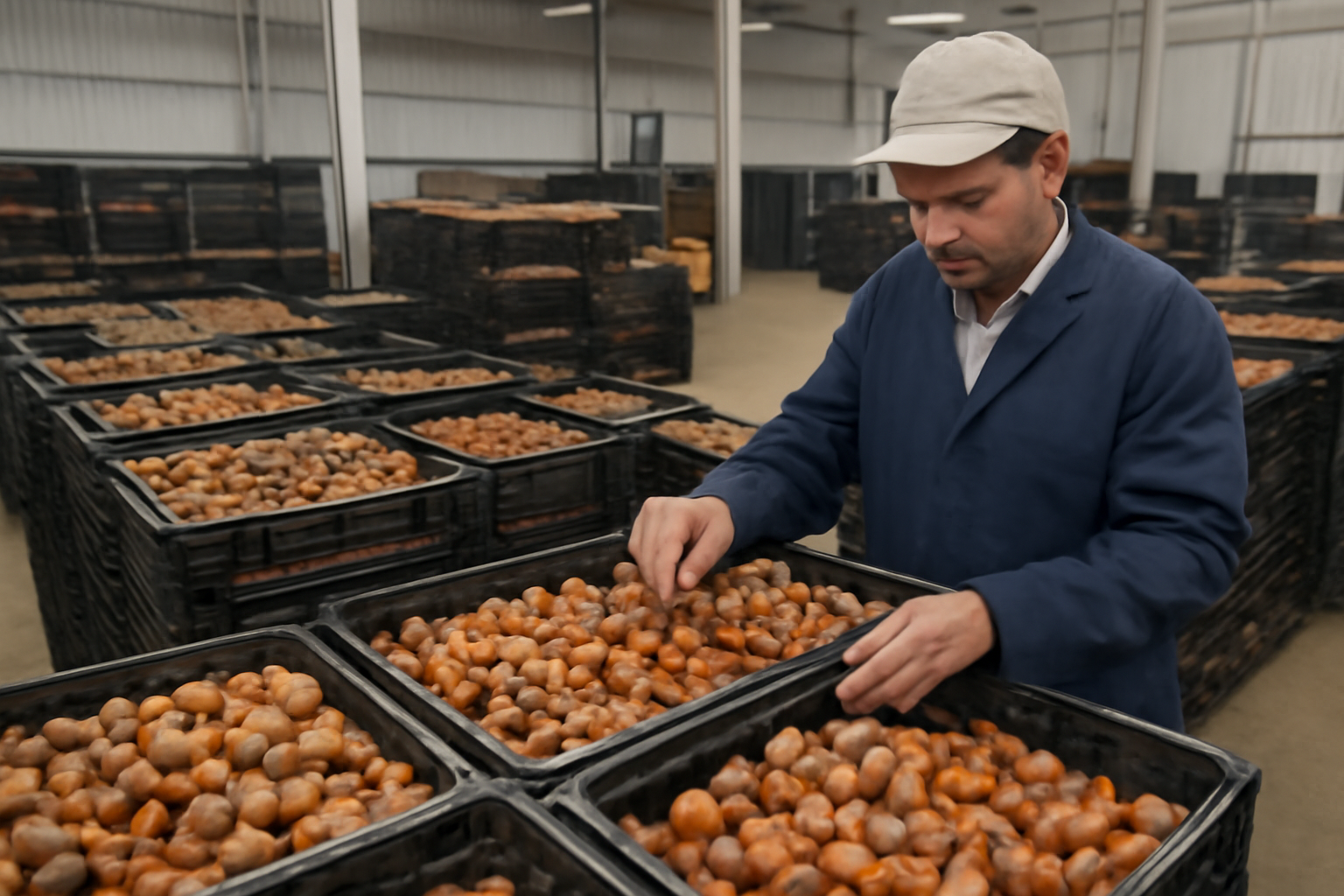
Harvest rebounds after a difficult season
Morocco is trying to reconcile a sharp recovery in domestic date production with continued reliance on foreign supplies. The Ministry of Agriculture estimated the 2025-2026 harvest at about 160,000 tonnes, an increase of approximately 55% from the previous season, according to Le360. The forecast was announced at the International Date Fair in Erfoud in October 2025 and remains a preliminary estimate pending final harvest data.
The improvement follows seasons affected by drought, water scarcity and pressure on oasis ecosystems. Le360 reported that better weather and public investment under the Generation Green strategy supported the recovery, although conditions remain uneven across production areas. Drâa-Tafilalet accounts for most Moroccan output, while Souss-Massa and the Oriental region are also important growing centers. Some traditional palm groves continue to face scarce water and aging trees.
Imports remain substantial despite larger crop
The stronger harvest has not removed Morocco’s dependence on imported dates. Office des Changes data cited by Le360 show that the country imported nearly 100,000 tonnes in 2025, with a cost-insurance-freight value of about 1.3 billion dirhams. The principal suppliers were Tunisia, the United Arab Emirates and Saudi Arabia. Imports include established varieties sought by consumers, particularly during Ramadan.
Average import prices ranged from 13 to 15 dirhams per kilogram in 2025, depending on origin, quality and delivery timing, Le360 reported. Morocco’s Ramadan consumption can reach 30,000-45,000 tonnes, according to industry estimates cited by LeBrief. The domestic crop is therefore large relative to the seasonal peak, but total production and headline consumption figures do not show whether local supply matches demand by variety, grade, packaging or price. Moroccan exports, meanwhile, remain well below imports and are concentrated in niche markets in Europe and West Africa.
Licensing aims to manage timing and volume
Since 24 December 2025, date imports have required prior authorization under measures introduced by the Ministry of Industry and Trade and implemented by customs, LeBrief reported. The policy is designed to protect domestic production ahead of Ramadan rather than prohibit foreign supplies. Industry representatives argue that unmanaged arrivals during the harvesting and marketing period can depress demand for Moroccan dates, create unsold stocks and expose small oasis farmers to losses.
Rachid El Bssita, president of the national interprofessional date federation, said effective policy must balance secure market supply with protection for domestic production, especially small farmers. The federation estimates a supply deficit of about 40,000 tonnes and says this figure, together with available stocks, should guide import volumes. Its preferred approach uses domestic output, inventories and actual consumption requirements rather than a blanket ban. For growers, importers and distributors, the central issue is consequently not whether Morocco should import dates, but when shipments should arrive and how much the market needs. Better production and stock data would allow licensing to support oasis incomes while preserving consumer choice and supply during the seasonal demand peak.