Morocco posts record onion imports as domestic production falls
Morocco imported a record 21,600 tonnes of fresh onions between July 2025 and April 2026, Telexpresse reported. The increase followed lower domestic production and higher prices during the 2025/2026 agricultural season.
Imports reach an all-time high
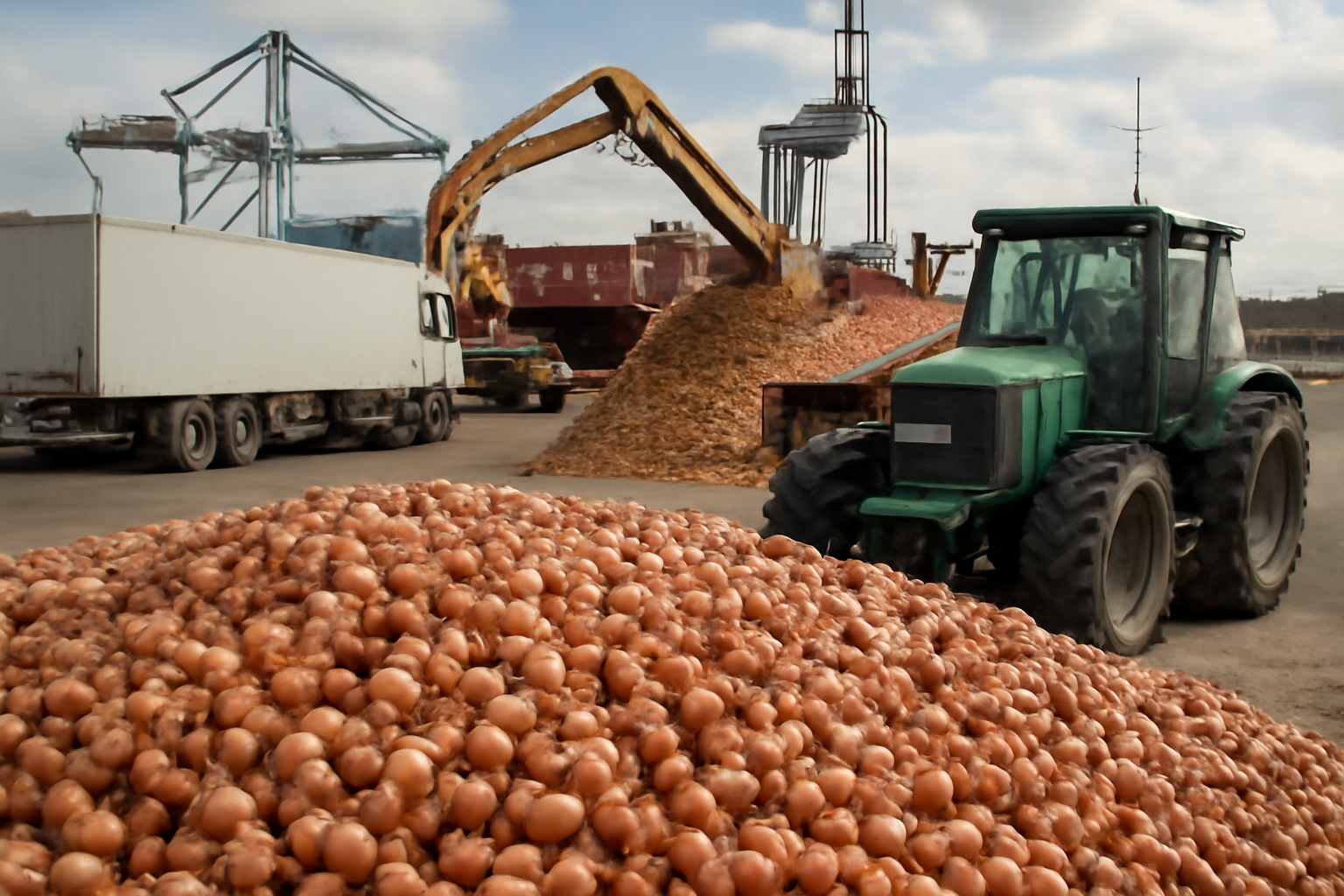
Morocco imported 21,600 tonnes of fresh onions between July 2025 and April 2026, the highest volume recorded by the country, according to Telexpresse. The purchases covered most of Morocco’s 2025/2026 agricultural season and marked an unprecedented reliance on foreign supply for a staple vegetable.
The record was driven by a decline in domestic onion production and an increase in prices, Telexpresse reported. Lower local availability created a supply gap that imports had to cover. For Moroccan wholesalers and food distributors, foreign onions therefore became more important in maintaining volumes on the domestic market.
Lower output changes the supply balance
The reported import total shows the scale of the adjustment. From July through April, Morocco brought in an average of more than 2,000 tonnes a month, although the source did not provide a monthly breakdown. The figure cannot show whether shipments were concentrated during a particular part of the season, but it confirms that imports played a substantial role over the ten-month period.
Telexpresse did not identify Morocco’s main suppliers, the value of the trade or the prices paid for imported onions. It also did not specify the size of the domestic production decline. Those missing details limit comparisons between overseas supply costs and Moroccan farm-gate or wholesale prices. They will also be important for exporters assessing whether the record represents a temporary response to one weak crop or a market opportunity that could continue into another season.
Trade implications for onion suppliers
For international exporters, a record volume signals stronger Moroccan demand when local output is insufficient. However, the opportunity remains closely tied to domestic harvest conditions and prices. A recovery in Moroccan production could reduce import requirements, while another constrained crop could preserve demand for foreign onions. Suppliers will need to follow planting, harvest and price developments rather than treating the 21,600-tonne figure as a guaranteed annual level.
For Moroccan importers, the central issues are supply continuity, purchase prices and the timing of arrivals. Onions are sensitive to storage and delivery conditions, making procurement schedules relevant to both availability and final market prices. Because the report provides neither origin countries nor shipment values, it is not yet possible to determine which exporting markets gained the most from Morocco’s higher demand or how the record volume affected the country’s import bill.
A record shaped by domestic scarcity
The available evidence points to a straightforward trade response: domestic production fell, prices rose and imports expanded to a record 21,600 tonnes. The next direction of the market will depend primarily on Morocco’s crop performance. Until fuller trade data become available, the record should be read as evidence of a significant supply shortfall during the 2025/2026 season, rather than proof of a permanent change in consumption.