Morocco's Potato Imports Hit Record 12,000 Tonnes After Flood Damage
Morocco imported more than 12,000 tonnes of fresh table potatoes between July 2025 and June 2026, a record volume driven by flood damage in the northern Loukkos basin. The Netherlands, France and Belgium supplied the shipments at a time of heavy European oversupply and near-zero prices.
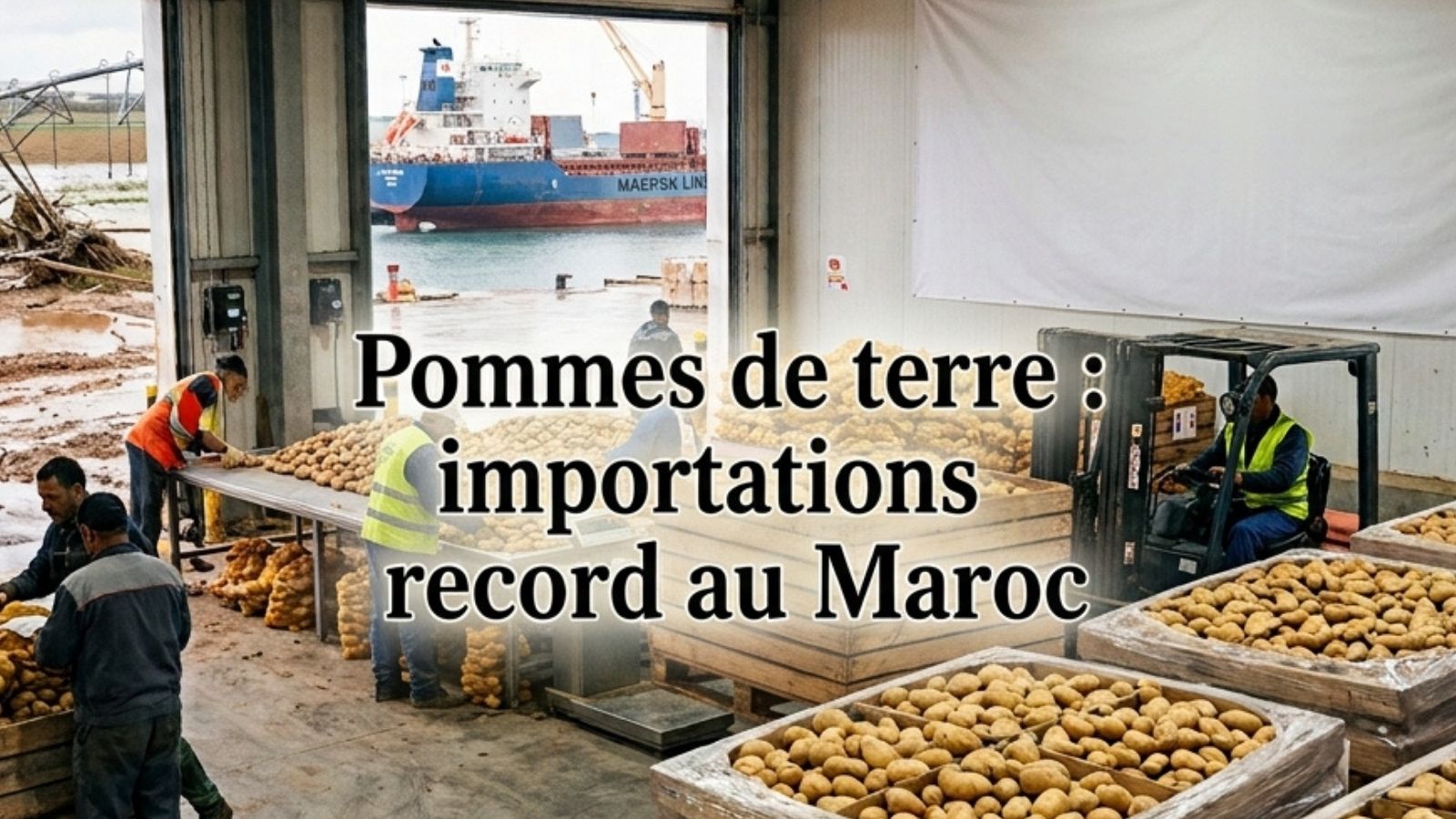
Morocco imported more than 12,000 tonnes of fresh table potatoes between July 2025 and June 2026, the largest volume on record for the country, after winter flooding destroyed part of the northern crop. According to data from EastFruit cited by infomediaire.net, the total is 50% higher than the combined imports of the five previous seasons and 2.4 times the previous record, set in the 2008/2009 campaign. Consonews.ma reports the same figures. The scale of that comparison shows how marginal imported potatoes normally are in Moroccan supply: a single season outweighed five earlier ones put together.
Flooding in the Loukkos basin cut national supply
The disruption began with heavy rainfall and flooding in January and February 2026 across the main growing areas of northern Morocco, above all the Loukkos basin. Fields were submerged and several farms lost their entire crop, according to infomediaire.net, sharply reducing the volume available on the domestic market. Loukkos is one of the main northern production zones for the fresh table segment, and its losses left traders without enough local produce to cover demand until the next harvest.
Purchases concentrated in April and May
Imports began to climb markedly in March 2026 and peaked in April and May. Those two months alone accounted for close to 80% of the season's total, consonews.ma reports. Buying then subsided as the new domestic crop came in from May. The profile confirms the compensatory nature of the flows: shipments were arranged to bridge a gap of roughly three months, not to open a permanent supply channel.
Dutch, French and Belgian shippers took the business
European suppliers covered essentially the whole of the trade, with the split reported by both outlets as follows:
- Netherlands — more than half of the imported volume
- France — close to one third
- Belgium — the remainder
The window coincided with a heavy surplus on the European market. Dutch excess stocks were estimated at 500,000 tonnes, and free-market potato prices in the Netherlands had fallen into negative territory. In Belgium, prices were close to zero. In France, April producer prices were more than 20% below the same month a year earlier. For shippers holding unsold stock at those levels, a paying destination in North Africa was worth the freight.
A weather event, not a new trade route
The combination of scarcity in Morocco and oversupply in Europe is what made the record possible, and both halves of that equation are temporary. Twelve thousand tonnes is marginal against a Dutch surplus alone estimated at 500,000 tonnes, so the shipments did little to lift European prices or clear the overhang. For Morocco, the season showed how quickly localised flooding can turn a largely self-sufficient fresh market into an importer, and how much the cost of that switch depends on the state of European stocks at the moment the gap opens. Had the same losses occurred in a tight European season, the same 12,000 tonnes would have carried a very different price.
The immediate market question is the state of the crop now planted in the affected northern zones. The 2025/2026 flows ended with the arrival of new harvests in May; a normal season in Loukkos would return Moroccan imports to their usual marginal level, while renewed damage would put buyers back in the European market — this time without the guarantee of a 500,000-tonne surplus waiting for them.