Morocco’s olive harvest set to rebound 111% to two million tonnes
Morocco expects olive production to reach about two million tonnes in 2025-2026, up 111% after two drought-hit seasons. Olive-oil output is forecast near 200,000 tonnes, restoring processing volumes while raising fresh questions about quality, water use and export capacity.
Harvest returns to the two-million-tonne level
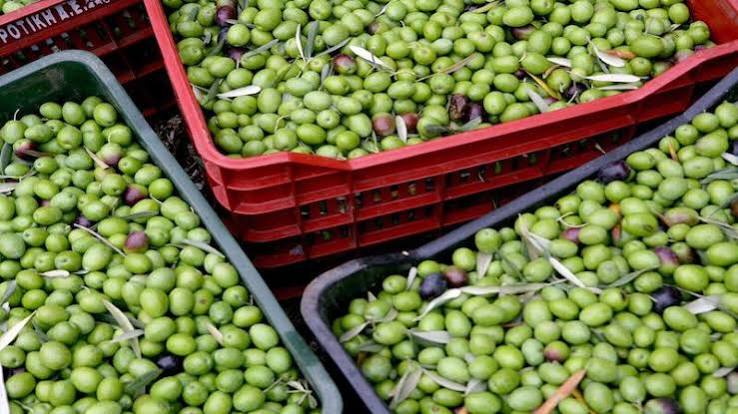
Morocco’s olive harvest is expected to reach about two million tonnes in the 2025-2026 agricultural season, an increase of 111% from the previous season, according to Industries.ma. The recovery follows two seasons severely affected by drought and would return production close to the 1.968 million tonnes recorded in 2021-2022.
Output had fallen to 1.086 million tonnes in 2022-2023 and approximately 1.072 million tonnes in 2023-2024. The projected rebound is significant for a crop grown by roughly 480,000 producers and accounting for more than 65% of Morocco’s area devoted to tree crops.
Olive plantations cover more than 1.1 million hectares, including over 900,000 productive hectares, while industry federation data put the planted area at approximately 1.2 million hectares. About 37.5% of that area is irrigated. Moroccan Picholine dominates with more than 90% of planted acreage, leaving the industry heavily dependent on one principal variety.
Recovery will test processing capacity
Approximately 67% of the olive crop is normally sent for crushing, 23% for preservation and 10% is lost or consumed by growers. Applying that structure to a two-million-tonne harvest would bring substantially more raw material to processors after two weak seasons.
Morocco has about 948 modern and semi-modern crushing units with combined annual capacity approaching 1.8 million tonnes of olives, as well as around 11,000 traditional mills. Fez-Meknes holds roughly 62% of crushing capacity and Marrakech-Safi about 16%. Together with Tangier-Tetouan-Al Hoceima, Oriental and Beni Mellal-Khenifra, these regions accounted for approximately 89% of production in 2022-2023.
The Ministry of Agriculture forecasts olive-oil production near 200,000 tonnes in 2025-2026, around 105% higher than previously. Output reached 200,000 tonnes in 2021-2022 before dropping to 107,000 tonnes in 2022-2023 and about 106,000 tonnes in 2023-2024. The recovery could therefore restore oil production to its recent high rather than establish a new record.
Domestic supply remains the main outlet
Quality will determine how much additional oil can reach higher-value markets. Industry federation figures indicate that extra-virgin oil usually represents only 10-15% of production, compared with 25-35% for virgin oil, 20-25% for ordinary oil and 25-40% for lampante oil. Morocco’s domestic market absorbs approximately 84-85% of olive-oil production, limiting the volume currently available for export.
Exports of olive products averaged about 117,200 tonnes in 2018-2022, with preserved olives contributing 87.3% and olive oil 12.6%. Their combined value was approximately 1.92 billion dirhams. In 2024, Morocco exported about 8,593 tonnes of virgin olive oil worth nearly $79.7 million. By contrast, 70-75% of industrially produced preserved olives are exported, making that segment more directly exposed to international demand.
The 2021-2030 programme contract targets 1.4 million hectares of olive plantations, 3.5 million tonnes of olives, 270,000 tonnes of industrial preserved-olive production and 100,000 tonnes of olive-oil and olive-pomace-oil exports. Planned investment totals about 16.9 billion dirhams, including 8.3 billion dirhams in public funding. Reaching those goals will depend not only on larger harvests but also on water efficiency, farm modernisation, oil quality, packaging, Moroccan branding and the commercial use of pomace, pits and other residues.