Morocco Keeps Lead in EU Greenhouse Vegetable Imports as Turkey Gains Ground
EU imports of five greenhouse vegetables averaged 1.33 million tonnes in 2023-2025, up 60.1% from 2015-2017. Morocco remains dominant in tomatoes, while Turkey is rapidly gaining share in tomatoes and courgettes.
EU import demand expands by 60.1%
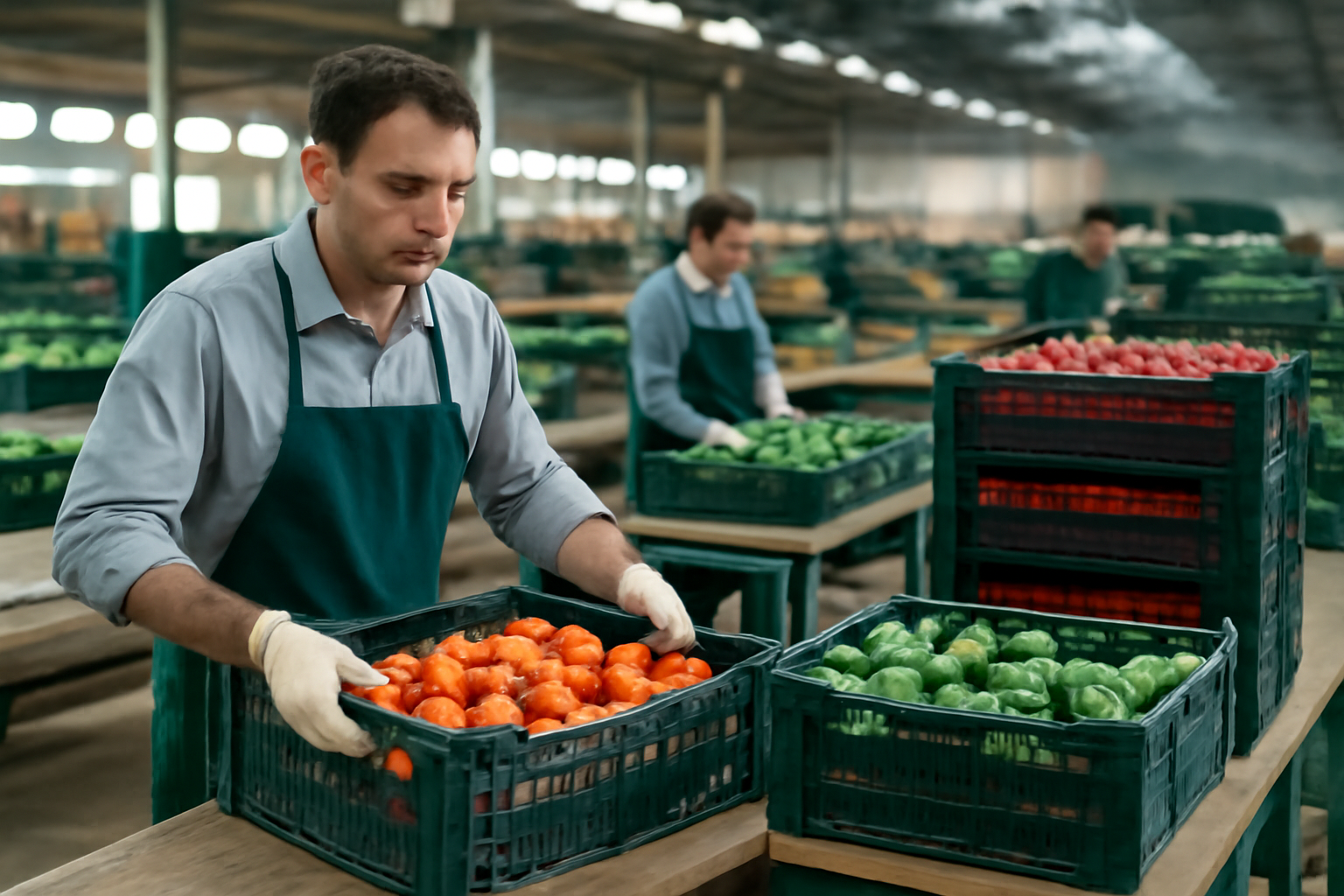
Morocco and Turkey have consolidated their position as the European Union’s principal external suppliers of greenhouse-grown vegetables as the bloc increases purchases from outside its borders. The products covered are tomatoes, peppers, cucumbers, aubergines and courgettes, five important categories for European retailers, wholesalers and food-service buyers.
According to Moroccan publication 24 Saa, average EU imports of the five vegetables rose from 828,000 tonnes in 2015-2017 to 1.33 million tonnes in 2023-2025, an increase of 60.1%. Morocco and Turkey together accounted for between 65% of the bloc’s aubergine imports and 91% of its tomato imports in 2025.
Over the same comparison period, Morocco’s shipments of the five products to the EU increased by 55.9%, while Turkey recorded growth of 136%. Other suppliers also expanded: Albania’s deliveries rose by 60.9%, Tunisia’s by 193.6% and Egypt’s by 309.2%, although the Egyptian increase came from a very small starting volume. EU imports from Serbia fell by 12%, those from North Macedonia by 30.1%, and those from Israel by 63.2%.
Morocco dominates tomatoes, Turkey advances
Tomatoes remain the strongest component of Morocco’s position. The country supplied 68.1% of EU tomato imports in 2025 after the volume purchased from Morocco increased by 53.4%. Its share nevertheless declined relative to 2015 as competing origins expanded more quickly.
Turkey’s tomato deliveries increased by 192.5%, lifting its 2025 share to 23%. Tunisia also gained ground: EU tomato imports from the country rose by 200.6%, giving it a 4.9% share. Morocco, Turkey and Tunisia therefore represented most external tomato supply, with competition intensifying even as the overall market grew.
The change is sharper in courgettes. EU imports from Morocco declined by 4.5%, and Morocco’s share fell from 72.5% in 2015 to 49.1% in 2025. Imports from Turkey rose by 92.8%, raising its share from 24.2% to 43%. The two suppliers are now separated by 6.1 percentage points in a category that Morocco once dominated by a much wider margin.
Competition broadens across peppers and cucumbers
Turkey retained first place among external aubergine suppliers with a 57.8% share in 2025, following a 31.5% increase in volume. In peppers, EU imports from Morocco rose by 80.6% and those from Turkey by 83.7%. Israel moved in the opposite direction: its pepper deliveries declined by 60.2%, reducing its share from 18.9% in 2015 to 3.2% in 2025. Egypt and Albania posted increases of 460.8% and 401.9%, respectively, but both began from limited volumes.
Cucumbers show an increasingly diverse field of suppliers. EU purchases from Albania increased by 219.4%, from Turkey by 178.9% and from Morocco by 168.5%, while imports from Serbia grew by 13.3%. The figures reported by 24 Saa indicate that Morocco remains central to EU greenhouse vegetable supply, particularly in tomatoes, but Turkey is narrowing the gap in several categories. For growers and exporters, preserving market share will increasingly depend on performance by individual product rather than strength across the vegetable basket as a whole.