Morocco imposes final antidumping duties of up to 76% on Chinese plywood and galvanized wire
Morocco has brought into force final antidumping duties reaching 76% on plywood from China and galvanized wire from Egypt and the United Arab Emirates. Because Egyptian and Emirati goods enter duty free under Arab trade agreements, antidumping is the only instrument able to change their landed cost. Moroccan furniture, mesh, fencing and construction buyers absorb the immediate increase.
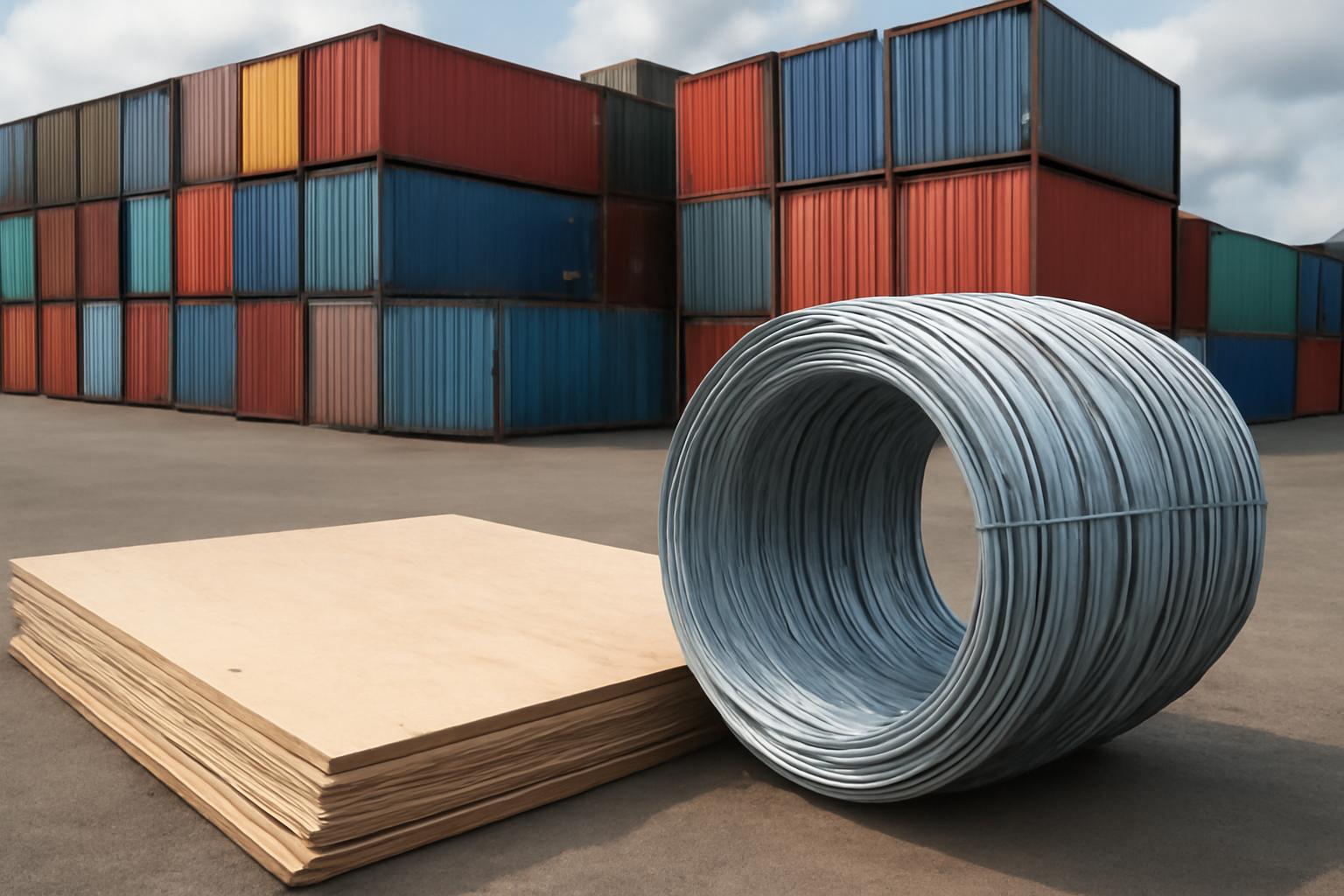
Morocco has brought into force new final antidumping duties on plywood imported from China and on galvanized wire imported from Egypt and the United Arab Emirates, with rates reaching up to 76%. The duties are definitive rather than provisional, and the decision is presented as a reinforcement of the kingdom's trade defence measures for domestic manufacturers.
Scope of the measure
The two cases cover unrelated products but share the same logic: both compete head-on with established Moroccan manufacturing capacity, and both are commodity grades where price, not specification, decides the order.
- Plywood from China — panels bonded from cross-laid wood veneers, traded under HS heading 4412 and consumed by furniture makers, joinery shops, concrete formwork suppliers and packaging producers.
- Galvanized wire from Egypt and the United Arab Emirates — zinc-coated steel wire under HS heading 7217, the input for welded and woven mesh, fencing, gabions, fasteners, agricultural trellising and cable armouring.
The headline figure is the maximum rate of 76%. Antidumping determinations normally set a range of duties rather than a single number, with individually examined exporters assigned their own margins and remaining shippers charged the residual rate. The information available on the Moroccan decision does not break the duties down by exporter, nor does it specify the investigation period or the term for which the measures will apply.
Trade flows in the line of fire
The Chinese leg of the decision targets the world's dominant source of plywood. Chinese panels enter Morocco without tariff preferences, at applied most-favoured-nation rates, so the antidumping duty stacks on top of the existing customs charge. At 76% the covered grades are effectively priced out: importers do not absorb a margin of that size, they change origin.
The wire cases sit on different legal ground. Morocco, Egypt and the United Arab Emirates all take part in the Greater Arab Free Trade Area, and Morocco and Egypt are additionally parties to the Agadir Agreement; under those frameworks industrial goods move between members duty free. Preferential access cannot be suspended product by product, which leaves antidumping duty as the only instrument able to change the landed cost of Egyptian and Emirati wire in Morocco. The measure therefore carries more weight against those two origins than a comparable duty would against a non-preferential supplier, and it puts Rabat in the position of restricting two Arab trade partners inside agreements designed to remove barriers.
Downstream cost effects
The immediate cost is borne inside Morocco. At the top rate, an invoice of 100 becomes 176 before freight, port charges and value-added tax are added. Contracts concluded before the duties entered into force become loss-making for importers unless the increase can be passed to the buyer, and pass-through is slow in construction, where prices are fixed in tender documents months ahead.
Substitution is the standard response. Plywood buyers can turn to Southeast Asian and South American suppliers, and the switch usually shows up in customs data within one to two quarters. Galvanized wire is traded more regionally because freight is heavy relative to value, which narrows the alternatives and gives Moroccan drawing and galvanizing lines genuine pricing room in the short term. Downstream users — fencing contractors, mesh fabricators, vineyard and orchard operators — absorb the difference.
Trade defence context
Wood panels and galvanized steel products are among the most frequently investigated goods in global antidumping practice, for structural reasons: both are standardised, price-transparent and produced with substantial surplus capacity in several exporting countries. Morocco has been building out its trade remedy toolkit alongside an industrial base in automotive, construction materials and light manufacturing, and definitive duties of this size indicate that domestic capacity utilisation now outweighs the cost to downstream buyers in the policy calculation.
Two things are worth monitoring. The first is whether import volumes reappear from origins not named in the cases, the usual sequel to a final duty and the usual trigger for anti-circumvention work. The second is what Moroccan producers do with the protected margin — whether it funds additional capacity and product range, or simply restores profitability at current output.