Weather-hit 2025/2026 season puts Morocco's avocado export sector under scrutiny
Agence Ecofin reports that Morocco's 2025/2026 avocado campaign was strongly affected by climatic hazards, raising questions about the economic viability of a crop that has become an important source of export earnings for the country's fruit industry. The issue is framed as structural rather than a single weak harvest, with irrigation cost and supply predictability at the centre.
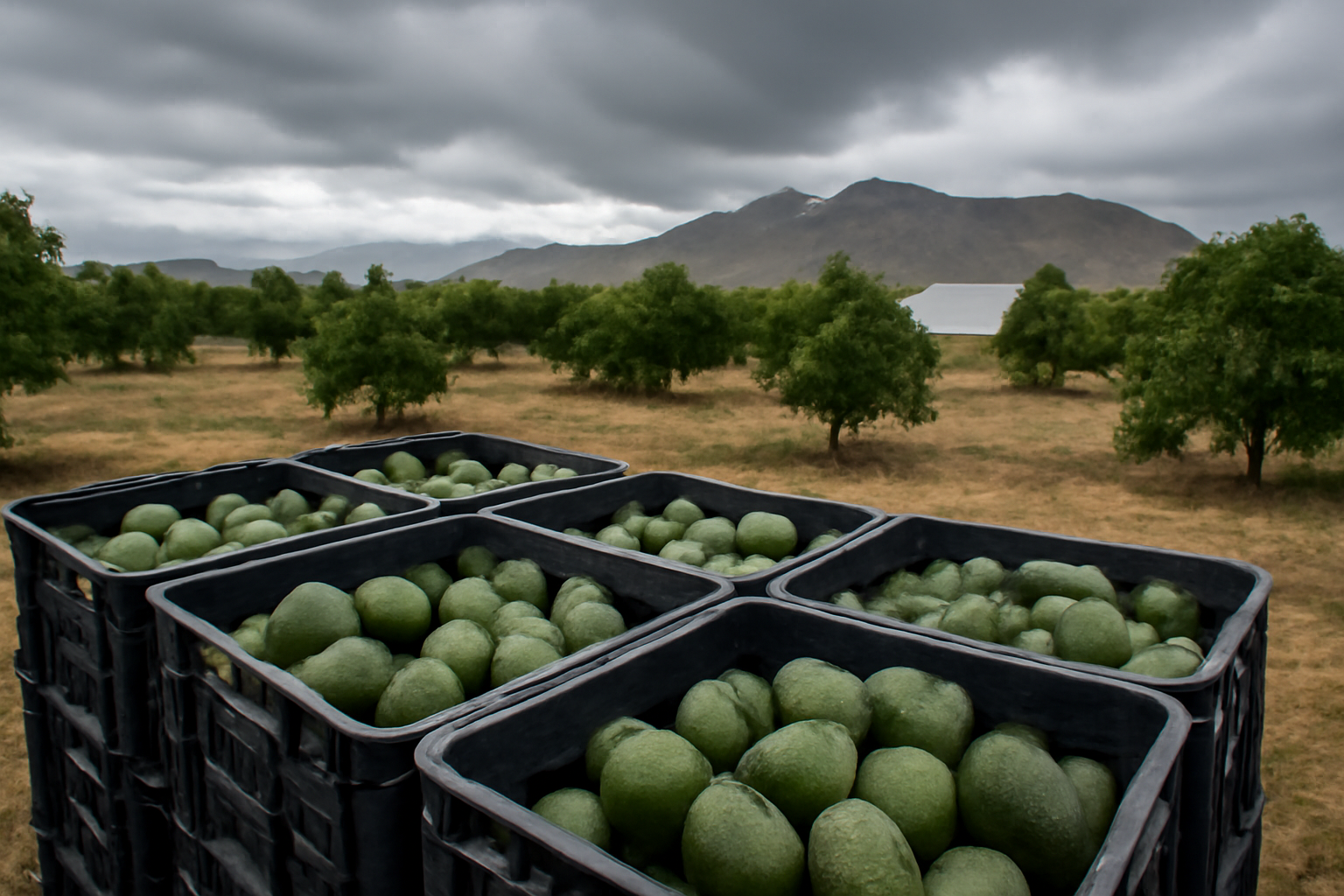
Morocco's avocado industry is facing questions about its long-term economic viability after a 2025/2026 campaign heavily disrupted by weather, according to Agence Ecofin. The publication describes avocado as an important source of export earnings for the Moroccan fruit sector and reports that climatic hazards weighed on the season.
A season shaped by climate
Agence Ecofin reports that the 2025/2026 avocado campaign in Morocco was strongly affected by climatic hazards. The publication frames the consequences as a matter of economic viability for the sector, not simply as a weaker harvest — a distinction that moves the discussion from seasonal yield to the underlying business case for the crop.
Weather damage in a perennial orchard crop is rarely contained within a single year. Heat stress, irregular flowering and restricted irrigation carry into the following cycles, so a disrupted campaign can mean lower and less predictable volumes across several seasons. For exporters that commit to European retail programmes months in advance, that unpredictability is as costly as the volume loss itself, because unfilled contracts are normally covered from other origins.
Water is the binding constraint
Avocado is among the more water-intensive tree crops in Moroccan horticulture, and its expansion has been contested on that basis. Irrigation is the input that determines both yield and fruit size, and in a season marked by climatic hazards it is also the input that becomes most expensive and most tightly rationed.
That cost structure explains why the viability framing matters. Orchards are financed against a decade or more of shipments, and the capital is sunk long before the first commercial harvest. When water becomes scarcer or dearer, the cost per kilogram rises even in years when trees produce normally, and the margin between farmgate cost and export price is the first thing to narrow.
What it means for the export trade
Moroccan avocado is sold principally into European markets, where it competes with supply from other origins across the calendar. Short transit times and counter-seasonal availability have been the sector's commercial advantages; both depend on consistent volumes rather than on a single strong year. A campaign disrupted by weather therefore tests the sector's position with buyers as much as its balance sheets. Several variables will determine how the situation develops:
- Volume continuity — whether the 2025/2026 disruption is followed by a normal 2026/2027 campaign or by a multi-season decline.
- Water policy — how irrigation allocation is handled for water-intensive export crops.
- Planting decisions — whether investment slows in new orchards in favour of upgrading existing plantations and irrigation systems.
- Buyer response — whether European importers rebalance programmes toward alternative origins.
Agence Ecofin's report does not describe the Moroccan avocado sector as failing; it describes a sector whose economics are being tested by climate variability. For producers, packers and importers the practical question is whether the crop can hold its cost position in a country where water is the scarcest input. The answer will show up in planting activity and in the consistency of shipments over the next several campaigns rather than in the results of any single season.