Montana Targets India’s Pulse Market in First Official Trade Mission
Montana Governor Greg Gianforte is leading a delegation of more than 30 people to India to seek greater sales of peas, lentils and chickpeas. The initiative faces uncertain agricultural market access and criticism from part of the MAGA movement in the United States.
Montana seeks a long-term outlet for pulses
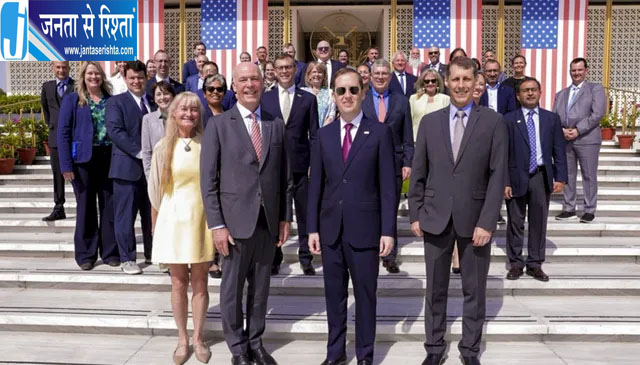
Montana has launched its first official trade mission to India, seeking to expand sales of peas, lentils, chickpeas and other pulses to the world’s largest pulse consumer and importer. Governor Greg Gianforte is leading a delegation of more than 30 people, with agriculture forming a central part of a broader agenda covering higher education, critical minerals, manufacturing, photonics, quantum technology and bioscience.
Janta Se Rishta reported that Gianforte met Indian business representatives and industry organizations in New Delhi, presenting Montana as a reliable US partner in agriculture, trade and technology. Discussions also covered opportunities for Indian companies considering investment and expansion in the US market. The delegation is scheduled to continue its mission in Sri Lanka.
Montana is the largest pulse-producing state in the United States, according to the state government. State Agriculture Director Jillien Streit said expanding international markets could help provide Montana farmers with stable, long-term demand. India’s scale makes it an obvious target: it is simultaneously the world’s largest producer, consumer and importer of pulses.
Existing trade remains relatively small
India was Montana’s 29th-largest trading partner in 2025. It bought more than $14 million of Montana goods that year, including peas, lentils, chickpeas and aircraft parts, according to figures cited by Janta Se Rishta. The state government is now examining whether that trade can be increased several times over, although no specific sales target or new commercial agreement has been announced.
India periodically increases pulse imports when domestic demand rises or weak monsoons constrain local supply. The Indian government has also recently considered reducing import duties on some pulses, a step that could improve opportunities for US suppliers. For Montana growers, greater access would add a major destination for crops produced at scale within the state and could broaden the pool of reliable buyers.
Market access is not assured, however. Chickpeas and some other agricultural products are sensitive sectors in India, where the government seeks to protect domestic farmers. Agricultural access is also among the contested issues in ongoing US-India trade negotiations. Talks on a proposed agreement are reportedly in their final stage, but differences remain over tariffs, farm products and other policy questions.
Commercial push meets political resistance
The mission has also become part of a domestic US political dispute. Janta Se Rishta said some supporters of President Donald Trump’s MAGA movement criticized the trip on social media, arguing that American political leaders should concentrate more heavily on domestic economic concerns and US workers. Their objections extend beyond pulses to Gianforte’s history in the technology industry and the mission’s focus on cooperation in advanced fields.
Montana’s administration argues that opening foreign markets directly supports US farmers and businesses. If Indian demand for Montana pulses grows, producers could gain more stable customers and stronger farm income. Gianforte said Montana makes world-class products and described India as an important partner for expanding cooperation in quality, innovation and trade.
Outcome depends on policy and purchasing
The visit establishes government and business contacts, but its commercial impact will depend on import policy, tariff treatment and actual orders from Indian buyers. Montana enters the market with significant pulse production, while India offers enormous consumption but also maintains strong domestic agricultural interests. That combination creates opportunity without guaranteeing access.
The mission therefore gives Montana growers a route to test demand rather than an immediate breakthrough. Its success will be measured by whether discussions lead to additional purchases of peas, lentils and chickpeas, and whether wider US-India negotiations make agricultural trade easier. Until those outcomes emerge, the more than $14 million recorded in 2025 remains the clearest benchmark for the relationship.