Moeve starts construction of 300 MW Onuba green hydrogen plant in Huelva
Moeve, formerly Cepsa, has begun building Onuba, the first phase of the Andalusian Green Hydrogen Valley, at Palos de la Frontera in Huelva. The plant will start with 300 MW of electrolysis capacity, expandable by 105 MW, and carries combined investment of more than €1 billion. Hy24 and COFIDES have taken the 29% stake previously earmarked for Masdar.
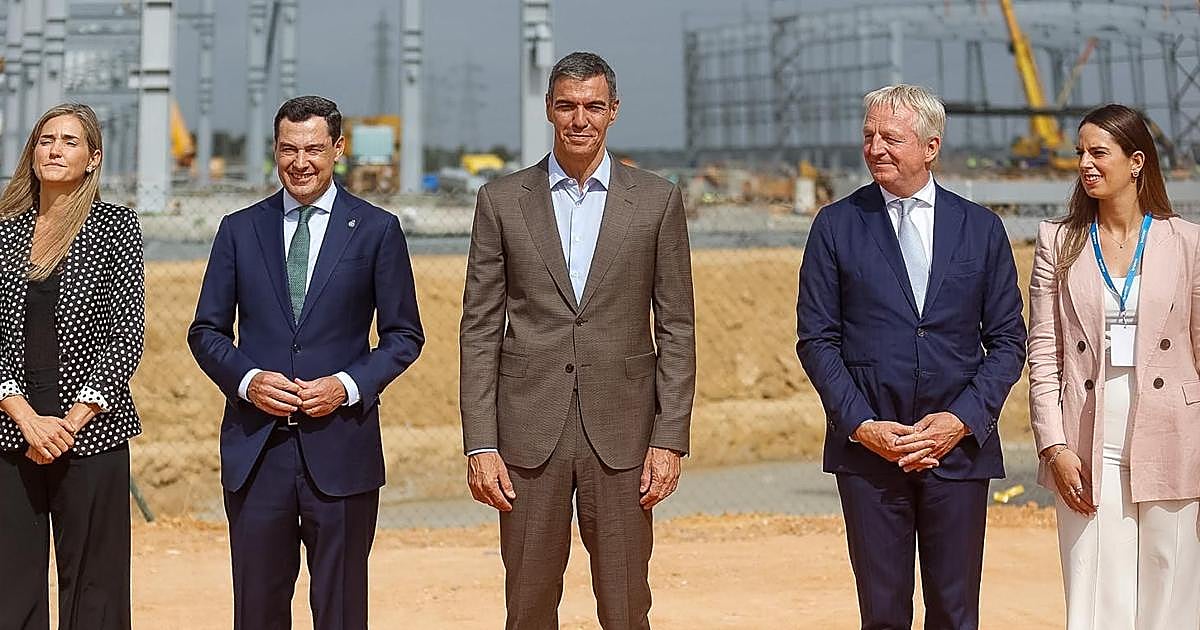
Moeve, the Spanish energy group formerly known as Cepsa, laid the first stone on Thursday of Onuba, the initial phase of the Andalusian Green Hydrogen Valley, at its energy park in Palos de la Frontera, Huelva. The plant will start with 300 megawatts of electrolysis capacity, expandable by a further 105 MW, and involves combined investment of more than €1 billion covering associated infrastructure and a self-consumption solar plant, according to energias-renovables.com.
The ceremony drew Spanish Prime Minister Pedro Sánchez, Ecological Transition Minister Sara Aagesen, Andalusian regional president Juanma Moreno and regional industry councillor Jorge Paradela, alongside Palos de la Frontera mayor Milagros Romero Artero. European Commission Executive Vice-President Teresa Ribera took part through a video recorded in Brussels, ABC reported.
Capacity, output and start-up
Moeve estimates Onuba will produce roughly 45,000 tonnes of renewable hydrogen a year, avoiding about 250,000 tonnes of CO₂ annually. ABC reports the plant will enter service in 2029 and will generate 8,000 direct and indirect jobs across the value chain, while energias-renovables.com cites company estimates of more than 8,000 direct, indirect and induced jobs during development, construction and commissioning, plus economic activity for over 400 local small firms and self-employed contractors.
The company describes Onuba as its first digital-native plant, built from the design stage around a digital twin and a unified data and IoT platform. To feed the electrolysers, Moeve plans to develop its own renewable projects and sign agreements with other solar and wind producers in Andalusia and elsewhere in Spain.
Shareholders realigned before groundbreaking
Construction starts after a reshuffle of the project's equity. El Correo reports that Hy24 and COFIDES have taken the 29% stake that Masdar had been due to acquire. The structure is now:
- Moeve holds a majority 51%.
- Hy24, described by the company as the largest global fund specialising in renewable hydrogen, and COFIDES, Spain's public-private financial institution, hold 29% between them.
- Enagás Renovable, one of Europe's main renewable gas developers, and Alter Enersun hold the remaining 20%.
Public money and PCI status
The first phase has been designated a Project of Common Interest by the European Union and carries €304 million in financing granted by the Spanish government under the Recovery, Transformation and Resilience Plan, funded through NextGenerationEU, supporting the development of 405 MW of the Andalusian valley. Sánchez put public backing for the Moeve project at more than €300 million and said Spain has already channelled more than €3 billion into over 120 renewable hydrogen projects, alongside mandatory emissions-reduction and renewable-fuel targets across transport designed to create demand.
Onuba is one half of a wider plan. The Andalusian Green Hydrogen Valley targets 2 GW of electrolysis split between Palos de la Frontera and San Roque in Cádiz, which is next in line for construction. ABC puts total investment across both sites at €3 billion, combined output at up to 300,000 tonnes of green hydrogen a year and avoided emissions at six million tonnes of CO₂ annually.
Where the hydrogen goes
Moeve says the hydrogen can be used in road fuels, aviation and marine fuels, and to decarbonise other industries that are hard to electrify. Cumulative investment in Andalusia now stands at €2.4 billion, including a second-generation biofuels plant that starts producing sustainable aviation fuel (SAF) and renewable HVO diesel next year — a combination the company says makes Palos de la Frontera Europe's largest hub for green molecule production.
Chief executive Maarten Wetselaar said the company is “leaving behind the era of green hydrogen pilot projects to move towards the construction of large-scale projects”, adding that Onuba puts Spain in the leading group in Europe. Moreno argued that Andalusia's climate allows renewable generation costs clearly below those of northern Europe and set the goal of turning southern Europe into the continent's green hydrogen factory, shifting the region from net energy importer to exporter. A Moeve study with PwC argues green molecules could halve Europe's external energy dependence by 2040, replace up to 50% of current fossil fuel demand by 2050, account for a third of the European energy mix and cut CO₂ emissions by 22%. Moeve, nearly 100 years old and rebranded from Cepsa in 2024, is controlled by Abu Dhabi sovereign fund Mubadala with 63% and The Carlyle Group with 37%, and employs more than 11,000 people.