Minya begins first export-oriented sweet potato harvest under FAO-backed pilot
Fifteen women farmers in Egypt’s Minya Governorate have begun harvesting sweet potatoes grown on 15 feddans for international markets. The FAO-backed pilot connects smallholders with Daltex Agricultural and provides training in export specifications and production methods.
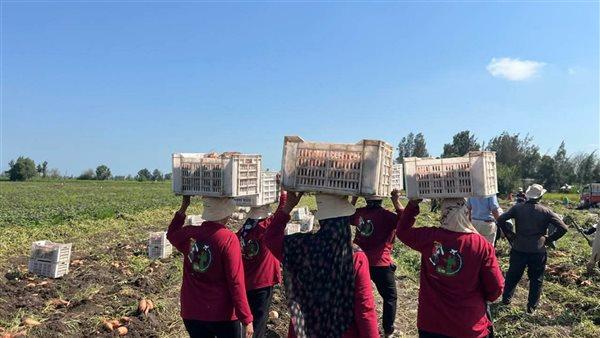
Export-focused harvest begins in Minya
Fifteen women farmers in the village of Kom El-Mahras in Egypt’s Minya Governorate have begun the first harvest of sweet potatoes cultivated under a pilot designed for international markets. The crop covers 15 feddans and forms part of the “Women’s Product — Women’s Mark” initiative, according to Al-Masry Al-Youm.
The Food and Agriculture Organization of the United Nations is organizing the harvest launch on Thursday, September 17, with Egypt’s Ministry of Agriculture and Land Reclamation, Ministry of Social Solidarity, National Council for Women and private-sector partners. The available reports do not identify the intended destination markets, shipment volumes or expected export value.
The initiative falls under a project aimed at improving socioeconomic conditions, food security and the empowerment of rural communities in Minya. It is financed by the Royal Norwegian Embassy in Cairo and implemented by the FAO in partnership with the Ministry of Social Solidarity.
Training targets export specifications
Al-Masry Al-Youm reported that the 15 participants received specialized training in sweet potato production according to specifications required for export. They also received technical advice and support throughout the different stages of cultivation, allowing the group to apply the training during a commercial harvest.
The pilot brings together the FAO, Daltex Agricultural, the Ministry of Social Solidarity, the National Council for Women and the Ministry of Agriculture and Land Reclamation. Representatives of Daltex Agricultural and government partners are due to attend the launch alongside AbdulHakim Elwaer, the FAO’s Assistant Director-General and Regional Representative for the Near East and North Africa.
The role of Daltex Agricultural gives the project a direct private-sector connection. The stated objective is to integrate small farmers, including women producers, into agricultural value chains and export markets. That link is important because meeting overseas specifications alone does not guarantee market access; growers also need commercial relationships, crop handling and routes to buyers.
A small pilot with a commercial test ahead
At 15 feddans and 15 participating farmers, the initiative remains limited in scale. Its immediate commercial significance will depend on the volume and quality of the harvested crop, buyer acceptance and whether produce advances from an export-oriented harvest to confirmed shipments. None of those results was quantified in the source reports.
For Minya’s rural producers, the pilot nevertheless provides a practical test of whether small plots can be linked to higher-value agricultural activities. If the crop meets buyer requirements and reaches international markets, the model could offer participating households an additional source of income and give local institutions experience in organizing export-compliant production. Replication would require evidence on yields, grading, packing, logistics and returns to farmers—details that have not yet been disclosed.