Milan appeals court restricts Italian branding of non-Italian Asiago cheese in US
The Milan Court of Appeal has barred misleading Italian references in the US marketing of “Sopressata & Asiago Cheese” made with non-Italian cheese. The ruling applies US misleading-advertising law and awards damages to the Asiago PDO protection consortium.
Court overturns 2023 jurisdiction ruling
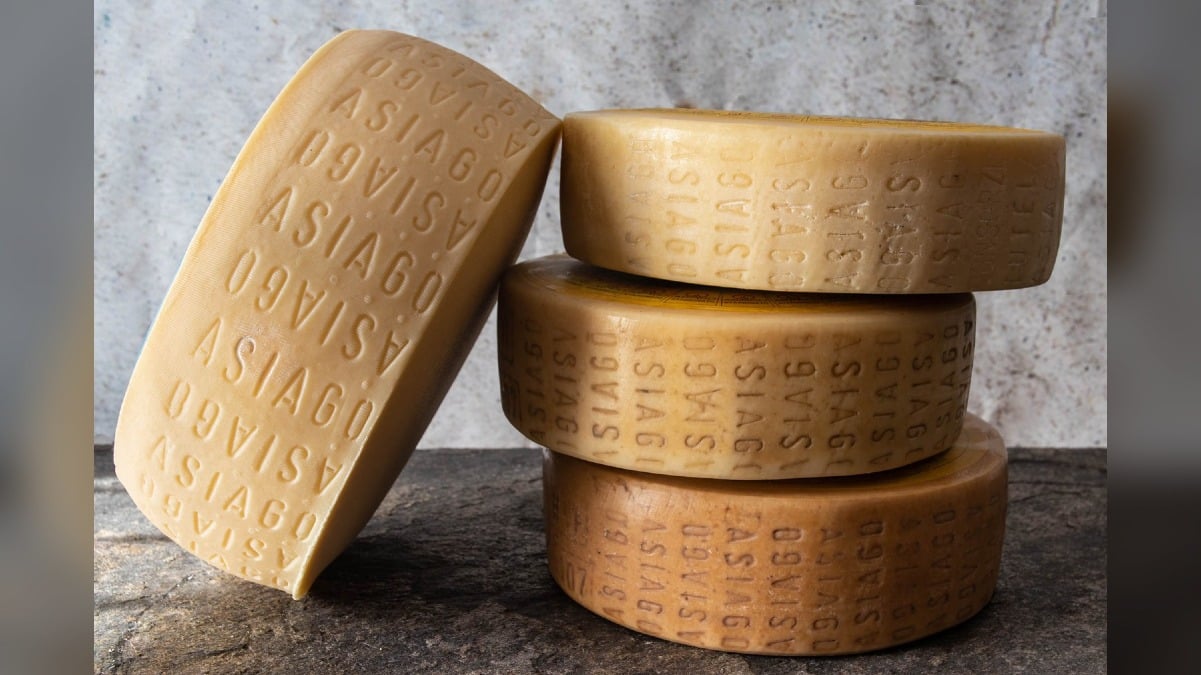
The Milan Court of Appeal has ruled that the packaging and promotion of a US-market cheese product were misleading because they evoked an Italian origin and the qualities of Asiago PDO even though the cheese was not Italian. The judgment, dated 25 September 2026, sided with the Consorzio Tutela Formaggio Asiago in its case against Giuseppe Citterio Salumificio S.p.A. and Euro Foods Inc., the group’s US company, according to Nordest24 and Eco Vicentino.
The dispute concerned “Sopressata & Asiago Cheese,” a Citterio-branded product sold and advertised in the United States by Euro Foods with the involvement of Giuseppe Citterio Salumificio. The court examined not only the product name but also packaging, images, graphic elements and promotional messages that referred to Italy or suggested organoleptic qualities associated with protected Asiago.
The appellate court fully reversed a Milan tribunal decision of 15 May 2023. The lower court had declined jurisdiction without considering the substance of the complaint. The appeals judges instead concluded that an Italian court could protect Asiago PDO in the United States by applying US rules on misleading advertising.
Restrictions cover production, trade and advertising
The ruling prohibits the two companies from producing, distributing, importing, exporting, marketing, offering for sale or advertising “Sopressata & Asiago Cheese” whenever its packaging or promotional material refers to Italian origin or manufacture, or invokes specific sensory qualities of Asiago PDO. The court also ordered the defendants to pay damages, although the reports did not disclose an amount.
The judgment does not establish a general US ban on cheese sold under the word Asiago. Its immediate effect concerns the presentation of the product at issue and the allegedly misleading combination of origin cues and quality claims. Nevertheless, consortium president Fiorenzo Rigoni said the decision could become an important legal precedent for organizations promoting Made in Italy products and challenging Italian-sounding marketing abroad.
Riccardo Deserti, president of Origin, the global alliance of geographical indications, described the outcome as positive for both Asiago PDO and the wider geographical-indication system. The case shows how protection bodies may use the law of a destination market to contest commercial presentation even where the dispute is heard by a court in the product’s country of origin.
US market raises the commercial stakes
Asiago is Italy’s fourth-largest cow’s-milk PDO cheese by production volume. Its supply chain uses about two million quintals of milk annually from 1,000 farms and turns it into 22,000 tonnes of cheese sold in more than 50 countries. The United States is identified as Asiago’s largest export market, making enforcement there particularly relevant to producers and licensed sellers.
The consortium has adopted what it calls a “zero tolerance” policy toward names, images, colors and other references that evoke Italy for products with no genuine connection to the country. Estimates cited by the consortium put the value of Italian-sounding products at €73 billion, compared with €71 billion of Italian food and agricultural exports. A TEHA Group Ambrosetti analysis based on 2026 Istat data estimates that converting that demand into sales of authentic Italian products could lift the country’s potential exports to about €143 billion. The ruling gives PDO owners another possible route for pursuing that market, while raising compliance risks for processors, importers and distributors using Italian identity cues on non-Italian food.