Milan Court Places Plastic Packaging Consortium Corepla Under Judicial Administration
The prevention measures section of the Milan tribunal has placed Corepla, Italy's national plastic packaging consortium, under judicial administration for one year for failing to prevent illegal waste handling by contractor Synextra. Prosecutors allege Synextra mishandled at least 240,000 tonnes of plastic-matrix waste in 2023-2025 for a gain of at least €58.3 million. Corepla is not itself under criminal investigation.
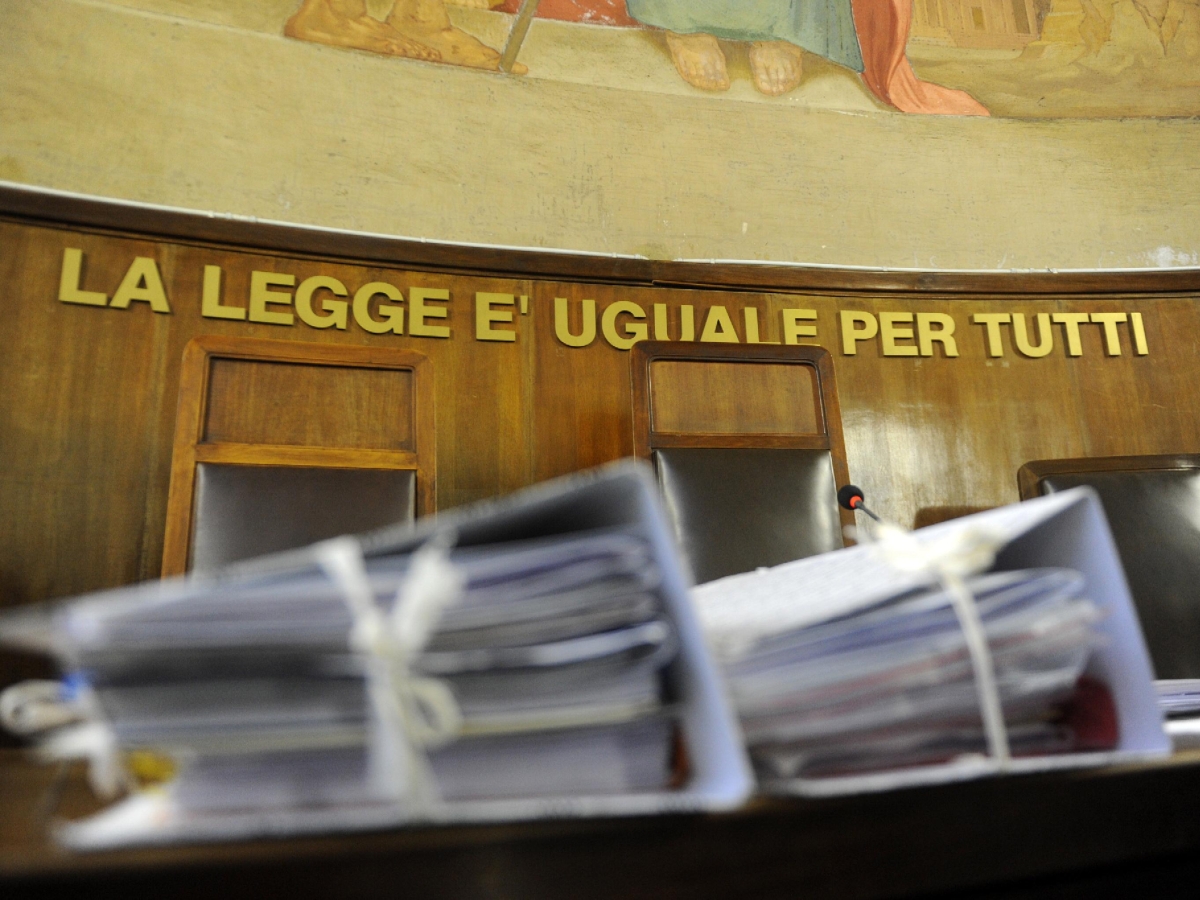
A Milan court has placed Corepla, Italy's national consortium for the collection, recycling and recovery of plastic packaging, under judicial administration for one year. The prevention measures section of the tribunal issued the order on Wednesday, 16 September, finding that the consortium failed to stop the illegal handling of waste by one of its main contractors. Corepla itself is not under criminal investigation.
What prosecutors allege at Corsico
The criminal case, open at the Milan Prosecutor's Office since 2024, targets Synextra spa and eight of its executives, including president Fabio Mosca. Prosecutors Silvia Bonardi, Cristian Barilli and Paolo Storari have served a notice of conclusion of investigations for illegal waste management under article 452-quaterdecies of the criminal code, covering 2023 and 2024. According to Corriere della Sera, the case rests on wiretaps, video surveillance and testimony from employees.
Carabinieri investigators say Synextra systematically mixed plastic-matrix municipal waste supplied through Corepla with other material, including industrial and special waste, assigned arbitrary classifications to it and manipulated the quality analyses so the material would appear to have been processed inside the plant on the consortium's behalf. The conduct centred on the selection and storage centre at Corsico, on the southern edge of Milan. The methods listed in the court documents include:
- false identification labels on bales of waste;
- laboratory analyses manipulated by cooperating analysts, or circumvented by setting aside selected «good» bales for testing;
- registers filled in to paper over gaps between recorded volumes and the quantities actually treated;
- on one occasion, a plant shut down under the pretext of maintenance to keep inspectors out of areas holding irregular stockpiles.
Investigators put the volumes at at least 240,000 tonnes of plastic-matrix waste between 2023 and 2025, and Synextra's gain at at least €58.3 million. That figure combines direct revenue from processing the waste with savings on plant costs avoided by not recycling and disposing of the material correctly.
The performance index and Corepla's inaction
Investigators trace the commercial motive to the «performance index», a ranking of selection and storage centres that determines how much material Corepla allocates to each site. A higher score meant larger volumes, irrespective of the real processing capacity at Corsico. Corepla already accounted for nearly 70% of Synextra's revenue. Wiretaps cited in the file describe the contract as an arrangement in which each side handled its own material as it saw fit.
Judges Paola Pendino (presiding), Giulia Cucciniello (rapporteur) and Maria Profeta held that the «alarming» irregularities were equally clear to Corepla, but that no manager took action against them or considered the possible criminal implications. The situation was «systematically minimised» by Corepla managers as, at most, a contractual breach, instead of being addressed through effective inspections or audits. One intercepted exchange quoted in the ruling has a speaker complaining that «they are making a mess at Synextra, I don't understand anything, nobody understands anything, they do whatever they want». The judges attributed the inaction to a reputational interest in showing that recycling targets were being met.
A non-profit consortium with €845 million in revenue
Corepla groups 2,426 producers and reported €845 million in annual revenue with a €15 million loss in 2024. It is a non-profit body with private legal personality but a public-interest mandate; its statute follows a template set by the Ministry of the Environment together with the Ministry of Productive Activities, which between them appoint two members of its board of statutory auditors.
The consortium operates within CONAI, the national packaging consortium, which works with municipal separate collection schemes under agreements with local authorities and runs six material-specific consortia covering steel, aluminium, paper and cardboard, wood, glass and plastic. Corepla draws on two revenue streams: the CONAI environmental contribution paid by companies on packaging placed on the Italian market, and proceeds from the sale of sorted material downstream of separate collection. The judicial administrator is appointed for one year under article 34 of legislative decree 159/2011, a measure built for negligence rather than criminal complicity, and is tasked with cleaning up a relationship the consortium proved unable to fix on its own.