Algeria's Mila region posts record garlic harvest of 1.619 million quintals
The wilaya of Mila has confirmed its position as Algeria's leading garlic-producing region, with the 2025-2026 campaign yielding a record 1.619 million quintals — roughly 161,900 tonnes. The result cements Mila's role as the anchor of national garlic supply.
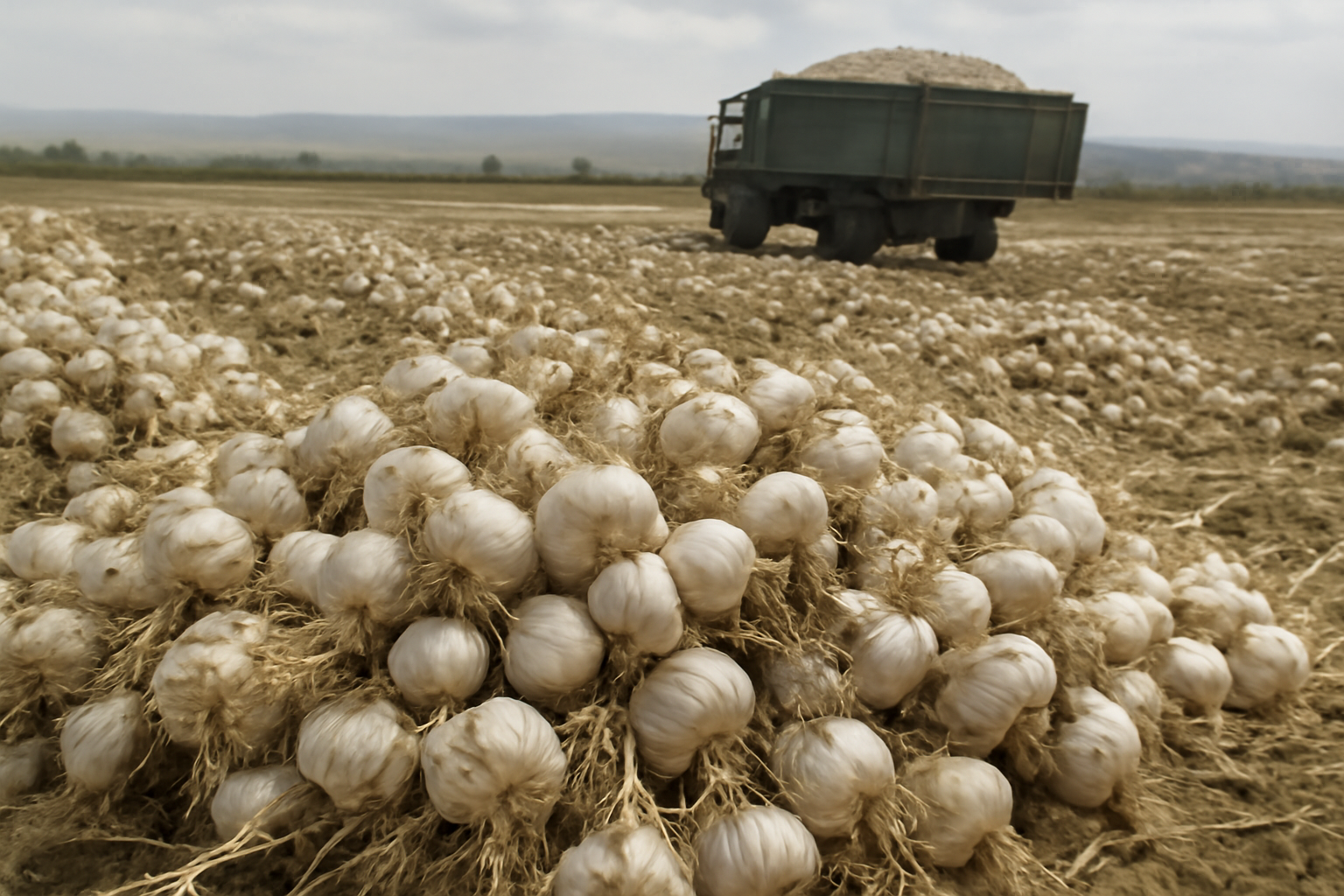
Record garlic harvest lifts Mila to the top of Algeria's production
The wilaya of Mila has confirmed its position as Algeria's leading garlic-producing region. Output for the 2025-2026 agricultural campaign reached 1.619 million quintals, a record for the province. At 100 kilograms to the quintal, that is equivalent to roughly 161,900 tonnes of garlic brought in over a single season, placing Mila at the head of the country's garlic supply and reinforcing a lead it has held in this crop.
Why Mila matters for national supply
Garlic is a staple of Algerian cooking and a steady line in the country's fresh-produce trade. When a single wilaya delivers a record crop, it concentrates a meaningful share of national supply in one place, giving buyers a clearer read on where volumes will come from through the marketing season. For domestic wholesalers, larger local availability usually means fewer gaps to fill and less exposure to the sharp price swings that follow a poor harvest.
A record at provincial level also reflects the choices growers have made on planted area and inputs. Output of this size suggests garlic has held its place in local crop rotations rather than losing ground to competing vegetables, which matters for anyone planning procurement a season ahead. It points to a production base that buyers can treat as reliable rather than occasional.
What it means for trade
For importers and exporters, the direction of the trend counts for more than any single figure. Record domestic output reduces the need to cover shortfalls with imported garlic and, where surpluses build up, can create room to ship product to neighbouring markets. Garlic keeps and travels relatively well compared with more perishable vegetables, which makes it a practical candidate for cross-border trade once local production runs ahead of consumption.
The open question is how the harvest clears. If domestic demand absorbs most of the 1.619 million quintals, the immediate effect is price stability at home rather than a jump in exports. If volumes exceed what the local market can take, traders will look to move the balance outward. Either way, the record confirms Mila as the reference point for Algerian garlic.
Outlook for the season
The near-term picture turns on storage and the pace of sales. Garlic can be held for months when cured and stored properly, so a large harvest does not have to reach the market all at once; it can be released gradually to smooth prices. For analysts tracking Algeria's fresh-produce balance, the figure to watch next is how much of Mila's crop stays domestic versus what moves across borders, and whether the province can repeat this level in the next campaign.