Mexico’s reliance on imported corn deepens as Veracruz producers warn about prices
Mexico’s corn consumption is exceeding domestic production capacity, increasing the country’s reliance on foreign supplies, mainly from the United States. Producers in Veracruz warn that the resulting market conditions are putting pressure on local prices.
Consumption moves further ahead of domestic supply
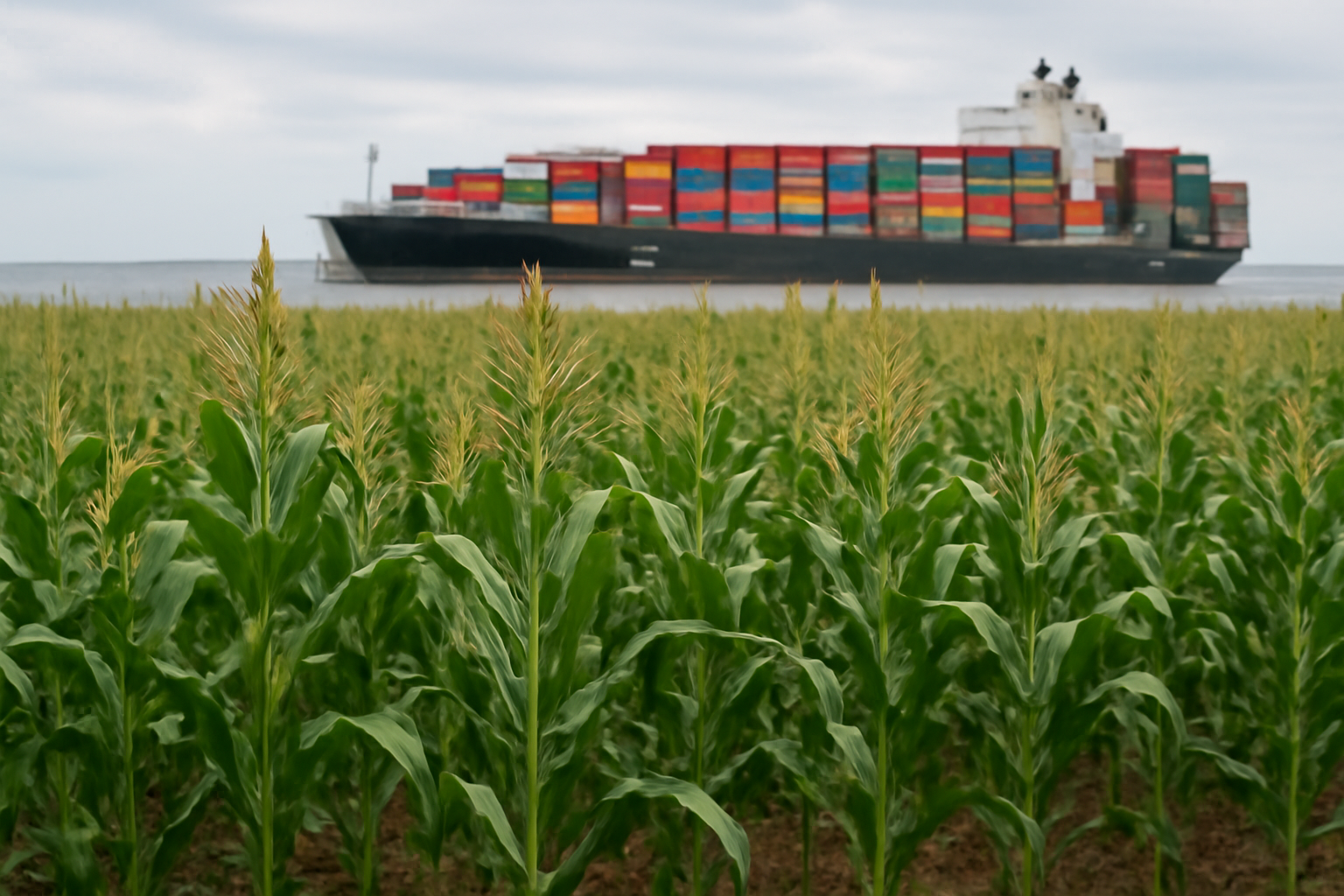
Mexico is becoming more dependent on imported corn as national consumption exceeds the country’s production capacity. Imagen de Veracruz reports that foreign purchases continue to rise and that the United States remains the principal source of those supplies.
The widening gap places imported grain in an increasingly important role within Mexico’s food, feed and processing markets. Domestic harvests alone are not sufficient to cover total demand, leaving buyers reliant on external supply to maintain availability for industrial users and other consumers.
The available source material does not provide import volumes, production figures, prices or a reporting period. It therefore does not establish how quickly the deficit has expanded or how the balance differs between corn varieties. Even so, the direction is clear: consumption is running above domestic output, and US-origin grain is covering a significant part of the shortfall.
Veracruz growers face price pressure
Producers in Veracruz are warning about prices as imported corn gains weight in the national market. Large and dependable foreign supplies can influence the prices offered to local growers, particularly when buyers can compare domestic grain with imported alternatives. The pressure may affect planting decisions, sales timing and producers’ ability to recover cultivation and logistics costs.
The impact will not necessarily be uniform. Conditions depend on the type and quality of corn, the location of buyers, transport costs and the needs of individual processors. Imported grain can support supply security for users facing insufficient domestic availability, while creating tougher competition for farmers selling into overlapping markets.
US supply becomes more important to Mexican buyers
The United States’ position as Mexico’s main foreign supplier makes the bilateral corn flow increasingly important for processors, livestock operators, traders and transport companies. For Mexican buyers, imports provide access to grain when national output cannot meet consumption. For US suppliers, Mexico represents a market whose purchasing needs are reinforced by the domestic production gap.
This dependence also increases exposure to conditions beyond Mexican farms. Changes in US availability, transport performance or purchasing costs can pass through to Mexican users when alternative sources cannot be secured on comparable terms. At the same time, Veracruz producers must compete in a market shaped by both local harvest conditions and the economics of imported grain.
The central issue is therefore not simply the presence of imports, but the growing distance between Mexico’s demand and its capacity to produce corn domestically. Without figures on volumes and prices, the scale of the immediate impact cannot be quantified. The warning from Veracruz nevertheless shows where the strain is appearing: at the producer level, where selling prices determine whether farmers can sustain future planting.