Mexico could rise to seventh in global corn production despite smaller crop
Mexico could become the world’s seventh-largest corn producer in 2026-2027 with output of approximately 24.1 million tonnes. The projected ranking gain would come despite a smaller crop, as global production forecasts are being reduced.
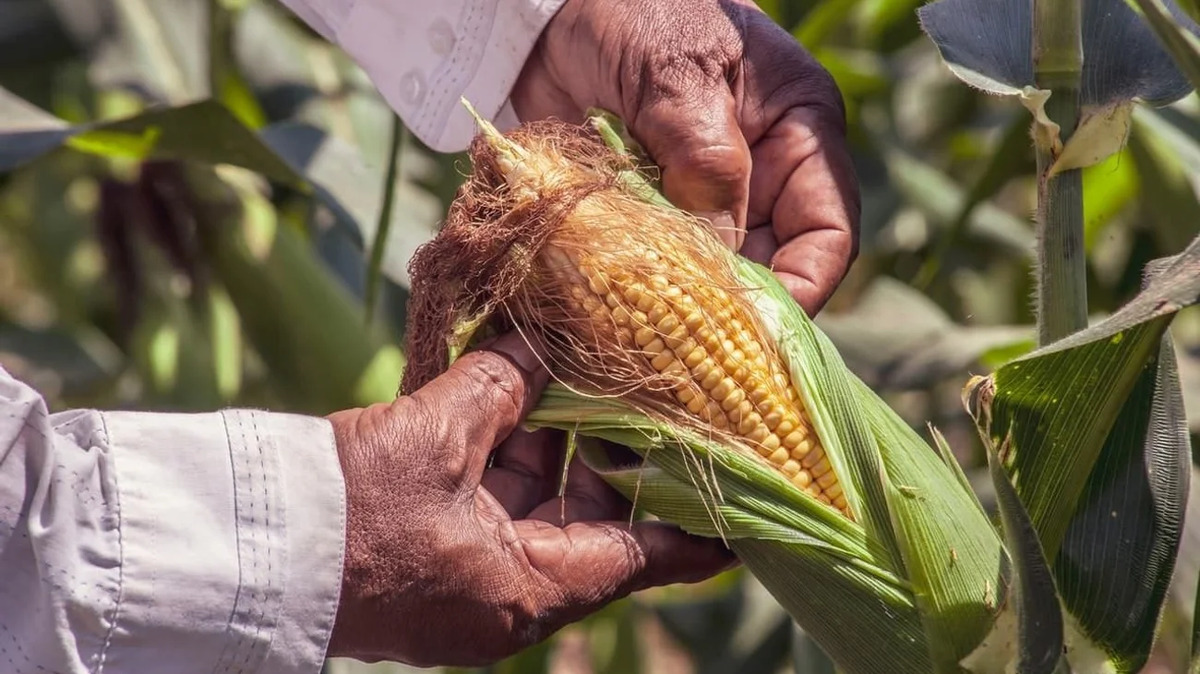
Mexico could gain a place despite lower output
Mexico could move from eighth to seventh place among the world’s largest corn producers in the 2026-2027 cycle, according to estimates cited in FIRA’s Panorama Agroalimentario Maíz 2026. Production is projected at approximately 24.1 million tonnes, slightly below the 24.7 million tonnes estimated for 2025-2026.
The expected rise in the ranking therefore does not reflect an expansion in Mexico’s crop. It suggests that changes in production among other major growers could alter the global order. In 2025-2026, Mexico’s 24.7 million tonnes represented around 1.9% of worldwide production, according to El Tiempo.
Mexico also has one of the world’s largest corn-growing areas. It ranked seventh by harvested area in 2025-2026, with approximately 6.7 million hectares. China led with around 45 million hectares, followed by the United States with 36.9 million hectares. The gap between Mexico’s acreage and output relative to the largest producers highlights substantial differences in yields.
United States, China and Brazil retain the lead
The United States remained the largest corn producer in 2025-2026, harvesting approximately 432.34 million tonnes, or 32.5% of global output. China ranked second with 301.24 million tonnes, while Brazil was third with 141 million tonnes. Estimates for 2026-2027 indicate that the United States will retain first place.
FIRA estimated the 2025-2026 global corn harvest at 1.327 billion tonnes, a record and an increase of 7.6% from the previous cycle. The crop came from 215.1 million hectares, with an average yield of 6.17 tonnes per hectare. For 2026-2027, the US Department of Agriculture projected output close to 1.300 billion tonnes, which would still be the second-largest volume on record.
European weather lowers the global outlook
The FAO’s latest forecast put global corn production during 2026 at 1.309 billion tonnes, 0.6% below its June projection. The revision was driven mainly by deteriorating harvest prospects in the European Union, especially France and Poland, where hot and dry summer conditions damaged crops and reduced expected yields.
Despite that adjustment, the FAO expects total global cereal production to reach 2.980 billion tonnes in 2026, the second-largest harvest recorded. The figures indicate that corn supplies would remain historically high even as the market moves below the preceding record.
Demand and trade keep pressure on available supply
Worldwide corn consumption increased at an average annual rate of 2.4% over the five marketing years from 2021-2022 to 2025-2026, reaching a record of approximately 1.300 billion tonnes. Feed use grew by an average of 2.7% annually, while food and industrial use increased by 2% over the same period.
The FAO expects the United States to consolidate its position as the leading corn exporter, supported by robust international demand and more competitive shipments. Argentina could increase exports to 39 million tonnes, bringing its volume close to Brazil’s. Europe could generate additional import demand after reductions in its production forecasts.
Black Sea trade remains a source of uncertainty. Russia and Ukraine are expected to continue exporting significant volumes, but maritime transport conditions, logistical risks and route restrictions could affect the timing and distribution of supplies. For producers, processors and traders, Mexico’s possible ranking gain matters less than the combination of restrained global output, rising consumption and uncertain trade logistics.