Mexico’s beef imports from Brazil fall 8.5% in January-July as tariff returns
Mexican beef imports from Brazil declined 8.5% in January-July 2026 after Mexico resumed charging a tariff on the product. The measure halted the triple-digit growth recorded during the tariff-free years.
Tariff reverses rapid import growth
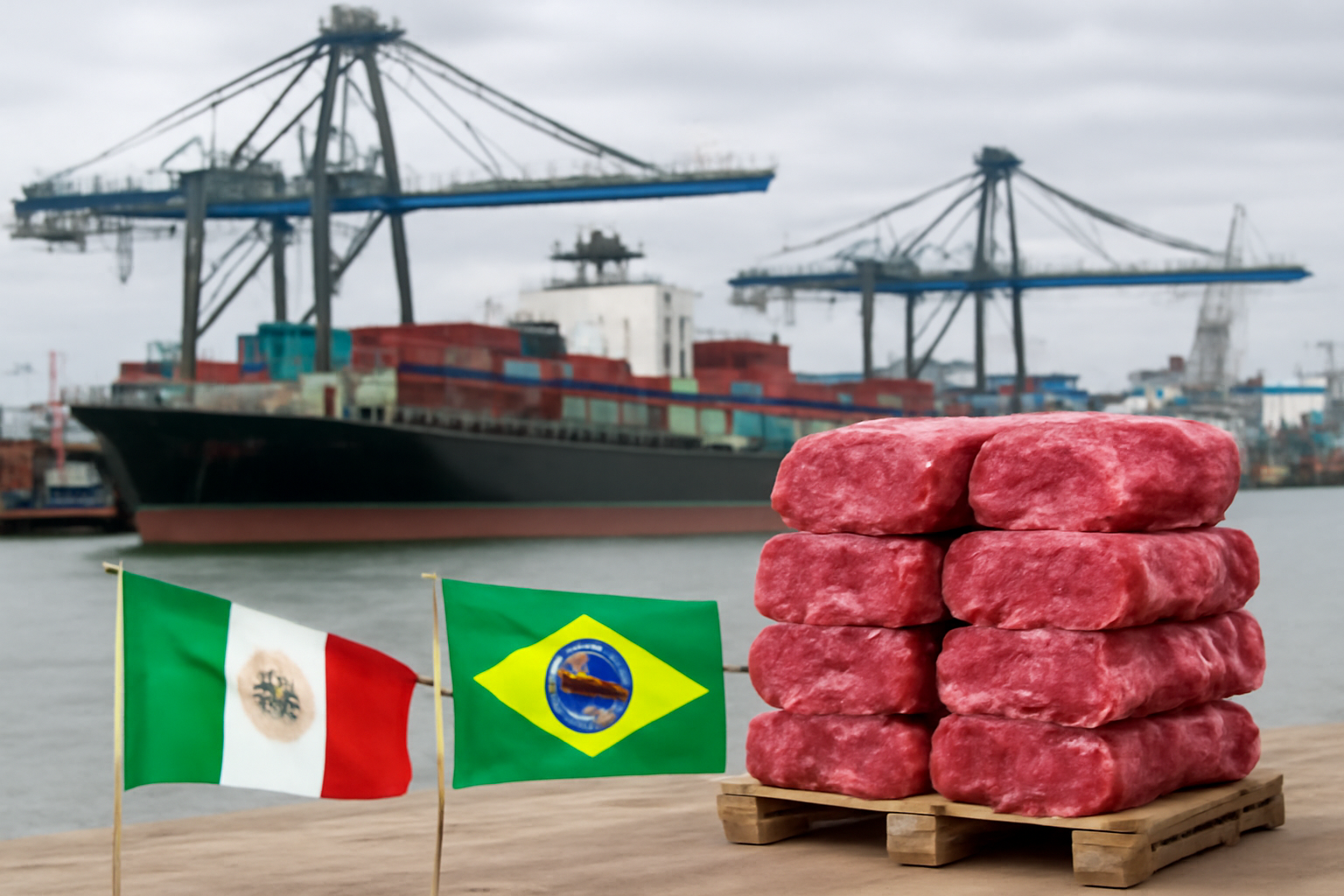
Mexico’s imports of Brazilian beef fell 8.5% in January-July 2026 after the Mexican government resumed charging a tariff on the product at the start of the year. The renewed levy has interrupted the triple-digit growth that shipments from Brazil recorded during the years when the trade was exempt from the duty.
The contraction marks a clear change in direction for a bilateral beef flow that had expanded rapidly under tariff-free access. While the available information does not specify the value or volume of shipments, the 8.5% decline shows that the change in border costs is already affecting purchasing decisions in the Mexican market.
For Mexican importers, a tariff directly raises the landed cost of Brazilian beef unless suppliers absorb part of the charge through lower export prices. Buyers can also reduce orders, alter the mix of cuts they purchase or seek supplies from other origins. The reported decline indicates that at least part of the market response has taken the form of lower imports from Brazil.
Brazilian suppliers lose tariff-free advantage
Brazilian exporters had benefited from the absence of the duty, achieving growth measured in triple digits. Reinstatement of the tariff removes that cost advantage and makes price negotiations more difficult for processors, distributors and food-service buyers in Mexico.
The effect will not necessarily be uniform across the supply chain. Exporters with room to adjust prices may defend volumes, while suppliers operating with narrower margins may prioritize other customers. Mexican buyers that depend on particular Brazilian products may continue importing despite the additional cost, whereas more price-sensitive users have a stronger incentive to change suppliers or substitute products.
The figures do not establish how much of the 8.5% fall was caused exclusively by the tariff. Demand, exchange rates, cattle and beef prices, logistics and the timing of shipments can also affect trade. However, the reversal from triple-digit growth to contraction coincides with the government’s decision to charge the duty again from January 2026.
Market focus shifts to sourcing and margins
The immediate issue for traders is whether the January-July decline represents a one-time adjustment or the beginning of a more sustained reduction in Brazilian shipments. That will depend on how importers redistribute purchases and how Brazilian sellers respond to the higher cost of entering Mexico.
Mexican processors and distributors must now balance the tariff-inclusive price of Brazilian beef against domestic supply and other eligible origins. Their choices will determine whether the duty mainly reduces Brazil’s market share, raises costs within Mexico or produces a combination of both effects.
For Brazilian producers and exporters, Mexico remains a market where competitiveness now depends on more than the price before customs. The tariff has become part of the commercial calculation, affecting margins and the price at which transactions remain viable. After several years of exceptional growth without the levy, the 8.5% decline provides the first clear indication that the policy change has cooled the trade.