Mexican brewers say domestic inputs provide a buffer against US tariff threats
Mexico’s beer industry says it is largely insulated from US tariff threats because three-quarters of its brewing inputs are sourced domestically. The local supply base limits direct exposure to imported materials, although tariffs could still affect finished-beer trade and cross-border costs.
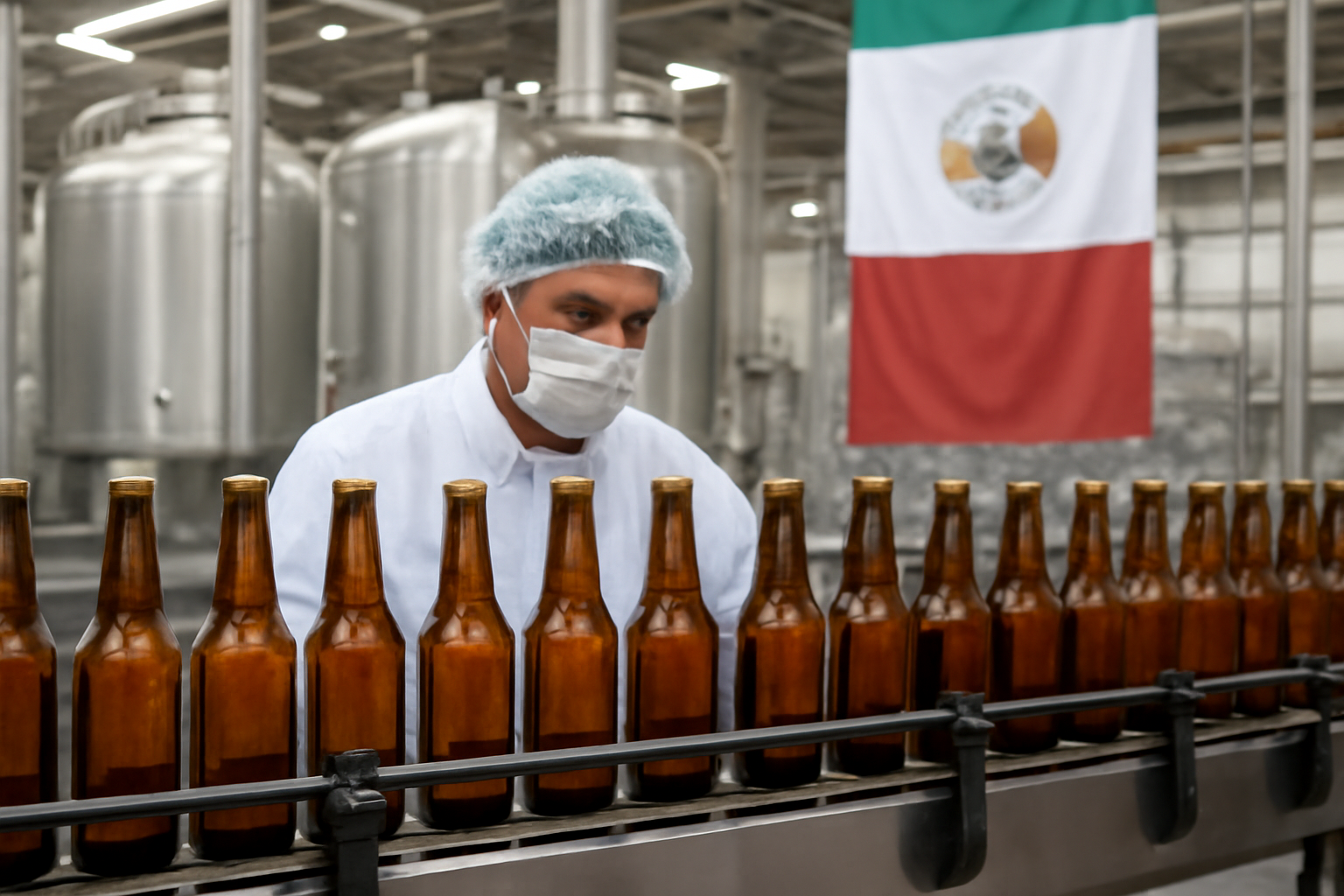
Domestic sourcing underpins industry confidence
Mexico’s beer industry says its reliance on domestic raw materials gives producers substantial protection from tariff threats associated with US President Donald Trump. According to La Jornada, Cerveceros de México argues that the sector is practically insulated because three-quarters of the inputs required to make beer are Mexican.
That sourcing profile matters because tariffs typically transmit pressure through imported ingredients, packaging materials, machinery or finished products. A brewery that buys most of its production inputs inside Mexico has less direct exposure to duties imposed on cross-border supplies. Domestic sourcing can also reduce sensitivity to customs delays and changes in the cost of moving materials between Mexico and the United States.
Protection is strongest on the production side
The industry’s position concerns the origin of brewing inputs rather than complete immunity from trade policy. The remaining quarter of inputs is not covered by the domestic share cited in the report and may still include materials or equipment exposed to international prices and border measures. La Jornada did not provide a breakdown of those inputs, their value or the countries from which they are obtained.
US measures affecting Mexican finished beer would create a different risk. Local barley or other Mexican inputs can protect the cost base at the brewery, but they cannot prevent an import tariff from increasing the landed price paid by a US buyer. The eventual burden would depend on the precise products covered and on whether brewers, distributors, retailers or consumers absorb the additional cost. No tariff rate, implementation date or estimate of the potential financial impact was included in the supplied report.
Local suppliers gain strategic importance
For Mexican farmers, maltsters, packaging companies and other suppliers, the three-quarters domestic share reinforces their role in the brewing chain. A broad local supplier base gives large brewers more room to manage external shocks and may encourage companies to preserve or expand Mexican procurement. It also concentrates operational exposure inside Mexico: the industry remains dependent on the reliability, quality and pricing of domestic crops, processing capacity and packaging production.
The claim therefore provides a measure of supply-chain resilience, not a guarantee that the market would escape disruption. Producers remain exposed to any US action directed at beer entering the American market, while traders and importers must distinguish between tariffs on production inputs and tariffs on the beverage itself. For investors and market analysts, the central question is the scope of any final measure. A tariff limited to selected imported inputs would have a narrower effect on an industry sourcing three-quarters domestically; a duty applied to Mexican beer at the US border would reach the sector through sales, margins and consumer prices regardless of where the beer’s ingredients originated.