Metlen’s €295.5 million gallium project puts Greece on Europe’s critical minerals map
Metlen plans annual capacity of 50 tonnes of gallium at its Agios Nikolaos complex in Greece, alongside expanded bauxite and alumina production. The project could provide an alternative to Chinese supply as demand grows from semiconductor, data center, 5G and electric-vehicle applications.
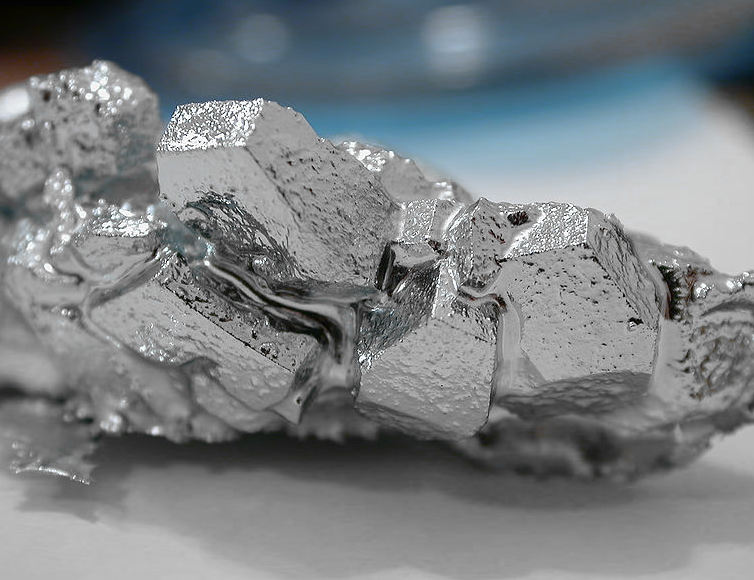
Greek project targets a concentrated market
Metlen is investing €295.5 million in an integrated bauxite, alumina and gallium production chain at the Aluminium of Greece complex in Agios Nikolaos, Boeotia. The project will give Greece its first production role in a metal used in advanced semiconductors and several energy technologies, while adding a new European source to a market dominated by China.
The plan includes annual capacity of about 2 million tonnes of bauxite and an increase in alumina capacity from 865,000 tonnes to 1.265 million tonnes. It will also install capacity to recover 50 tonnes of gallium per year. Gallium is generally not mined as a primary product; it is recovered mainly during the processing of bauxite into alumina and, to a lesser extent, from zinc processing. Metlen’s existing integrated operations therefore provide the industrial base for entering the smaller but strategically important gallium market.
QY Research estimates that global primary gallium production reached about 894.5 tonnes in 2025. On that basis, Metlen’s planned capacity would be equivalent to roughly 5.6% of 2025 global output, although capacity is not the same as actual production. Capital.gr reports that Metlen designed the 50-tonne unit with the potential to replace Europe’s current gallium imports.
Semiconductor demand drives market growth
According to QY Research figures cited by Capital.gr and SBC TV, the global gallium market was valued at $841 million in 2025 and is forecast to reach $1.232 billion in 2026 and $1.816 billion by 2032. The forecast implies a compound annual growth rate of 6.7% through 2032.
Demand is being supported by gallium nitride and gallium arsenide semiconductors. These materials are used in artificial intelligence infrastructure, data centers, 5G networks, electric vehicles and fast-charging systems. Capital.gr also identifies advanced electronics, photovoltaics and defense applications among the markets linked to gallium demand.
Supply is less responsive than demand because gallium occurs in low concentrations and its recovery depends largely on the scale and economics of alumina production. QY Research identifies Aluminum Corporation of China, Jinjiang Group (Xingan Gallium), Zhuhai Fangyuan, East Hope, Beijing JiYa Semiconductor Material and Qiya Group among the major producers. It expects China to remain dominant in the short term despite diversification projects and increased recycling.
European backing reflects supply-security concerns
The European Commission has recognized the development as a Strategic Project under the Critical Raw Materials Act. It was one of 47 projects selected from 170 applications. The European Investment Bank approved €90 million in financing in January 2026, describing it as the first gallium-production investment in Europe financed by the bank.
Greece’s Interministerial Committee for Strategic Investments approved the project in May. Metlen has said it expects approximately €118 million in grants and tax incentives. The public support reflects Europe’s effort to reduce exposure to geopolitical and trade disruptions in critical raw-material supply chains.
The project will not directly lower household energy bills, but it could strengthen supply resilience for manufacturers of power electronics, charging equipment, telecommunications systems and energy infrastructure. For Metlen, gallium adds a high-value product to an established bauxite and alumina chain. For European buyers, the significance lies in obtaining a regional source in a market where new supply cannot be brought online quickly and industrial policy increasingly influences availability.